

.webp)

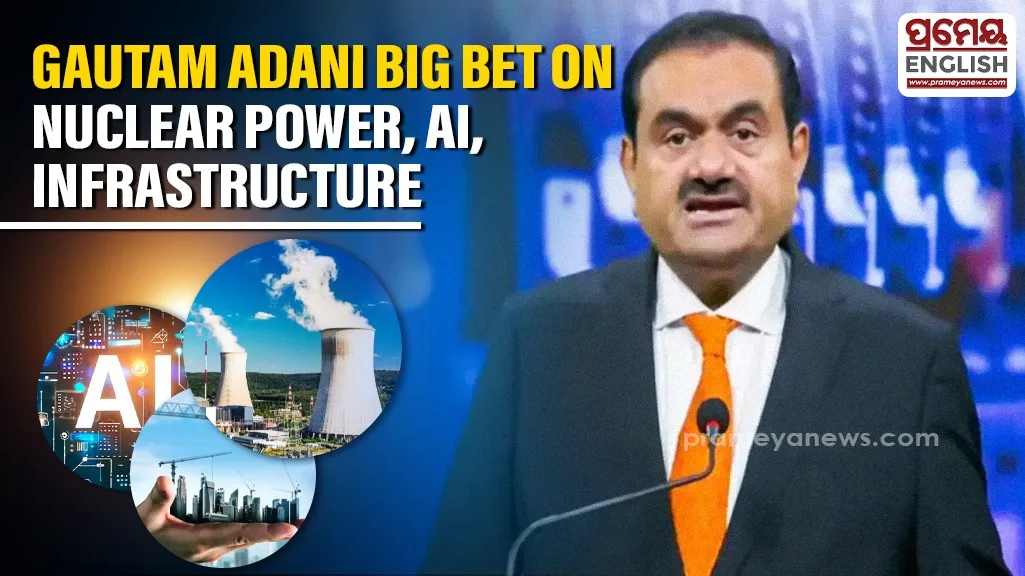
India enters new industrial phase with private nuclear expansion
Gautam Adani announced the formal entry of his conglomerate into the nuclear energy sector through a newly formed entity named Adani Atomic Energy. Speaking at the annual general meeting on Wednesday, the billionaire industrialist outlined a roadmap targeting 10 gigawatts of atomic power capacity by 2035. This expansion marks a major strategy shift for the business house as the country looks for consistent, carbon-free electricity to feed surging heavy industries and digital facilities.
Energy security and digital infrastructure have become central priorities for corporate India. The conglomerate invested more than Rs 1.5 lakh crore into core infrastructure projects during the 2026 fiscal year alone. According to corporate disclosures, this spending constitutes roughly 30 percent of all private-sector capital expenditure in the nation during that period.
Historically, nuclear generation in India remained almost exclusively within the domain of state-run corporations due to strict regulatory oversight and legislative frameworks. This aggressive private pivot mirrors global trends where tech-driven power demands force a reliance on stable baseload power sources rather than intermittent renewables alone.
Digital Expansion and Global Technology Alliances
Technological mastery requires vast physical infrastructure to thrive in the modern economic landscape. To capture the rising demand from artificial intelligence applications, the group aims to establish a three-gigawatt data centre network by 2030. A binding agreement signed with tech giant Google involves creating a large-scale data hub facility in Visakhapatnam to anchor these computing needs.
Simultaneously, traditional power operations are receiving a capital injection exceeding Rs 2 lakh crore to reach 45 gigawatts of generation capacity within the next five years. Beyond domestic borders, a cross-border initiative with Bhutan's Druk Green Power Corporation will see the joint creation of 5,000 megawatts of clean hydroelectric projects.
Logistics Outpaces Targets across Ports And Aviation
Transport divisions posted strong operational metrics over the past fiscal year. The port management wing handled over 500 million tonnes of maritime cargo, setting a firm baseline to hit one billion tonnes by the turn of the decade. Notably, the international port terminal at Vizhinjam processed over one million twenty-foot equivalent units during its introductory year of operation.
Aviation assets also saw major milestones with the introduction of the Navi Mumbai International Airport alongside a modern terminal building at Guwahati. Designed to accommodate 90 million travelers on an annual basis, the Navi Mumbai aviation project achieved operational readiness in just over four years.
Financial Metrics Rebound Strongly Following Market Scrutiny
Defensive production and aerospace manufacturing lines are expanding through collaborative industrial agreements with international firms like Leonardo and Embraer. These ventures helped manufacture specialized drones, missile components, and ammunition supply lines utilized by domestic defense forces.
Financially, the holding firm demonstrated strong recovery with consolidated revenue climbing 7.4 percent to reach Rs 2.92 lakh crore. Earnings before interest, taxes, depreciation, and amortization rose to Rs 94,834 crore, while net profit after tax surged by nearly 14 percent to hit Rs 46,376 crore. The chairman noted a recent Rs 25,000 crore equity rights issue served as a direct validation of investor trust following periods of intense regulatory and public review.
.webp)