

.webp)

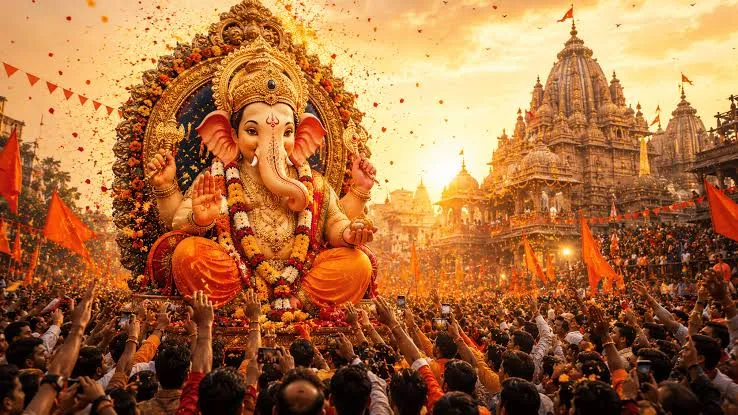
Revered as Vighnaharta, the remover of obstacles, and Prathamesh, the one who is worshipped first, Lord Ganesha occupies a special place in Hindu traditions.
Every year during the month of Bhadrapada, devotees welcome Ganesha into their homes and worship him with devotion. Ganesh Chaturthi 2026 will be celebrated on Monday, September 14, marking the beginning of the festival season for millions of devotees across India and abroad.
Ganesh Chaturthi 2026 Date and Tithi
Ganesh Chaturthi is observed on the Shukla Paksha Chaturthi of the Bhadrapada month. Unlike many Hindu festivals that follow sunrise-based timings, the installation of Lord Ganesha's idol is traditionally performed during the Madhyahna Kaal, or midday period, as Ganesha is believed to have been born during this time.
According to the timings provided, the Chaturthi Tithi begins at 7:06 AM on September 14 and ends at 7:44 AM on September 15.
The Sthapana Muhurat differs from city to city. In New Delhi, it is from 11:02 AM to 1:31 PM, while Mumbai will observe the window from 11:20 AM to 1:48 PM. In Pune, the auspicious period is 11:16 AM to 1:44 PM, and in Kolkata it is 10:18 AM to 12:46 PM.
The main immersion ceremony, Anant Chaturdashi, will be observed on Friday, September 25, 2026.
Why is Ganesha Worshipped First?
According to Hindu mythology, Goddess Parvati created Ganesha and appointed him as the guardian of her home. When Lord Shiva returned and was stopped by Ganesha, a confrontation followed, resulting in the boy's death.
After seeing Parvati's grief, Shiva restored Ganesha to life with the head of an elephant and granted him a special boon. Lord Ganesha was declared the deity who would be worshipped first before any auspicious ceremony or undertaking.
Why Should You Avoid Looking at the Moon on Ganesh Chaturthi?
One of the most fascinating traditions associated with Ganesh Chaturthi is the belief that devotees should avoid looking at the moon on Bhadrapada Shukla Chaturthi.
According to the traditional story, Chandra Dev, the moon god, laughed after seeing Ganesha fall from his mouse following a feast of modaks. Angered by the mockery, Ganesha cursed the moon, stating that anyone who looked at it on this particular tithi would face false accusations and disgrace.
This is known as Mithya Dosh.
The traditional story is also linked to Lord Krishna and the Syamantaka Mani. Krishna was falsely accused of stealing the precious gem after inadvertently seeing the moon on Ganesh Chaturthi. He eventually recovered the jewel and cleared his name.
Tradition holds that listening to the Syamantaka Mani Katha and worshipping Lord Ganesha can help devotees overcome the effects of Mithya Dosh if the moon is accidentally seen.
Ganesh Sthapana and Puja Vidhi
1. Prepare the Puja Area
Clean the worship area and place a wooden platform facing north or east. Cover it with a clean red or yellow cloth and place a small quantity of akshat at the centre.
2. Perform the Sankalp
Sit before the platform and take water, rice grains and a flower in your right hand. State your name, gotra, place and intention to perform the Ganesh Puja.
3. Perform Sthapana and Pran Pratishtha
During the Madhyahna Muhurat, place the Ganesha idol on the prepared platform. Sprinkle Gangajal and chant “Om Gam Ganapataye Namah” while invoking the divine presence of Lord Ganesha.
A copper kalash filled with water, a coin, supari and mango leaves may be placed beside the idol and topped with a coconut.
4. Offer Traditional Puja Materials
Perform the traditional sixteen-step Shodashopachara Puja. Offer sandalwood paste, roli, akshat, flowers, a mauli thread and durva grass. Red hibiscus is also considered an auspicious offering to Ganesha.
5. Offer Naivedya and Perform Aarti
Devotees traditionally offer 21 modaks or laddoos, along with fruits, panchmeva and mishri. The Ganesh Chaturthi Katha and Syamantaka Mani story may also be recited before performing the aarti.
6. Daily Worship
When the idol remains at home for multiple days, devotees generally perform morning and evening aarti and offer fresh naivedya each day until Visarjan.
.webp)