

.webp)
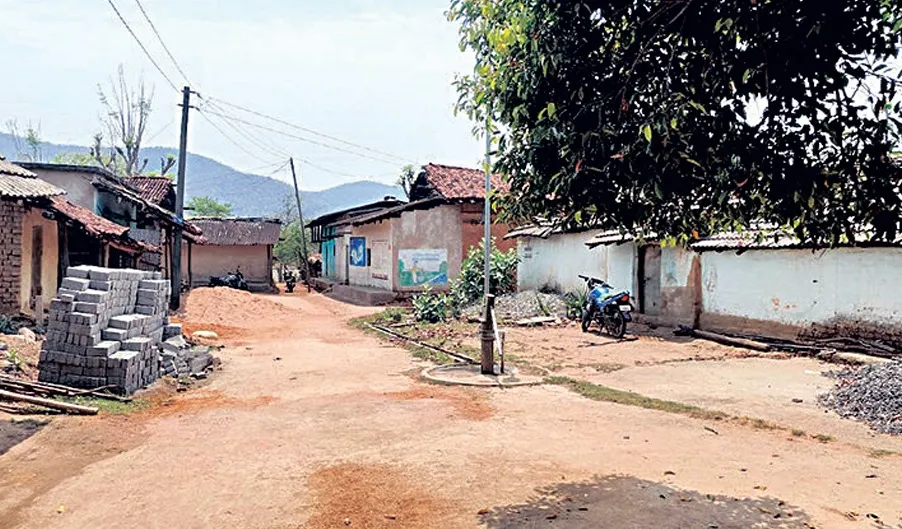
Sambalpur, Aug 20: Once feared across parts of Sambalpur and Sundargarh, former Maoist zonal commander Ganesh Mirdha has now taken a completely different path. After giving up arms, Ganesh has become a forest protection committee watcher, taking responsibility for protecting forests from timber smugglers and illegal logging.
His wife, Sulochana Mirdha, who was also associated with the Maoist organisation, has returned to the mainstream as well. She learned tailoring while in jail and now earns a livelihood through stitching clothes. She also provides free tailoring training to tribal girls, helping them gain skills and become financially independent.
Another former Maoist associate, Dhanu Dehury, has transformed his life by becoming a successful farmer. Former cadre Maoist Amar Mirdha and his wife have also given up violence and started a small hotel business.
Today, more than 20 former Maoists like Ganesh, Sulochana, Dhanu and Amar have chosen peace and development over violence. Once opposed to government schemes, they are now directly participating in development activities and contributing to the transformation of their communities.
From a Maoist Stronghold to a Development Zone
Tampersinga village under Jujumura block of Sambalpur district was once considered a Maoist stronghold. Maoist activities reportedly began making their presence felt in the district on January 21, 2003, when then Jujumura sarpanch Kadar Singh was killed.
In May 2005, Maoists carried out another violent attack in Burda, killing three people. Two months later, four people were killed in Tampersinga, Banjaritikra and Chhamunda areas under Meghpal panchayat.
Following Maoist calls, more than 100 young men and women from Tampersinga and nearby areas reportedly joined the organisation. Police records indicate that 24 people from Tampersinga were directly or indirectly associated with Maoist activities.
However, the situation has changed significantly since former Maoist cadres returned to the mainstream. The once-isolated village is now witnessing development, with improved roads, drinking water facilities and access to basic healthcare.
Tampersinga is home to around 300 people. The village previously lacked proper road connectivity, while the Kisinada-Meghpal route was also difficult to access. Today, paved roads connect different parts of the village.
To ensure access to clean drinking water, 23 solar-powered pumps have been installed in the village. A paved road has also been constructed from Padiabahal to Marang, while work on an asphalt road to Ghusuriabahal has moved forward through the tendering process.
Meghpal sarpanch Mamata Pradhan said the government has focused on healthcare, drinking water and connectivity in former Maoist-affected areas, helping address several basic problems faced by residents.
Local resident Dibakar Patra acknowledged the development but said some challenges remain. He demanded a round-the-clock drinking water supply to every household and the appointment of a doctor at Jujumura Primary Health Centre, with mandatory residential service.
The transformation of Tampersinga reflects how former conflict-affected communities can move towards peace, livelihood opportunities and development when former insurgents return to the mainstream and become partners in the development process.
.webp)