
.webp)


Bhubaneswar, August 31, 2026: The flood situation in Odisha is showing improvement, with the overall situation remaining under control. Relief, rescue, response and restoration measures continue across the affected areas, while the State Government maintains close and continuous monitoring of the situation.
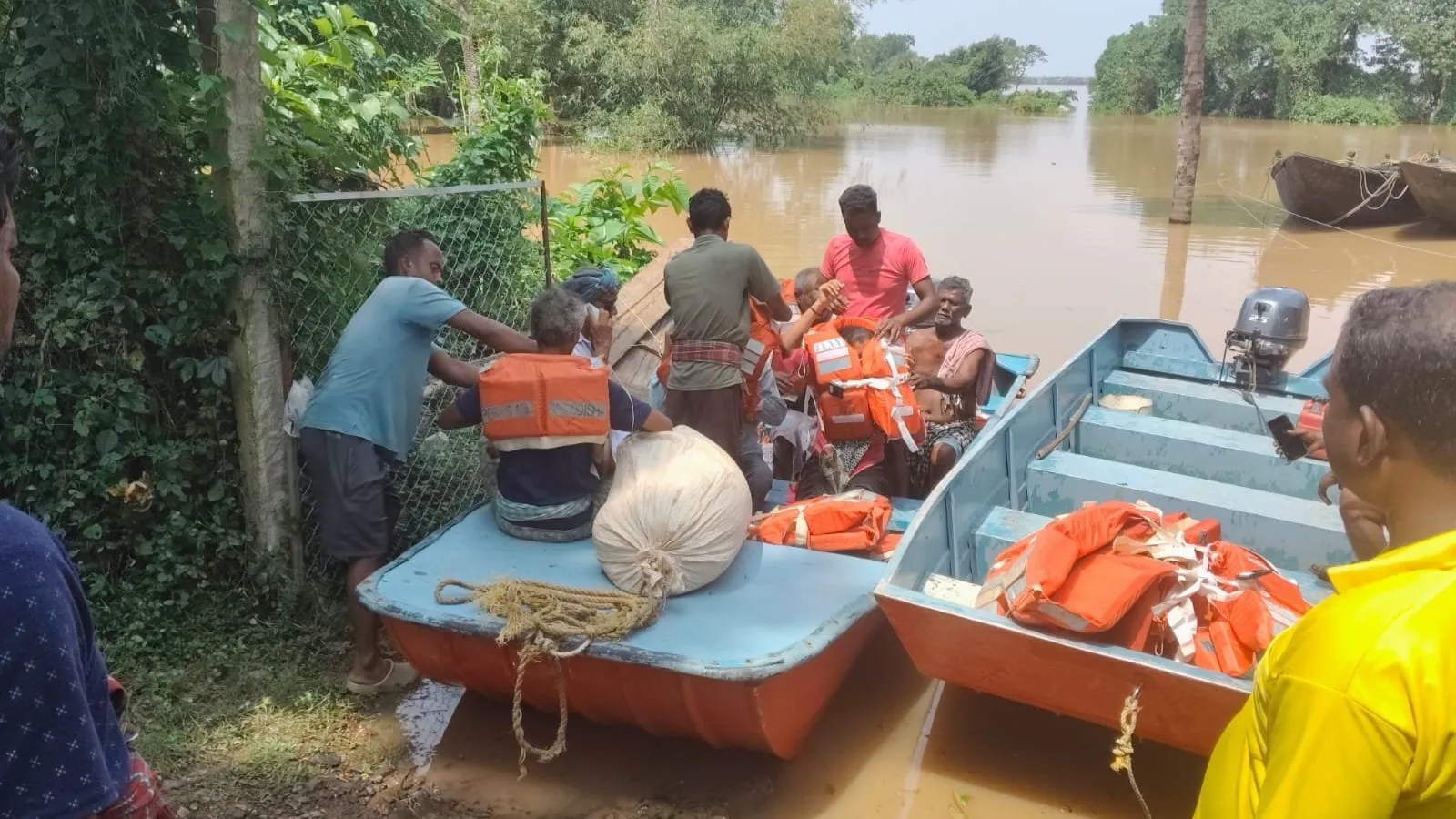
According to a Government release, as per today's reports, in Jajpur district, one block - Dasarathpur - remains affected, with 19 GPs and 62 villages affected. 22 relief camps are operational and covering 8,983 beneficiaries. Other affected districts have shown improvement in conditions and are being closely monitored and provided with all necessary resources.
The relief camps that are operational are being provided with essential facilities, including safe drinking water, sanitation, lighting, medical support and food. Special arrangements continue to be made for vulnerable groups, including children, pregnant women, elderly persons and persons with disabilities. Essential relief materials are also being supplied as per local requirements.
So far, during this phase of flood situation, 6,426.76 quintals of chuda, 648.01 quintals of gur and 1,590.71 MT of cattle feed have been supplied, while 11,337 polythene sheets have been distributed to affected families.
A total of 157 response teams were deployed during the crisis, comprising of 56 ODRAF teams, 9 NDRF teams and 92 Fire & Emergency Services teams, that helped strengthen rescue and emergency responses across districts. As part of today's deployment, 6 ODRAF teams are still in action in Jajpur district.
The State recorded an average rainfall of 24.5 mm during the last 24 hours, with the highest rainfall of 127.2 mm recorded at Barkote Block in Deogarh district. Three blocks recorded rainfall above 100 mm, while 34 blocks and two ULBs recorded rainfall between 50 mm and 100 mm.
At 12 noon on August 31, river water levels across the State continued to be closely monitored. The Mahanadi at Naraj stood at 23.94 m and the Devi at Alipingal at 4.72 m, and the Kushabhadra at Nimapada stood at 3.82 m, all showing a falling trend. The Brahmani at Panposh and Jenapur stood at 174.82 m and 20.30 m, respectively, with slow rising trends, while the Baitarani at Anandpur and Akhuapada stood at 36.71 m and 18.06 m, respectively. The Burhabalanga at N.H. 5 stood at 6.24 m and the Subarnarekha at Jamsholaghat stood at 47.94 m and Rajghat at 8.87 m respectively and the Jalaka at Mathani stood at 6.48 m. The overall river situation continues to remain under close watch, with regular monitoring and necessary preparedness being maintained by the concerned administrations.
The IMD has forecast heavy to very heavy rainfall at isolated places in several districts, with extremely heavy rainfall likely at one or two places in Bargada district under Red Warning. Thunderstorms accompanied by lightning and gusty winds are also likely in several districts. Districts under Orange Warning are as follows Sundaragada, Jharsuguda, Sambalpur, Debagada, Anugola, Kendujhar, Subarnapur, Nuapada, Balangir, Kalahandi. Districts under Yellow Warning are Baleshwar, Bhadrak, Jajpur, Dhenkanal, Mayurbhanj, Boudh, Kandhamala, Nawarangpur, and Rayagada.
Districts under Red, Orange and Yellow warnings have been advised to keep their administrative machinery ready to face any eventuality. People have been advised to closely monitor weather conditions and take safe shelter during thunderstorms to protect themselves from lightning.
The State Emergency Operation Centre continues to maintain a 24×7 watch over the situation in coordination with District Emergency Operation Centres (DEOCs). District administrations have been advised to remain alert to the possibility of localised flooding, waterlogging in low-lying areas, closure of vulnerable roads, landslides and damage to vulnerable structures and standing crops.
The Office of the Special Relief Commissioner continues to coordinate with district administrations and concerned departments to ensure timely response, relief and restoration measures. The State's response mechanism remains fully prepared to address any emerging requirement, safeguard lives and support affected communities.
The overall situation remains under control, with continued focus on relief, response, restoration and the safety and well-being of people across the affected areas.
.webp)