
.webp)


PM Modi inaugurates revolutionary zero-emission hydrogen railway network
Prime Minister Narendra Modi officially launched India’s very first hydrogen-powered train on Friday. This locally built locomotive operates on the 89-kilometer track connecting Jind and Sonipat. Entering the clean mobility sector, India now stands alongside advanced nations like Germany and Japan in running fuel cell railway systems. For a rapidly developing nation, adopting this green technology serves as a critical shift towards long-term energy independence and sustainable transportation.
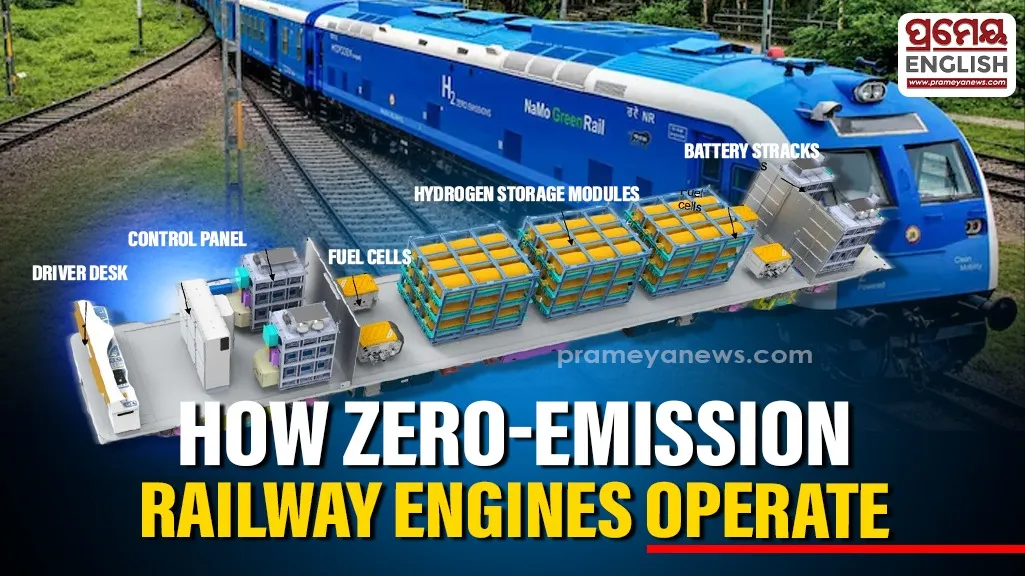
How zero-emission railway engines operate
Conventional diesel engines burn heavily polluting fossil fuels, but this new locomotive generates power entirely internally. High-pressure cylinders safely store compressed hydrogen gas inside two main power cars. This gas flows directly into a powerful 1,200-kilowatt Proton Exchange Membrane Fuel Cell. Inside this specialized unit, platinum catalysts carefully split hydrogen molecules into protons and electrons. Electrons travel through an external circuit to generate electric current, which directly drives the heavy traction motors. Oxygen from outside air then mixes seamlessly with the remaining protons and electrons. This fascinating chemical reaction produces only clean water vapor and warm heat as byproducts, completely eliminating all harmful carbon exhaust fumes.
Advanced power storage and modern safety features
Lithium Iron Phosphate batteries store any excess electricity generated by the advanced fuel cells. These strong batteries supply extra energy when the train accelerates quickly and capture surplus power during braking. This hybrid setup significantly cuts down hydrogen usage and boosts overall mechanical efficiency. Hydrogen naturally holds a huge energy density of 120 megajoules per kilogram, easily beating standard diesel fuel.
Indian Railways built a large hydrogen storage and refueling station at Jind to support this project. This facility safely holds nearly 3,000 kilograms of gas and strictly follows international safety codes. Furthermore, engineers equipped the 10-coach train with smart leak detectors, automated shut-off valves, and sensitive flame sensors to protect up to 2,600 passengers.
Future of green mobility across India
Operating at regular speeds reaching 75 kilometers per hour, this project connects Jind and Sonipat. Railway authorities will carefully analyze real-time data from these runs. Successful implementation could soon inspire similar clean rail corridors across Eastern India, benefiting Odisha by drastically reducing pollution.
.webp)