



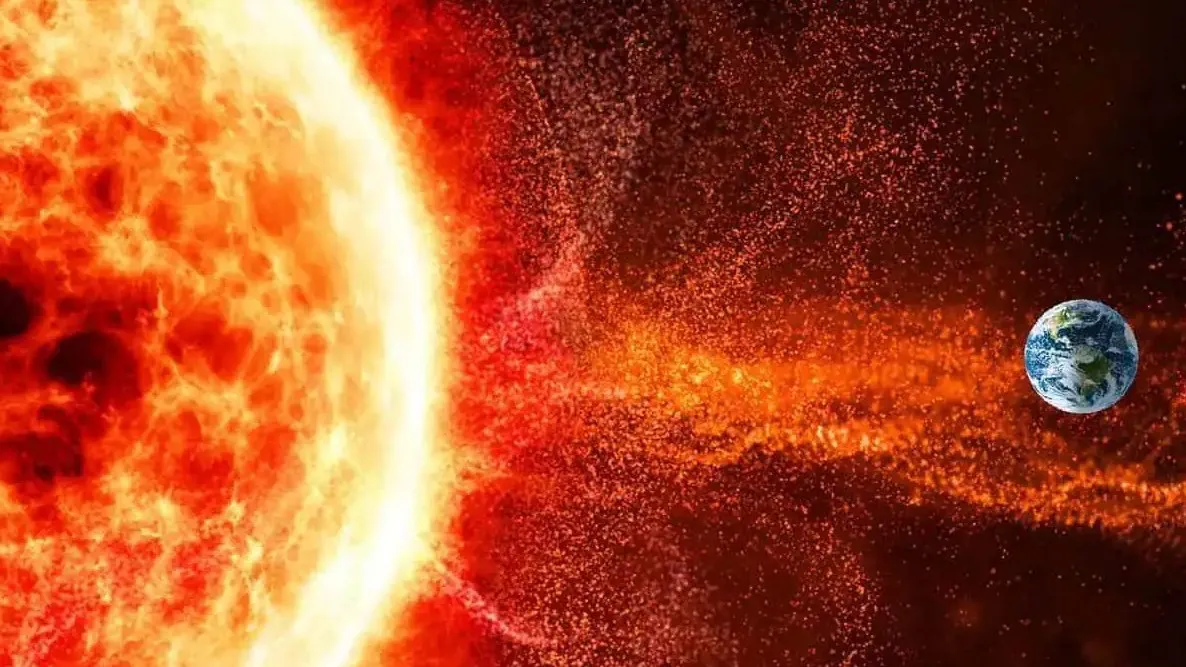
Powerful geomagnetic eruption threatens satellite networks and triggers auroras
Earth faces an intense geomagnetic disturbance today as a fast-moving solar storm collides with our planetary magnetic shield. Originating from a highly volatile region on our sun, this M1.8 class explosion propelled a heavy core filament of ionized plasma directly toward us at 1,400 kilometers per second. NASA and the Space Weather Prediction Center subsequently issued a strong G3 warning, indicating potential disruptions to high-frequency communication systems, orbiting satellites, and surface power grids.
Mechanics of Today's Eruption
Scientists observed the initial flare on June 6, originating from a volatile area named Active Region 4461. Instead of a standard scattered plasma wave, this specific event ejected an intensely packed filament held together by tightly twisted magnetic fields. When those underlying structural fields finally snapped, they released trapped radiation and fired a localized billion-tonne energy cloud outward. Leading space weather expert Tamitha Skov characterised this powerful burst as a textbook core filament eruption. Because the ejected material is uncommonly thick, it carries enough sheer momentum to crash violently against our outer magnetosphere.
Displays Reaching Lower Latitudes
Intense geomagnetic impacts typically force the northern lights far beyond their usual polar boundaries. Current atmospheric projections suggest these brilliant red, green, and purple curtains of light could stretch directly across northern India, central Europe, and southern Australia. While high-altitude northern Indian states anticipate vivid visual auroras, astronomy enthusiasts in regions like Odisha remain extremely vigilant for related low-frequency radio communication disruptions caused by this atmospheric interference. Such widespread and intense global displays occurred quite recently during the extreme May 2024 storms, which temporarily overwhelmed localized power infrastructures worldwide.
Monitoring Approaching Cloud Magnetics
Everything now depends entirely on one critical, currently unmeasured variable known as the Bz component. This precise scientific metric tracks the southward orientation of the incoming plasma cloud's internal magnetic field. If this field aligns directly opposite to Earth's natural defensive grid upon arrival, the resulting magnetic reconnection will allow raw solar energy to pour straight into our upper atmosphere. Satellites stationed roughly 1.5 million kilometers away will only confirm this critical alignment about an hour before actual impact. Should the approaching energy mass merge with leftover debris from earlier solar flares, it could rapidly evolve into a dangerous cannibal coronal mass ejection. This unfortunate combination would easily push the current G3 threat level into a severe G4 category, dramatically expanding both the spectacular visual light shows and potential satellite hardware hazards globally.