

.webp)


By Premananda Panda
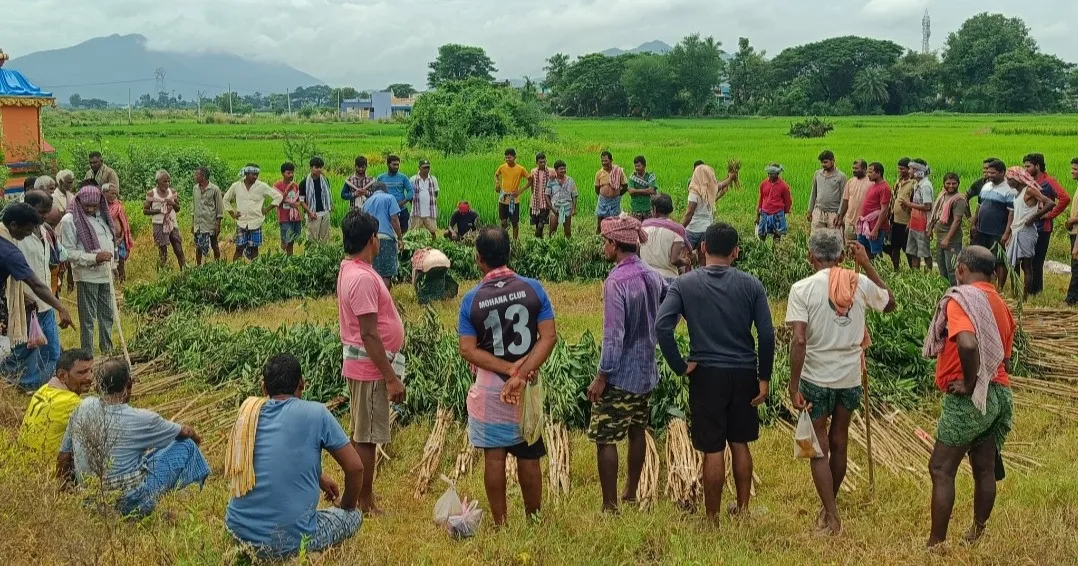
Berhampur: Keeping alive an age-old agricultural tradition rooted in faith and folklore, farmers in Gosani block of Gajapati district and villages on the outskirts of Paralakhemundi performed a unique ritual on Maha Ashtami on Sunday, praying for a bountiful harvest.
The farmers gathered at Gramadevi temples, dedicated to their respective village deities, and worshipped Ankola branches as part of the traditional observance. They offered coconuts, bananas, sweets, flowers, earthen lamps and small cucumbers to the branches before carrying them to their paddy fields and planting them.
The ritual is closely associated with Kalaratri, the intervening night between Maha Saptami and Maha Ashtami. According to local custom, animal sacrifice was traditionally performed before the Gramadevi during this period. Farmers would then collect Ankola branches, dip them in the sacrificial blood and plant them in their agricultural fields as part of the age-old practice.
Over the years, animal sacrifice has largely ceased, reflecting a change in the way the ritual is observed. However, the central practice of worshipping Ankola branches and planting them in paddy fields continues to be followed with devotion by farming communities.
For local farmers, the ritual is more than a religious observance. It represents their enduring connection with the land, the agricultural cycle and the village deity, whom they believe protects their crops and livelihoods. The consecrated Ankola branch is regarded as a symbol of divine blessings, with farmers believing that planting it in their fields will bring prosperity and ensure a healthy, plentiful harvest.
The tradition highlights how religious beliefs and agricultural practices remain closely intertwined in rural Gajapati, where generations continue to preserve customs associated with the land and the hope of a prosperous farming season.
.webp)