


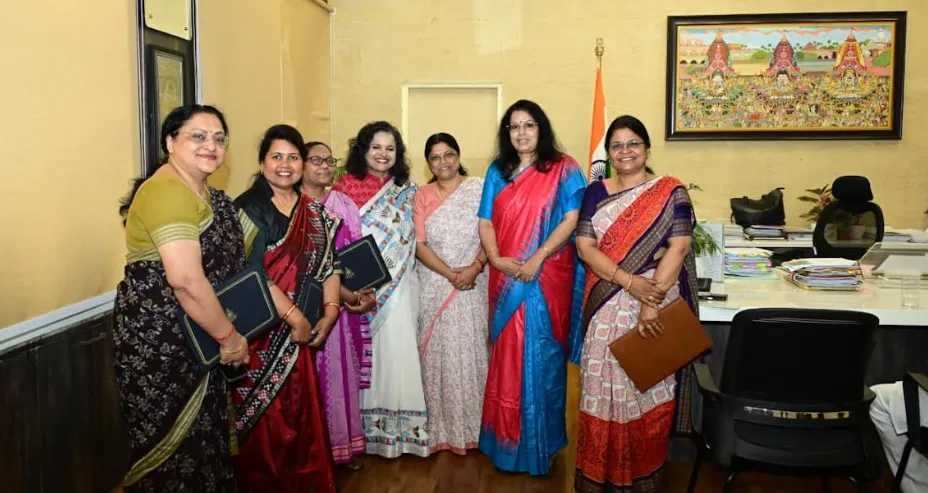
Bhubaneswar, March 17: Six women officers from Odisha, promoted to the Indian Administrative Service (IAS), met Anu Garg, Odisha's Chief Secretary, after completing their post-induction training at the prestigious Lal Bahadur Shastri National Academy of Administration (LBSNAA) in Mussoorie.
The officers—Aradhana Das, Lili Kumari Kulu, Nivedita Mishra, Yugaleshwari Dash, Rega Geetarani Pattnaik, and Swyampra Mahanty—completed their training as part of the 128th Induction Training Program. They returned to Odisha following their comprehensive training, which included skill-building programs, case studies, team-based presentations, and cultural activities, held from February 27 to March 13.
The meeting with the Chief Secretary at Lok Seva Bhavan was a courtesy gesture to celebrate their achievements. The officers also presented a study tour of "Bharat Darshan," which significantly contributed to Odisha's top rankings, receiving appreciation for their dedication and performance.
Notably, Odisha became the first state to send these women officers to LBSNAA, underscoring its commitment to women’s empowerment and increasing female participation in governance. These six women were among 83 officers from various states who underwent the training, with Odisha’s officers selected for this distinguished opportunity.
In addition to their training, the officers had the honor of meeting the President of India, Draupadi Murmu, in New Delhi.
Swyampra Mahanty received accolades for her outstanding work in women’s empowerment, health services, and welfare programs, particularly the ‘Subhadra’ initiative. Aradhana Das was recognized for her contributions to India’s heritage, culture, and societal development. Throughout the cultural programs, the officers highlighted Odisha’s vibrant art and culture, earning high praise for their performances.
This achievement marks a significant milestone in both their personal journeys and the state's progress toward gender equality and leadership in governance.