

.webp)


Molecular Science Behind Odia Rice Pudding
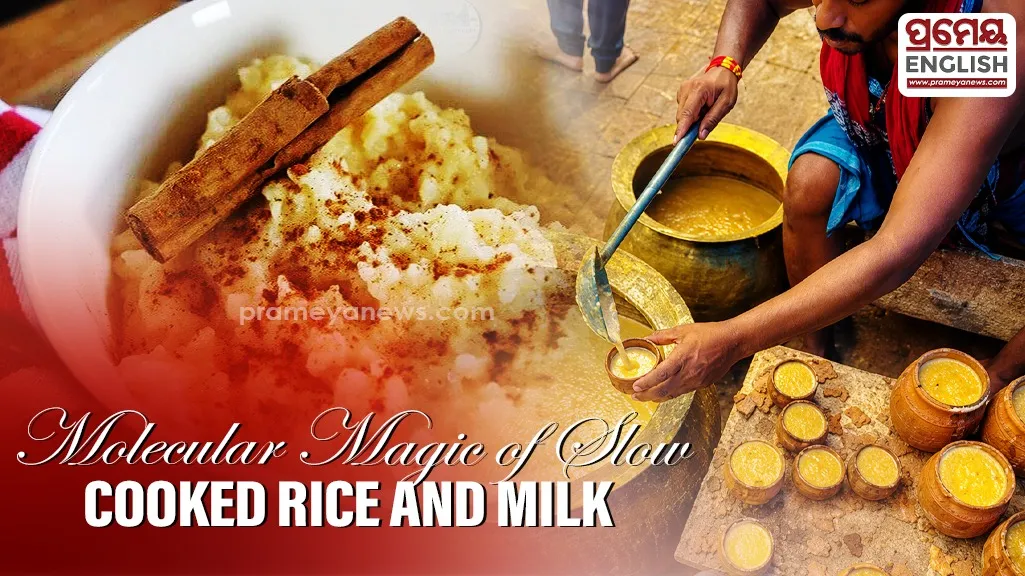
Chaula Khiri represents a brilliant display of food science wrapped inside cultural tradition. We combine one cup of rice with one liter of milk and two cups of sugar to build a complex molecular matrix. Starches from the rice grains provide the structural foundation for this entire dish. Fat from a single tablespoon of ghee or refined oil adds luxurious richness while acting as a flavor carrier. These simple everyday ingredients completely transform into a thick dessert through carefully controlled heat and resting time.
Hydration and Structural Breakdown
Washing the raw rice serves as the crucial very first step before cooking. This simple action removes excess surface starch to prevent unwanted clumping in the pot. We then cook this washed rice in four cups of water alongside salt and exactly two bay leaves. Keeping the gas flame slow while stirring ensures even heat distribution. Heating rice in water triggers a process known as starch gelatinization. Starch granules actively absorb warm water and swell significantly. Heat eventually causes these swollen granules to burst open. They release long amylose molecules into the surrounding liquid. This molecular release creates a thick web that effectively traps moisture. Adding a tiny bit of salt early in the process chemically enhances our tongue's perception of sweetness later.
Thermal Cooking and Flavor Extraction
Milk joins the swollen rice matrix once the initial water cooking phase concludes. We keep the gas flame low until the milk reaches a boil and the rice becomes overcooked. Gentle heating slowly denatures whey proteins in the milk to guarantee a smooth texture. We then introduce the sugar and stir the mixture for five continuous minutes. Sucrose molecules quickly dissolve and bind with free water. This binding action dramatically increases the overall thickness of our dessert. Leaving the mixture to boil for another fifteen minutes concentrates both the sugars and the milk solids. We separately fry twenty grams of cashews and raisins in hot ghee. This frying triggers rapid Maillard browning on the nuts. We mix these aromatic fried elements into our prepared pudding and stir for five more minutes. Removing the pan from the gas allows the temperature to drop. We add half a teaspoon of green cardamom powder only when the mixture becomes notably thick. Adding spices late preserves their delicate volatile oils. Serving the dish cool helps the starch network to fully set and stabilize.

.webp)