



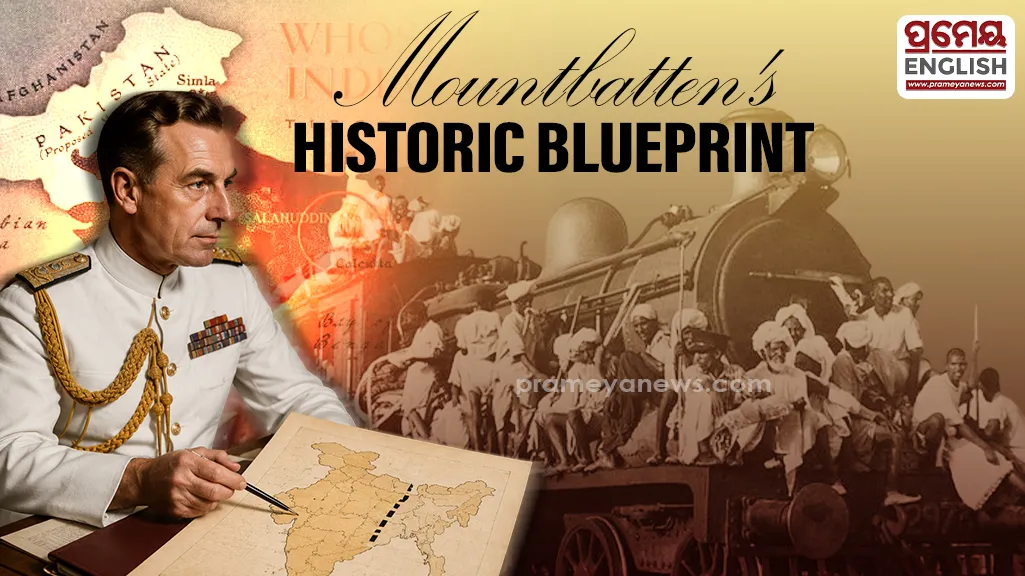
June 3 blueprint fast-tracked independence and divided British India
Lord Louis Mountbatten presented the final roadmap for partitioning British India into two independent nations on June 3, 1947. This strategy, frequently called the 3rd June Plan, aimed to speed up the transfer of power to prevent growing communal clashes across the country. British leaders originally intended to completely exit by June 1948 but advanced the deadline to August 15, 1947.
Dividing the territory created two distinct dominions known as India and Pakistan. Provincial assemblies in Bengal and Punjab gathered to vote on splitting their lands, while public referendums decided the future of the North-West Frontier Province and the Sylhet district of Assam. Meanwhile, more than 560 princely states received options to join either nation or attempt to stay independent. To fix the actual geographic divisions on the map, a boundary commission led by Sir Cyril Radcliffe began drawing the new international borders under extreme time pressure. This fast-tracked process caught millions unprepared as administrators worked day and night to divide public assets, financial reserves, and military units.
Political leaders across the subcontinent met the announcement with mixed emotions. Indian National Congress members accepted the terms reluctantly to avoid a full civil war and protect a strong federal center. The Muslim League welcomed the strategy because it guaranteed their main objective of building a sovereign Pakistan out of the divided areas. However, deep anxiety filled the Sikh community, who faced the painful fracturing of their ancestral lands in Punjab.
For Odisha, which had already secured its identity as a separate linguistic province in 1936, this national split forced the urgent integration of its numerous internal princely states into the emerging Indian democracy. Nationally, the rushed timeline forced over 14 million individuals to flee across newly formed borders, triggering historic displacement. Families left behind ancestral homes overnight, carrying only what they could hold while sectarian violence claimed hundreds of thousands of lives. Decades later, unresolved border disagreements stemming from this 1947 decision continue to define relations between the two neighbors. Today, this historic moment stands as a defining chapter that permanently redrew maps and reshaped millions of lives across Asia forever.