



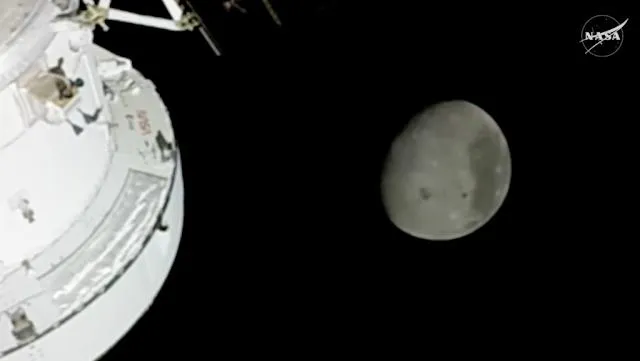
NASA astronauts reach lunar orbit for deep space observations.
Astronauts aboard the Orion spacecraft commenced a critical seven-hour flyby of the Moon today, capturing high-resolution data from the lunar far side. This maneuver represents the closest human proximity to the lunar surface in over five decades, marking a significant leap for the Artemis program.
Commanded by Reid Wiseman, the four-person crew—including Victor Glover, Christina Koch, and Jeremy Hansen—is currently testing life-support systems in the deep space environment. During the transit, the team observed lunar regions never before viewed directly by human eyes, focusing on the rugged terrain of the Southern Pole. These observations help scientists identify potential landing sites for future manned missions.
India’s own lunar ambitions via the Chandrayaan program share significant scientific goals with this mission, particularly in mapping water ice within shadowed lunar craters. While previous robotic probes have mapped the "dark side" of the Moon, the real-time human perspective provided by Artemis II allows for more nuanced geological assessment.
Navigation and Mission Success
Precision remains vital as the Orion capsule utilises lunar gravity to slingshot back toward Earth. Ground controllers in Houston confirmed that all communication arrays functioned perfectly during the period when the Moon blocked direct signals from Earth. This phase proves that current shielding technology can protect crews from cosmic radiation during extended voyages.
Future exploration hinges on the success of these trajectory tests. Success today ensures that NASA stays on track for a surface landing later this decade.
With Agency threads and Image Courtesy: NASA