



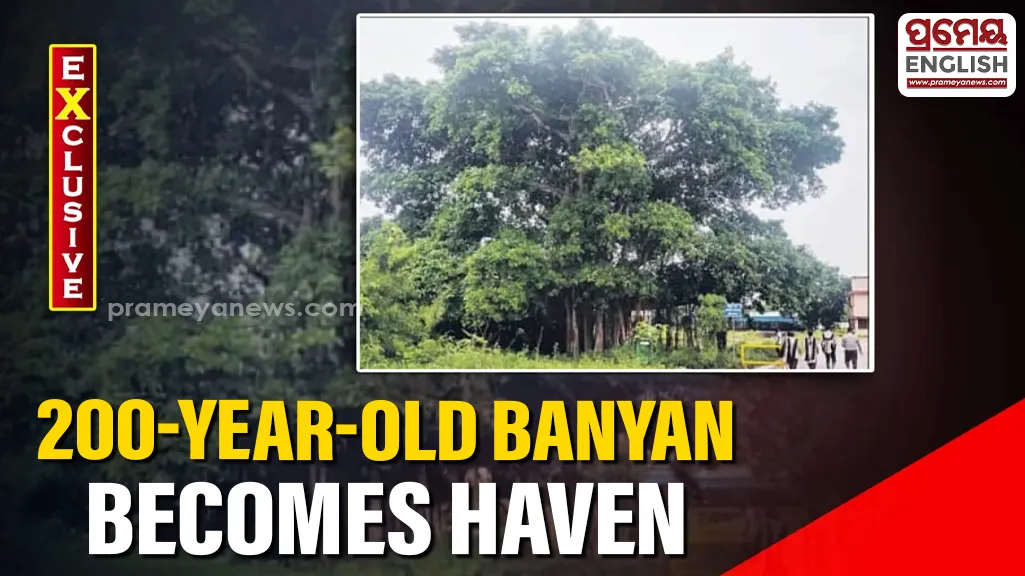
Bhubaneswar, June 9: A majestic banyan tree standing tall inside the campus of Ekamra College in Bhubaneswar has evolved into a thriving ecosystem, providing shelter to numerous species of birds and small animals. Estimated to be more than 200 years old, the giant tree has become a natural attraction and a vital refuge for local wildlife amid the rapid urbanisation of the state capital.
Spread across nearly 200 decimals of land, the sprawling banyan tree covers a vast area with its extensive branches, aerial roots, and dense canopy. The tree, which stands about 14 metres tall with a trunk circumference of nearly 20 feet, is home to a diverse range of creatures. Squirrels can be seen darting across its branches, while mongoose families have made homes among its roots and hollows. The constant chirping of birds, insects, and lizards creates a unique natural ambience around the tree.
Ekamra College, located in BMC Ward No. 67, was established in 1978. Before the college came into existence, the area served as grazing land surrounded by woodland, with the banyan tree already standing as a landmark. Local residents say their fathers and grandfathers had seen the tree in its present form, suggesting that it is well over two centuries old.
The tree continues to attract a variety of bird species, including kites, parrots, owls, cuckoos, and several other native and migratory birds that feed on its fruits and nest within its branches. At night, the calls of owls can often be heard from the tree, while during the day, squirrels and birds keep the surroundings lively.
Despite major infrastructure development on the college campus, including new academic buildings, hostels, and parking facilities, the banyan tree has been carefully preserved. Today, it not only enhances the beauty of the institution but also serves as a safe habitat for wildlife in a city where large banyan trees are becoming increasingly rare.
As Bhubaneswar continues to expand, the centuries-old banyan tree at Ekamra College stands as a living reminder of the city's natural heritage and the importance of preserving urban biodiversity.