
.webp)

By Vikash Kumar Sharma
Cuttack: The legacy of freedom fighter Netaji Subhas Chandra Bose lives on in Cuttack through a 139-year-old Durga Puja tradition founded by his father, Janakinath Bose. The Buxi Bazar Badhei Sahi Durga Puja Samiti, formerly known as Binapani Club, continues to preserve Bengali religious customs, keeping alive a unique link between the Bose family, the city’s cultural heritage and its Bengali community.
Janakinath Bose, the founder President of Binapani Club, laid the foundation of the Durga Puja tradition that continues at BadheiSahi. The association gives the committee a special place in Cuttack’s religious and cultural history. “We are blessed that the first seed of the Durga Puja tradition was sown by such a legendary figure,” said Rana Chatterjee, a senior Committee member, recalling Janakinath Bose’s contribution.
While Subhas Chandra Bose is remembered for his role in India’s freedom struggle, the puja offers another perspective on the family’s connection with Cuttack. Through the annual celebrations, Janakinath Bose’s legacy continues to be remembered within the community.
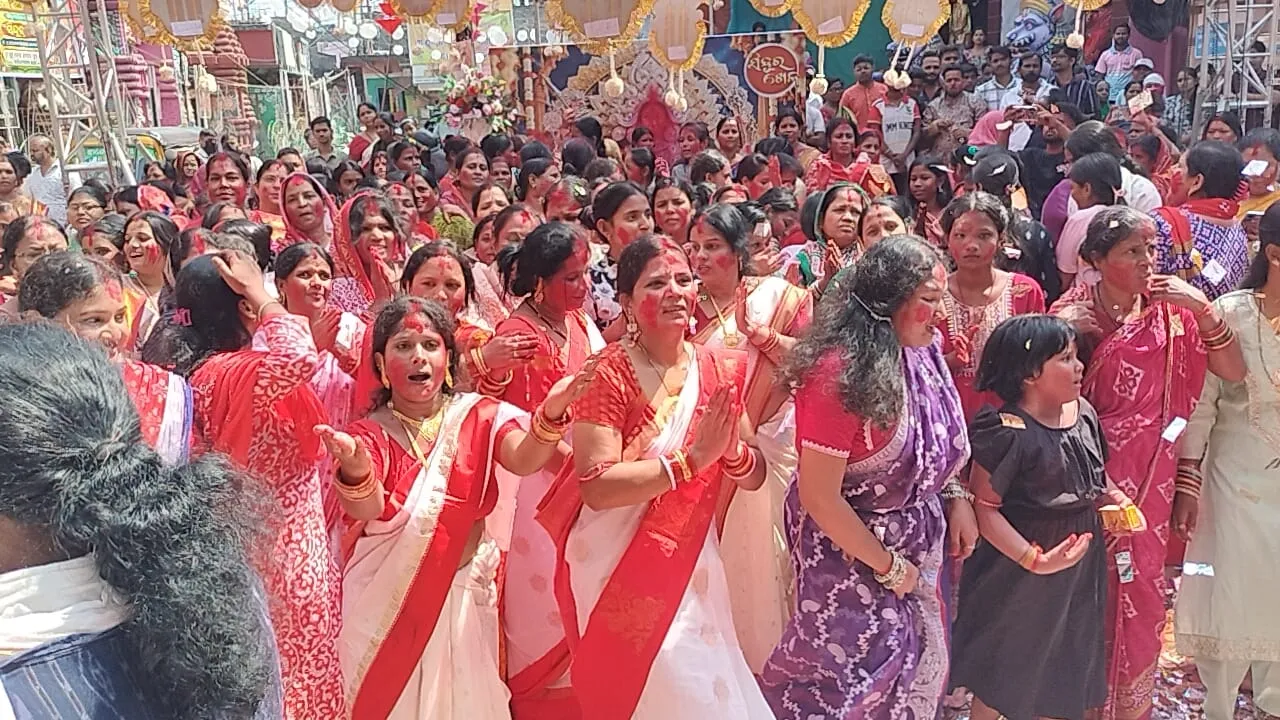
The Committee’s historical significance is reflected in its observance of Bengali traditions. On Vijaya Dashami, around 500 women participated in SindurKhela, smearing vermilion on one another and exchanging ShubhoBijoya greetings before bidding farewell to Goddess Durga.
Also Read: 190 mobile phones, 21 gold chains stolen at Durga Puja Pandals in Bhubaneswar in three days
The Bengali tradition of Durga Puja extends beyond Buxi Bazar. According to SisirSamadar, a member of the Alam Chand Puja Committee, more than 30 puja committees in Cuttack follow Bengali customs. SindurKhela was organised across these committees on this Vijaya Dashami.
Traditional music remains another defining feature of Bengali-style celebrations. Instead of DJs and amplified popular music, the committees retain the sounds of the dhak (traditional drum), conch shells and cymbals during worship and immersion processions. Women also actively participate in the immersion rituals.
Cuttack’s wider Durga Puja history is associated with several historic mandaps. According to local accounts, worship of the Goddess in the city dates back to 1509, when Sri Chaitanya Mahaprabhu is believed to have initiated the rituals during his stay in Cuttack, installing a brass idol with the assistance of Banerjee Brahmin families.
The first community Durga Puja is said to have been organised at Machhua Bazar Sarpa Durga Mandap in 1752 by Kolkata landlord Swarup Chandra Das. At Choudhury Bazar and Sheikh Bazar, Hara Parbati idols were reportedly worshipped in 1875, while Durga Puja began there in 1902.
Against this historical backdrop, the 139-year-old Buxi Bazar tradition represents an enduring chapter in Cuttack’s festival heritage. Its association with Janakinath Bose, along with the continued observance of Bengali rituals, music and community celebrations, demonstrates how cultural traditions survive through successive generations.
As devotees bid farewell to the Goddess amid the sounds of the dhak, conch shells and cymbals, the celebrations reaffirm the community’s commitment to preserving its distinctive Bengali identity and the legacy of those who helped shape it.
.webp)