


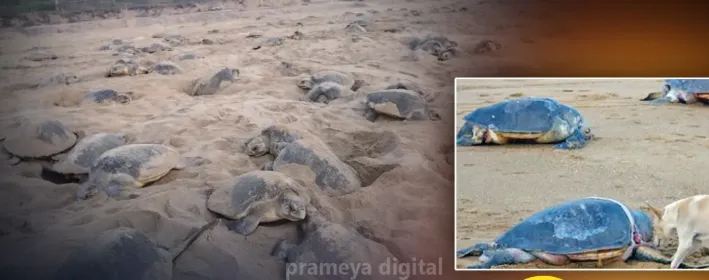
Kendrapara, Mar 17: The "No Fishing Zone" at Gahirmatha has been declared to protect the endangered Olive Ridley turtles during their nesting season from November 1 to May 31. Despite this ban, illegal fishing activities by trawlers continue within the marine sanctuary, resulting in the deaths of a significant number of turtles.
According to reports, nearly 600 Olive Ridley turtles have died this year alone, with many more feared to have perished due to illegal fishing and other human activities. Although the Forest Department has a range office at Gahirmatha, there are allegations of inaction to prevent these deaths and to properly address the bodies of dead turtles after they wash ashore.
Recently, over 100 dead turtles have been found along Gahirmatha's beaches, raising alarm about the ongoing illegal fishing and its consequences on the local turtle population. There are also reports that forest officials attempted to conceal the dead turtles by breaking wooden structures on the beach, while scavengers like dogs and jackals have been seen consuming the carcasses.
Since 1997, the Gahirmatha region has been designated as a marine sanctuary, vital for Olive Ridley turtles’ nesting. Stretching about 70 kilometers from Dhamra to the mouth of the Mahandi River, this area has been crucial for turtle conservation. However, illegal fishing, beach pollution, and environmental disturbances have led to an increase in turtle mortality.
Environmentalists argue that the deaths are also linked to the degradation of the marine environment, including plastic pollution in the ocean, which harms marine life. Additionally, factors like sandbars and other oceanic obstacles are believed to contribute to the death toll.
The Forest Department has reported 584 dead turtles since November, but they maintain that illegal fishing is not the primary cause of the fatalities. Instead, environmental stress from long oceanic journeys and changing weather patterns are said to be significant factors. However, the authorities are taking action to combat illegal fishing, enforcing the fishing ban strictly, and initiating legal action against violators. As of now, 409 Olive Ridley turtles have participated in the nesting process this year.
The Forest Department has urged for immediate and comprehensive measures to protect the Olive Ridley turtles, emphasizing the need to uphold the integrity of the marine sanctuary and eliminate illegal fishing practices that threaten the species' survival.