
.webp)

Bhubaneswar, August 20: At first glance, a mosquito may appear insignificant—tiny enough to be brushed away with a hand. Yet this small insect can carry diseases capable of disrupting families, affecting livelihoods and, in severe cases, claiming lives.
Malaria, dengue, chikungunya, Japanese encephalitis and filariasis are among the major diseases transmitted by mosquitoes. In western Odisha, changing environmental conditions, climate variability, stagnant water, inadequate drainage and poor sanitation are creating favourable breeding grounds for mosquitoes, raising concerns among health professionals and communities alike.
As the region continues to face the burden of mosquito-borne diseases, there is growing demand for a dedicated Department of Entomology at Veer Surendra Sai Institute of Medical Sciences and Research (VIMSAR), Burla, to strengthen research into mosquito species, breeding patterns and disease transmission.
A day that changed malaria history
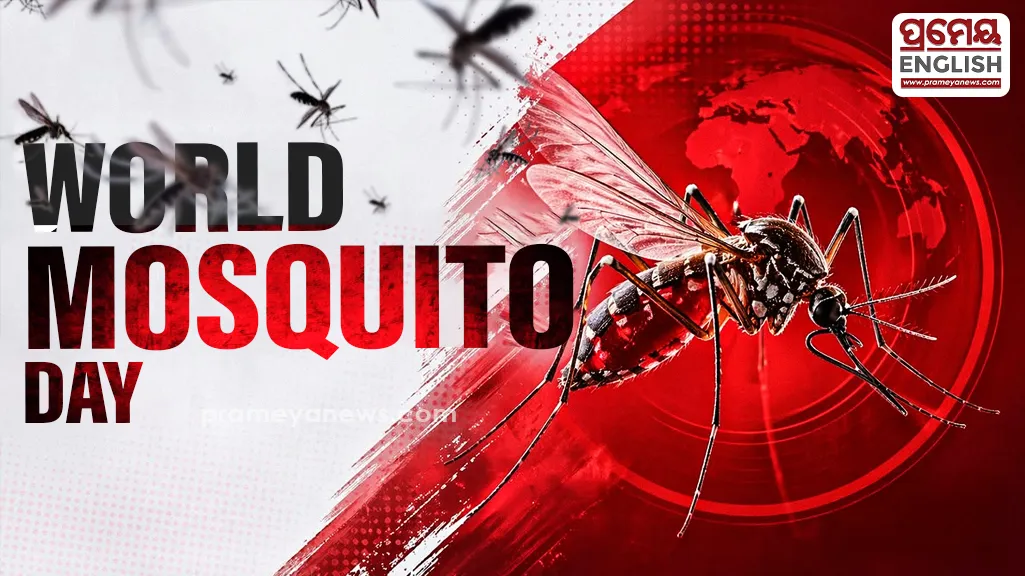
August 20 is observed as World Mosquito Day, marking a landmark moment in the history of medical science.
On August 20, 1897, Sir Ronald Ross, a British Army medical officer working in India, discovered malaria parasites in the body of a female Anopheles mosquito. His work provided the first scientific evidence that mosquitoes transmit malaria. The discovery earned Ross the Nobel Prize in Physiology or Medicine in 1902.
More than a century later, mosquitoes remain a major public-health challenge.
Western Odisha: A fertile ground for mosquitoes
Western Odisha's geography and rural economy create conditions in which mosquitoes can thrive. Large tracts of land are devoted to paddy and other crops, while livestock are commonly kept close to homes in many villages.
Agricultural fields, drains, stagnant water, ponds and livestock-rearing areas can create humid environments suitable for mosquito breeding. During periods of rainfall and water stagnation, the problem can become even more pronounced.
Several districts—including Kalahandi, Balangir, Bargarh, Sambalpur, Jharsuguda, Sundargarh, Boudh and Nuapada—have historically carried a significant malaria burden.
Odisha has implemented several programmes to control malaria, including the DAMaN initiative in tribal areas, which achieved notable results. However, malaria has continued to pose a challenge.
Statewide malaria cases stood at 41,973 in 2023, rising sharply to 68,693 in 2024 before reaching 62,137 in 2025.
The numbers underline a difficult reality: despite years of intervention, malaria remains a serious public-health concern.
Dengue joins the challenge
Malaria is not the only threat.
Dengue, transmitted primarily by Aedes mosquitoes, has increasingly become a regular health concern in Odisha. The state recorded 7,063 dengue cases in 2022, with the figure rising to 9,892 in 2025.
Japanese encephalitis has also emerged as a concern at different times. Southern Odisha witnessed a major outbreak in 2018. The inclusion of the JE vaccine in the childhood immunisation programme has subsequently helped reduce its impact considerably.
Filariasis presents a different kind of challenge. Unlike an acute illness that may pass after treatment, lymphatic filariasis can leave people with long-term swelling, disability and social and economic difficulties.
In 2024, more than 67,000 people with lymphoedema in Odisha received self-care support, while over 3,600 hydrocele surgeries were performed.
Why VIMSAR matters
For western Odisha, VIMSAR, Burla, is more than a major referral hospital. It is a centre of medical education, research and specialised healthcare, attracting patients from across the region and neighbouring areas.
Among the patients arriving at VIMSAR are those suffering from malaria, dengue and other infectious diseases.
This makes the institution particularly well placed to study the region's mosquito-borne disease landscape.
A dedicated Department of Entomology could undertake systematic studies of mosquito populations across western Odisha—identifying species, mapping breeding sites, studying their life cycles and examining their role in disease transmission.
Such research could also help answer an important local question: Which mosquitoes are most prevalent in western Odisha, where are they breeding, and which diseases do they pose the greatest risk of transmitting?
Scientific data of this kind could help health authorities design more targeted and effective mosquito-control strategies.
Prevention begins at home
Medical treatment alone cannot solve the mosquito problem. Prevention remains the first line of defence.
Simple measures can make a significant difference: preventing stagnant water around homes, keeping water-storage containers covered, cleaning coolers at least once a week and removing old tyres, cans and other containers that can collect rainwater.
Better drainage and sanitation systems are equally important.
Individuals can also reduce their risk by using mosquito nets, wearing full-sleeved clothing and using mosquito repellents where appropriate. Anyone developing a fever should seek medical attention promptly rather than dismissing it as an ordinary seasonal illness.
A community fight against a tiny enemy
The battle against mosquitoes cannot be left entirely to government agencies and health departments. It begins in individual homes and extends to neighbourhoods, villages and entire communities.
“Mosquitoes may be small, but the danger they pose is very significant,” said Professor Smita Kumari Panda, Professor and Head of the Department of Community Medicine at VIMSAR.
Her message captures the larger challenge. Mosquito control is not simply about killing adult mosquitoes. It is about identifying and destroying their breeding grounds, understanding their behaviour and building scientific evidence to guide public-health interventions.
A mosquito may be tiny. The diseases it carries are not.
For western Odisha, therefore, the call for stronger mosquito surveillance, community participation and a dedicated entomology research facility at VIMSAR is not merely an academic demand—it could become an important part of the region's long-term public-health strategy.
.webp)