

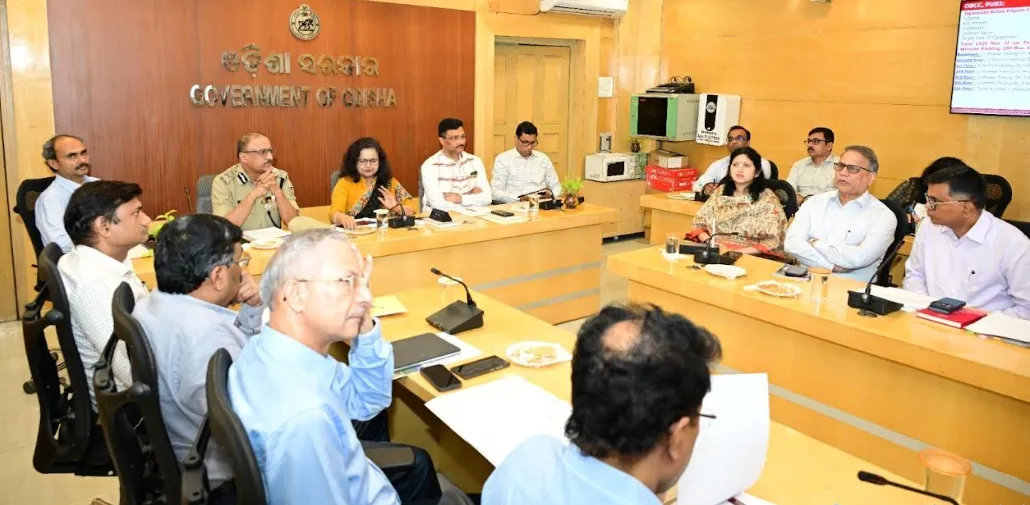
Bhubaneswar, March 17: Odisha's Chief Secretary, Anu Garg, chaired the third preparatory meeting for the upcoming Lord Jagannath Rath Yatra, which is scheduled to take place in June. The meeting, held at Lokseva Bhavan, focused on reviewing previous decisions and assessing the effectiveness of the preparations.
During the meeting, Chief Secretary Garg provided key directions and guidance on various aspects of the Yatra's preparation. A significant point of discussion was the establishment of temporary medical facilities at eight prominent locations along both sides of the Puri Bada Danda. Health specialists will be stationed at these sites to manage any medical emergencies. Ambulance services will be provided along one side of the procession route to maintain smooth traffic flow, with additional ambulances stationed at hospitals and the IDCH in Puri.
The meeting also reviewed sanitation and toilet facilities within the city. A special committee has been created to oversee water drainage management during potential heavy rainfall. Other discussed topics included improvements to city roads and infrastructure, electrification work, and special arrangements for passenger transport from the railway station. Further attention was given to crowd management, traffic control, Rathkath facilities, parking arrangements, and the coordination of the Command and Control Center.
To keep the public informed, the Department of Information & Public Relations will install 70 LED TVs at strategic locations to provide real-time updates on the Yatra. Several ongoing infrastructure projects, including road works by the National Highway Authority, will be completed ahead of the event.
Additional discussions covered mobile network improvements, fire services, emergency medical provisions, volunteer training, and the preparation of temporary shelters for police personnel and volunteers. CCTV arrangements were also reviewed for enhanced security.
Padhi, the Chief Administrator of Shri Mandir, provided updates on the Rathkath and related preparations. Notably, the chariot construction will commence on March 27, coinciding with Shri Ram Navami, with other related activities following suit.
The first preparatory meeting for the Rath Yatra was held on January 13, followed by a second meeting on February 17.
The meeting was attended by several senior officials, including Hemanta Sharma, Additional Chief Secretary of the Home, Information & Public Relations Department; Arabinda Padhy, Secretary of the Revenue and Disaster Management Department; Police DG W.B. Khurania; DG Fire Services Sudhansu Shadangi; Usha Padhi, Additional Chief Secretary of the Home & Urban Development Department; and representatives from various departments such as Health, IT, Legal, Commerce & Transport, and Railway.
Puri District Collector Divyajyoti Parida and SP Prateek Singh also provided updates on the progress in their respective areas.