
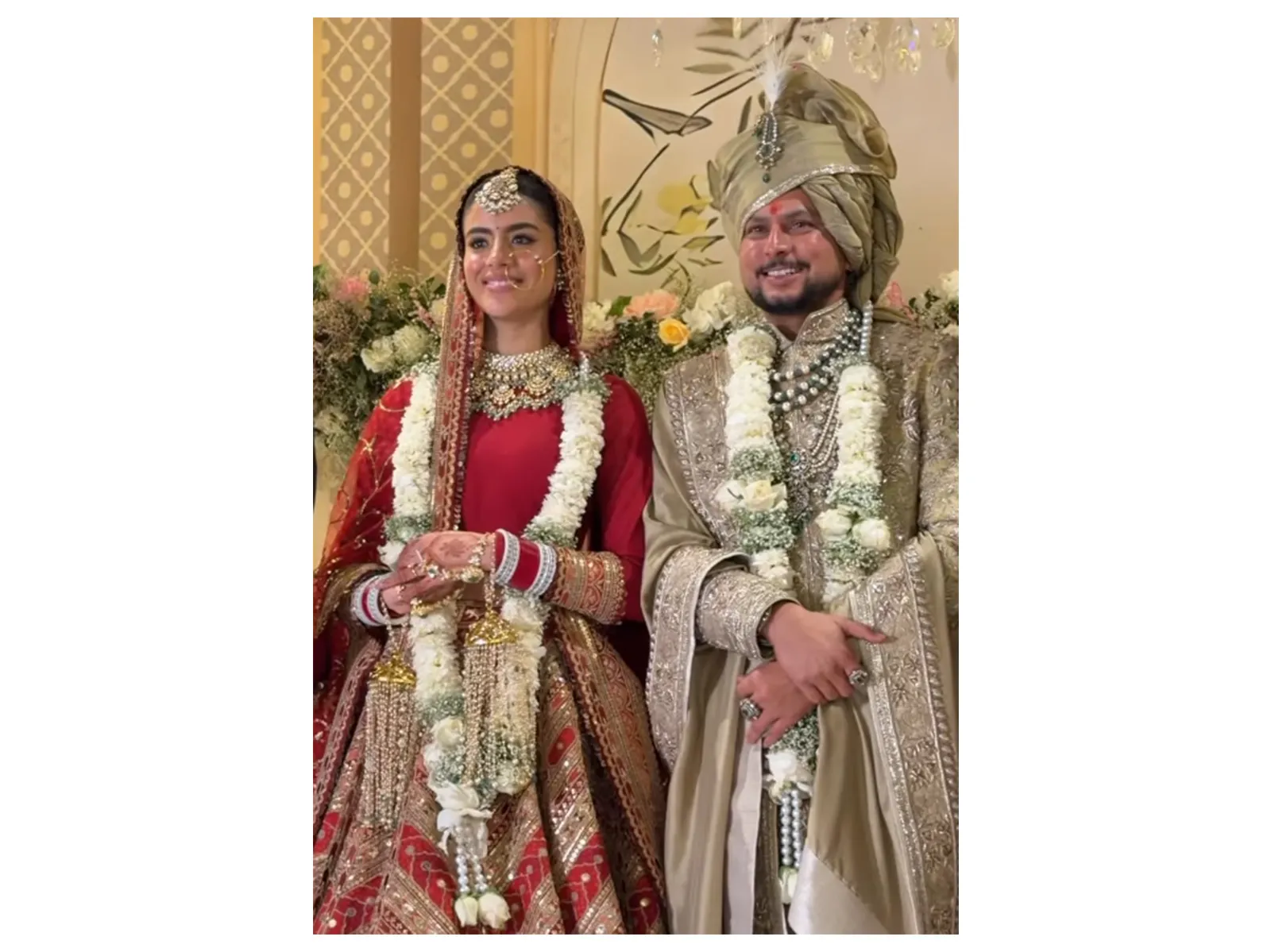
Mussoorie, March 15: India's premier chinaman bowler, Kuldeep Yadav, tied the knot with his childhood friend and longtime partner, Vanshika, in a regal ceremony on Saturday, March 14, 2026.
The wedding took place at Welcomhotel The Savoy in Mussoorie, Uttarakhand, shortly after India successfully defended their ICC Men's T20 World Cup title in February.
The couple, who officially got engaged on June 4, 2025, in Lucknow, chose a royal-themed celebration set against the picturesque Himalayan backdrop.
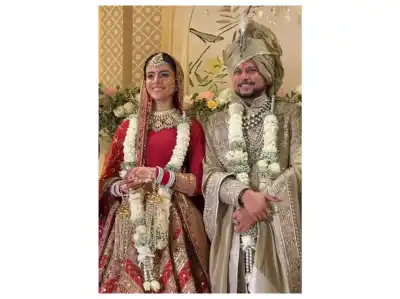
The venue was adorned in elegant ivory and gold decor. For the main ceremony, the couple opted for a classic North Indian aesthetic.
Kuldeep donned a beige-hued golden sherwani with intricate tonal embroidery, complemented by a matching turban featuring a jewelled kalgi. He completed his ensemble with multiple strands of pearl kantha necklaces.
Vanshika chose a timeless red lehenga heavily detailed with golden zari work, paired with a traditional red chooda and an ornate golden maang teeka.
Kuldeep's close friend and Indian cricketer Yuzvendra Chahal took to his Instagram handle to congratulate the couple.
The celebrations began on Friday night with a soulful Sangeet ceremony. Renowned singer Bismil delivered a mesmerising Sufi performance, captivating the high-profile guest list.
Viral clips from the event showed former cricketers Suresh Raina and Mohammad Kaif, alongside current teammates Yuzvendra Chahal and Rinku Singh, enjoying the musical evening.
Pre-wedding rituals also showcased the couple's vibrant style, with Kuldeep seen in a pink sherwani and Vanshika in a bright pink saree during the Haldi ceremony. (ANI)