.webp)

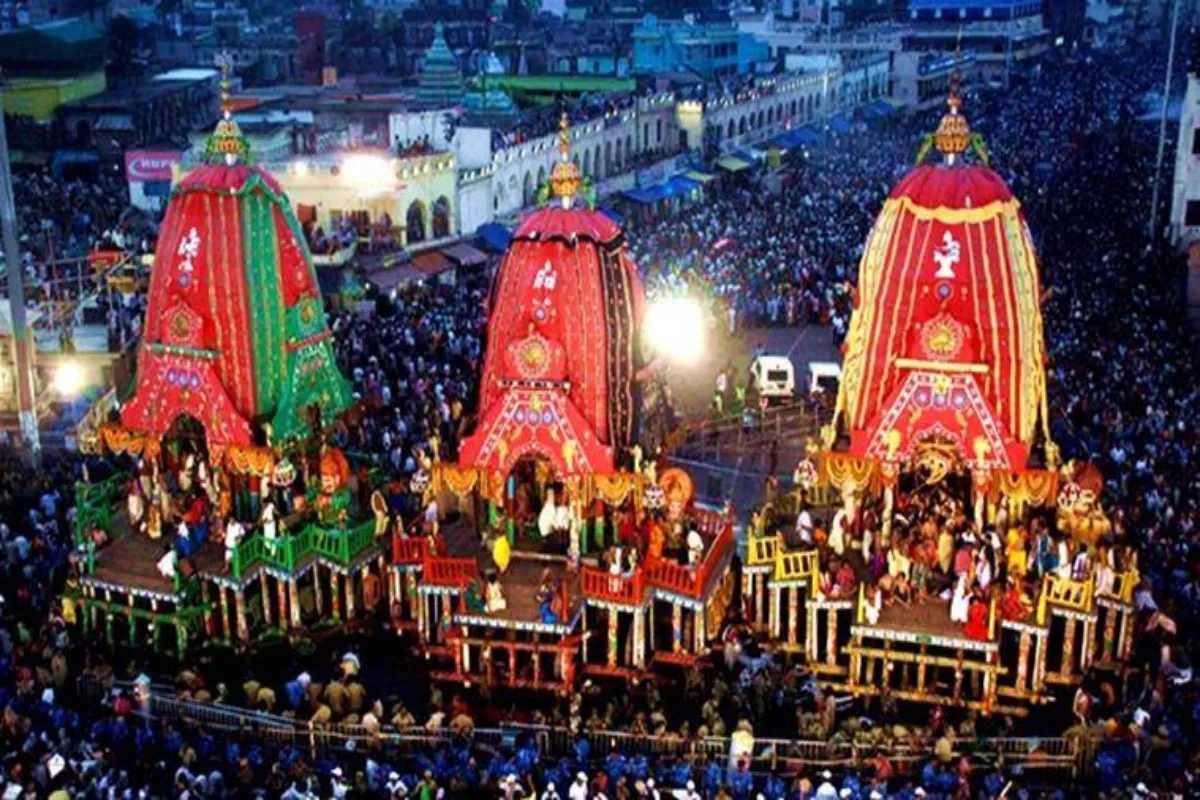
Puri, Jul 16: While the three majestic chariots of the Jagannath Rath Yatra are instantly recognizable, each carries a name steeped in mythology and spiritual symbolism. Among them, the chariot of Goddess Subhadra-known as Darpadalana or Devadalana—has intrigued devotees and scholars alike for centuries.
Unlike Nandighosha, the chariot of Lord Jagannath, and Taladhwaja, the chariot of Lord Balabhadra, Subhadra's chariot is associated with multiple names and legends rooted in ancient Hindu scriptures and Odisha's Jagannath tradition.
Why 'Darpadalana' or 'Devadalana'?
In Jagannath culture, Goddess Subhadra is not worshipped merely as the sister of Lord Jagannath and Lord Balabhadra. She is revered as Adi Shakti, Yogamaya, and Mahamaya—the embodiment of divine feminine power. Her chariot's name reflects this spiritual significance.
According to Odia literary traditions, particularly Balaram Das's Dandi Ramayana, the name Devadalana traces its origin to the story of Meghanada (Indrajit) from the Ramayana.
The legend says Meghanada performed a sacred yajna under the blessings of Goddess Nikumbhila, seeking invincibility. At the end of the ritual, a divine chariot emerged from the sacrificial fire, and Brahma had granted that anyone fighting from this chariot would remain unconquered. Riding this celestial chariot, Meghanada defeated Indra and several other gods, earning the title Indrajit.
Although the original Valmiki Ramayana does not name the chariot, Balaram Das referred to it as Devadalana in his Odia retelling. Some later interpretations also adopted the same name.
A Different Interpretation
Interestingly, the Shree Jagannath Temple Record of Rights (Swatwalipi) does not describe Subhadra's chariot as Devadalana. Instead, it simply refers to it as the "Devi Ratha" or "Subhadra's Chariot."
Scholars believe the name "Devi Ratha" is linked to the blessings of Goddess Nikumbhila rather than the defeat of the gods. Thus, according to this interpretation, the name symbolizes divine grace instead of victory over celestial beings.
The Padmadhwaja Connection
The Sarala Mahabharata offers yet another fascinating legend, referring to Subhadra's chariot as Padmadhwaja (Lotus Banner).
The epic narrates that when the Sun God lost his chariot after it was swallowed by the demon Arkasura, Lord Brahma performed a yajna from which eight divine chariots emerged, including Nandighosha, Taladhwaja, and Padmadhwaja.
The Sun God first rode Padmadhwaja before reclaiming his original chariot. Later, Brahma gifted the same celestial chariot to Arjuna, who used it during the Mahabharata war. Since Arjuna later became associated with Goddess Subhadra, the chariot eventually came to be linked with her.
The Chariot's Unique Features
Today, Goddess Subhadra's chariot is popularly known by both Darpadalana and Devadalana, while Padmadhwaja remains another traditional name found in ancient Odia literature.
Some key features of the chariot include:
Height: 44 feet 6 inches
Wood used: 711 pieces
Number of wheels: 12
Canopy colours: Black and red
Charioteer: Arjuna (some traditions mention Devadatta or Satyaki)
Horses: Four red horses named Rochika, Mochika, Jita, and Aparajita (alternate traditions mention Prajna, Anujna, Ghora, and Aghora)
Banner deity: Tripura Sundari
Chariot platform: Kampalya
For centuries, Odisha's sacred texts and temple traditions have used both Darpadalana and Devadalana interchangeably to refer to Goddess Subhadra's chariot. Regardless of the name, the chariot remains a powerful symbol of divine feminine energy, protection, humility, and the triumph of spiritual strength, making it one of the most revered elements of the world-famous Jagannath Rath Yatra.
.webp)