
.webp)

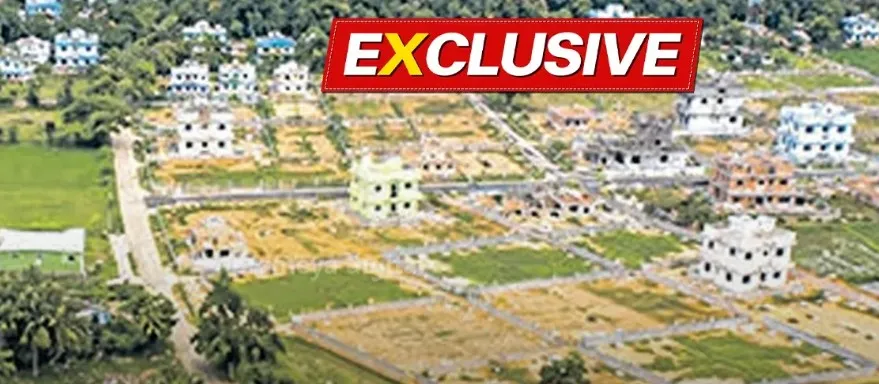
Bhuabneswar, july 24: Once, Paikarapur was a quiet village on the outskirts of Bhubaneswar with just seven hamlets. The word “building” meant little more than three small houses. Today, the same village has four apartment complexes, several new colonies and a rapidly changing skyline. Within a decade, the village has transformed beyond recognition.
The fields where farmers once grew crops, the orchards that provided shade, and the open spaces where children played have slowly disappeared. Paikarapur is no longer just a village near the capital city — it is emerging as a new urban settlement.
This is not an isolated story. It is a reflection of a larger transformation taking place across Odisha, where expanding cities are steadily absorbing surrounding villages and reshaping their landscapes, lifestyles and identities.
Cities expanding, villages disappearing
Bhubaneswar is spreading in every direction. Villages and rural pockets around Baranga, Phulnakhara, Pipili, Jatani, Khordha, Balianta and Balipatna are gradually becoming part of the capital region’s urban ecosystem.
The Bhubaneswar Development Authority (BDA), which began with 115 revenue villages, now covers hundreds more. With new development plans, several additional villages are expected to come under its jurisdiction. Similarly, the Bhubaneswar Municipal Corporation has already absorbed areas such as Patrapada, Sijuwa, Andharua and Pahala, with more villages likely to follow.
The expansion has created a new urban landscape — apartment towers, housing projects, commercial complexes and highways replacing farmland and village commons.
From farmland to factory zones
The story is similar in other parts of Odisha.
In Jajpur’s Kalinganagar industrial belt, entire villages have disappeared into the expanding industrial zone. Thousands of acres of agricultural land have given way to factories, roads and new settlements. Many displaced villagers, who once depended on farming, now work as contractual labourers in industries that replaced their fields.
Industrial growth has not only transformed villages but also altered the natural landscape. Hills, streams and green spaces have vanished in several areas under the pressure of rapid development.
Angul, another industrial hub, has witnessed a similar transformation. Villages around the city have merged with expanding urban settlements, while new townships have emerged on the outskirts. Land prices have increased sharply as demand for residential and commercial spaces continues to rise.
Rourkela and Balasore too have expanded beyond their earlier boundaries, bringing several surrounding villages into the urban fold.
A state moving towards urbanisation
From Bhubaneswar and Cuttack to Berhampur, Sambalpur, Puri, Paradip, Rourkela, Angul and Jharsuguda, Odisha’s cities are growing rapidly.
Villages that were once identified by their panchayats are now seeking urban status. The creation of new NACs and municipalities reflects this changing reality.
Over the past two decades, hundreds of villages have merged with urban areas. Odisha’s urban population has steadily increased, rising from around 17% in the 2011 Census to nearly 22% now. The state has set an ambitious target of achieving 40% urbanisation by 2036.
The cost of urban growth
While urbanisation brings better roads, infrastructure, jobs and modern facilities, it has also changed the social fabric of villages.
Agricultural land is shrinking as real estate expands. Plotting businesses have spread rapidly, with builders turning towards rural areas around cities. Rising land prices have created sudden wealth for many families who sell ancestral property.
For some, land sales have brought new houses, expensive vehicles and a more comfortable lifestyle. But the transition has also weakened traditional occupations and community practices.
Potters, blacksmiths, carpenters and other traditional artisans are becoming increasingly rare. Younger generations are moving away from ancestral professions, attracted by the opportunities and lifestyle associated with cities.
The disappearing soul of villages
The physical transformation of villages is only one part of the story. The deeper change is cultural.
Traditional community spaces like Bhagabata Tungis are losing their importance. Folk traditions, village performances and age-old celebrations no longer carry the same enthusiasm among younger generations.
Art forms such as Pala, Dasakathia, puppet shows, horse dances and Chhau are struggling to survive in the face of changing interests and modern entertainment.
Village markets and small shops are also finding it difficult to compete with malls, shopping complexes and online marketplaces.
The village is changing — not just in appearance, but in spirit.
As concrete structures replace fields and highways replace village paths, Odisha stands at a crucial crossroads. Urbanisation may be inevitable, but the challenge lies in ensuring that development does not erase the memories, traditions and identity that make villages unique.
.webp)