
.webp)

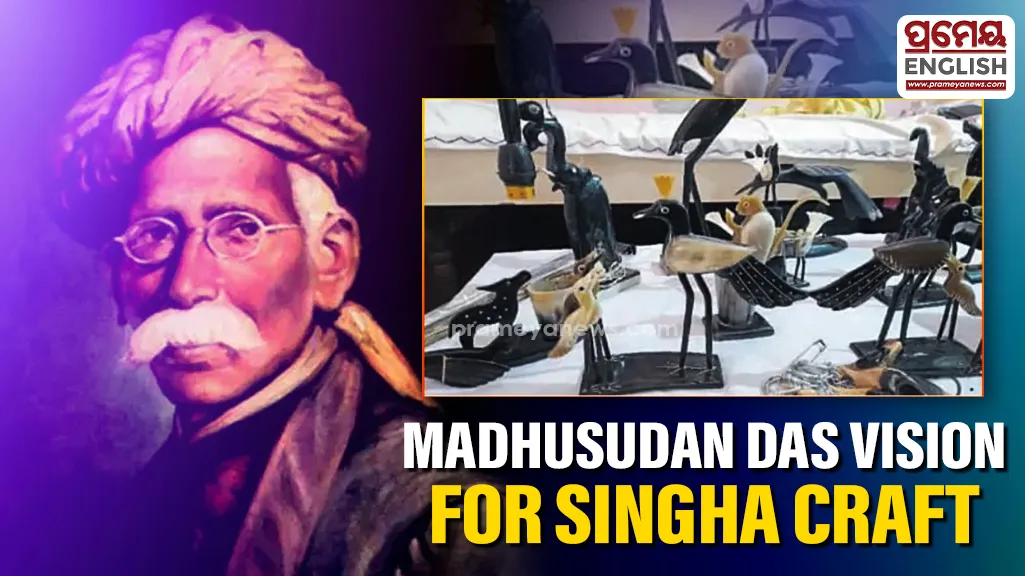
Bhubaneswar, Ap 28: Madhusudan Das, the revered architect of independent Odisha, envisioned a self-reliant Odia community rooted in local craftsmanship. Over 130 years ago, he laid the foundations for Odisha’s artistic and industrial future through Utkal Art Works, aiming to elevate the traditional singha (buffalo horn) craft. The workshop produced decorative boxes, jewelry, and other artistic items, trained around 150 artisans, and financially supported them, helping Cuttack’s singha craft reach major cities like Kolkata, Mumbai, and even London.
Born and based in Cuttack, Madhusudan Das established Utkal Art Works long before the famed leather and shoe industry “Utkal Tannery” came into existence in 1905. He collaborated with renowned silver artisan Tarakasi and offered training in singha work, ivory, and wooden handicrafts. By setting up workshops in his own home, he helped artisans refine their skills according to modern tastes, while ensuring they received daily wages and financial support for raw materials, regardless of whether their products were sold.
Madhusudan Das’s initiatives significantly contributed to organizing and commercializing Cuttack’s traditional singha craft. His efforts brought international recognition; during a trip to London, he organized exhibitions that showcased Odisha’s handicrafts. In 1902, Sir John Woodburn, the Lieutenant Governor of Bengal, visited the Cuttack workshop and was deeply impressed by the artisans’ skill.
Unfortunately, due to financial challenges, Utkal Art Works could not sustain itself long-term. Today, while singha craft from Odisha’s Parlakhemundi is recognized worldwide, the Cuttack-based tradition has vanished. Only a single family in Mangalabag preserves a fragment of this heritage, with no trace of the original workshop remaining. Despite references in books and sketches, authorities are unaware of the location or condition of these historic workshops.
The disappearance of Utkal Art Works is a poignant reminder of Madhusudan Das’s dream, which once symbolized Odisha’s creative and industrial potential. Its loss highlights the importance of preserving the state’s cultural and artisanal legacy for future generations.
.webp)