.webp)



New Delhi, Nov 26:The United States is questioning India's manufacturing support programmes, including the Production Linked Incentive (PLI) scheme and ‘Make in India’ initiative, even as Washington uses tariffs to protect its own industries, Ajay Srivastava, founder of the Global Trade Research Initiative (GTRI), has said.
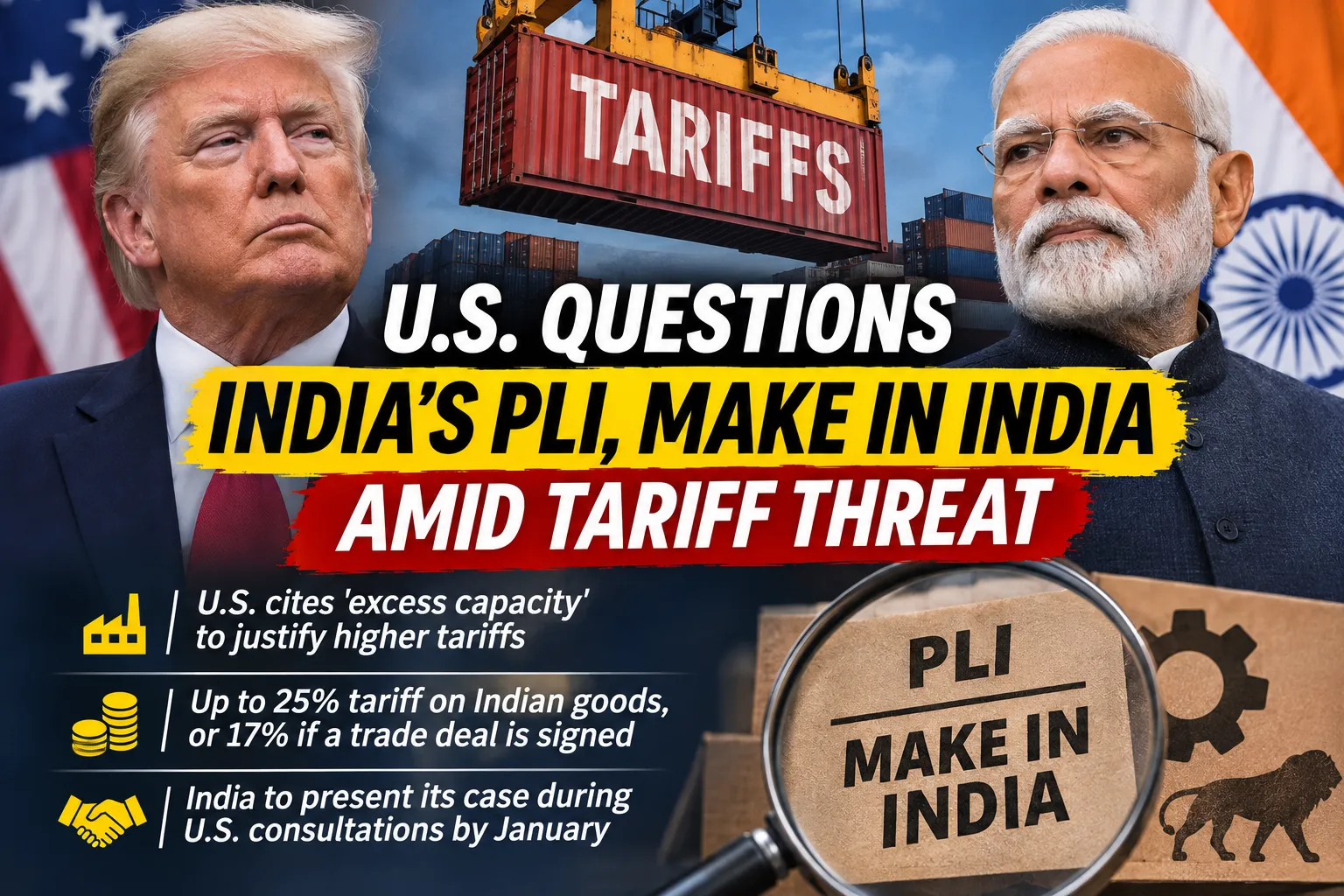
His remarks come after the Office of the US Trade Representative (USTR) proposed tariffs of up to 25 per cent on Indian goods, citing concerns over structural excess capacity. The proposed rate could be reduced to 17 per cent if a trade agreement is reached, according to the report.
Srivastava argued that Washington views India's efforts to strengthen domestic manufacturing as a threat to American producers, since greater local production could reduce demand for US-made goods.
Also read: US proposes up to 25% tariff on Indian goods, may lower it to 17% if trade agreement is reached
He said the USTR had listed several Indian government schemes as measures that allegedly hurt American manufacturers. However, he questioned why policies aimed at supporting domestic industries were being treated as a trade concern.
The GTRI founder also pointed out that the US action was not limited to India. The USTR has included 16 economies, among them the European Union and China, in its scrutiny of manufacturing policies and excess capacity.
Citing Cambodia as another example, Srivastava said the US had also raised concerns about the country's economic policies, labour laws and efforts to promote manufacturing.
He described the excess-capacity argument as a pretext for pushing countries into trade agreements that favour Washington. According to him, the proposed tariffs are being used as leverage to secure trade deals on terms favourable to the US.
On India's response, Srivastava urged the government to use the consultation period to challenge the allegations and explain why the country does not have structural excess capacity. He said the consultation window would remain open until January.
He also called on India to highlight subsidies provided by the US government to its agricultural sector, arguing that Washington should examine its own support measures before questioning those of other countries.
The proposed tariffs could affect around 50-52 per cent of India's exports to the US, particularly labour-intensive sectors such as textiles, garments, leather goods, handicrafts and some auto components, Srivastava said.
However, around 40 per cent of India's exports, including diesel, petrol, generic medicines and iPhone-type products, would continue to enter the US at zero tariffs, he added.
Steel, aluminium and copper, along with certain auto components, would remain subject to tariffs of 50 per cent, higher than the proposed 25 per cent rate. These products account for around 7-8 per cent of India's exports to the US, according to Srivastava.
The proposed measures could therefore put pressure on several Indian export sectors, even as New Delhi prepares to contest Washington's allegations during the consultation process. (With ANI inputs)
.webp)