

New Delhi, March 18: Prime Minister Narendra Modi on Wednesday thanked the retiring Rajya Sabha MPs for their contributions, wishing them well for their future political endeavours as he emphasised that there was "no full stop in politics".
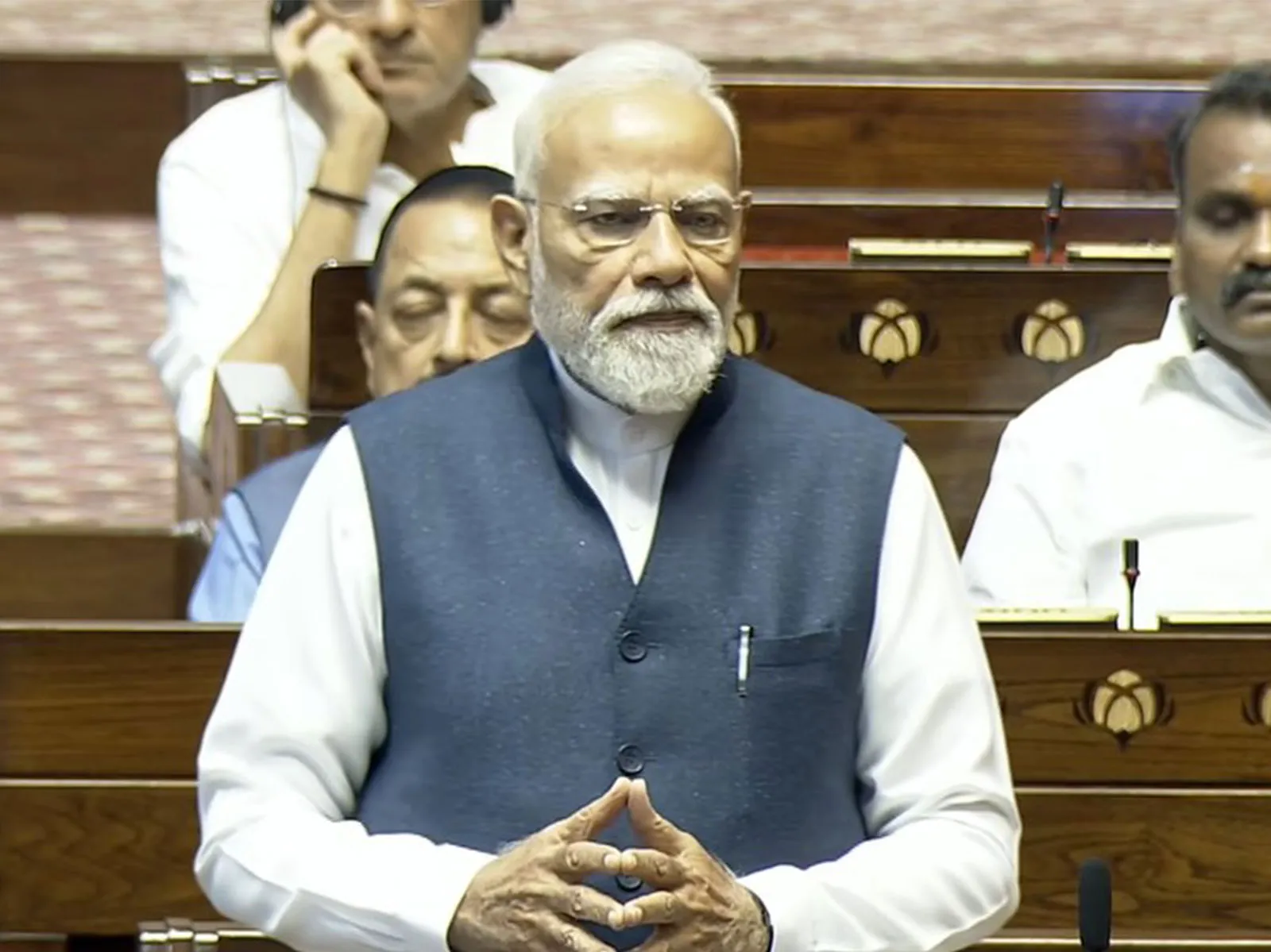
Addressing the upper house of Parliament during the ongoing budget session, PM Modi said that every member plays a unique role, adding that their experience and contribution will always be remembered.
"Discussions take place on various issues in the House, and every member plays a unique role in them. In moments like these, a common sense of respect is generated, rising above party lines. To the leaders who are leaving the House after the end of their tenure, I want to say that there is no full stop in politics. The future is waiting for you. Your experience and contribution will always be remembered," the PM said.
He further urged the newly elected MPs to learn from the veterans like HD Deve Gowda, Mallikarjun Kharge, Sharad Pawar, who he said have spent more than half of their lives in parliamentary work.
"HD Deve Gowda ji, Mallikarjun Kharge ji, and Sharad Pawar ji are senior leaders who have spent more than half of their lives in parliamentary work. Newly elected MPs should learn from them," he said.
Speaking about Ramdas Athawale, whose term is coming to an end, PM Modi said, "Sometimes we used to hear that there is a lot of opportunity for humour and satire in the House. These days, perhaps it is gradually decreasing. But our Athawale is evergreen. Athawale is leaving, but no one here will feel any shortcoming. I am fully confident that he will continue to serve satire and humour in abundance."
Ramdas Athawale, Priyanka Chaturvedi, Tiruchi Siva, Amarendra Dhari Singh, and Abhishek Manu Singhvi are among the 37 retiring MPs.
This comes after biennial Rajya Sabha elections were held to fill 37 seats across 10 states. Out of the 37 seats, 26 candidates were elected unopposed.
In Bihar, abstention from Congress and RJD MLAs helped the NDA secure all five seats in the Rajya Sabha from Bihar. NDA had fielded Bihar Chief Minister Nitish Kumar, BJP National President Nitin Nabin, RLM Chief Upendra Kushwaha, JD(U) MP Ram Nath Thakur and BJP's Shivesh Ram.
BJP candidates Manmohan Samal and Sujeet Kumar, BJD's Santrupt Mishra and independent candidate Dilip Ray will move to the Rajya Sabha from Odisha.
BJP's Sanjay Bhatia and Congress Karmeveer Singh Bauddh will move to Haryana. (ANI)