

.webp)
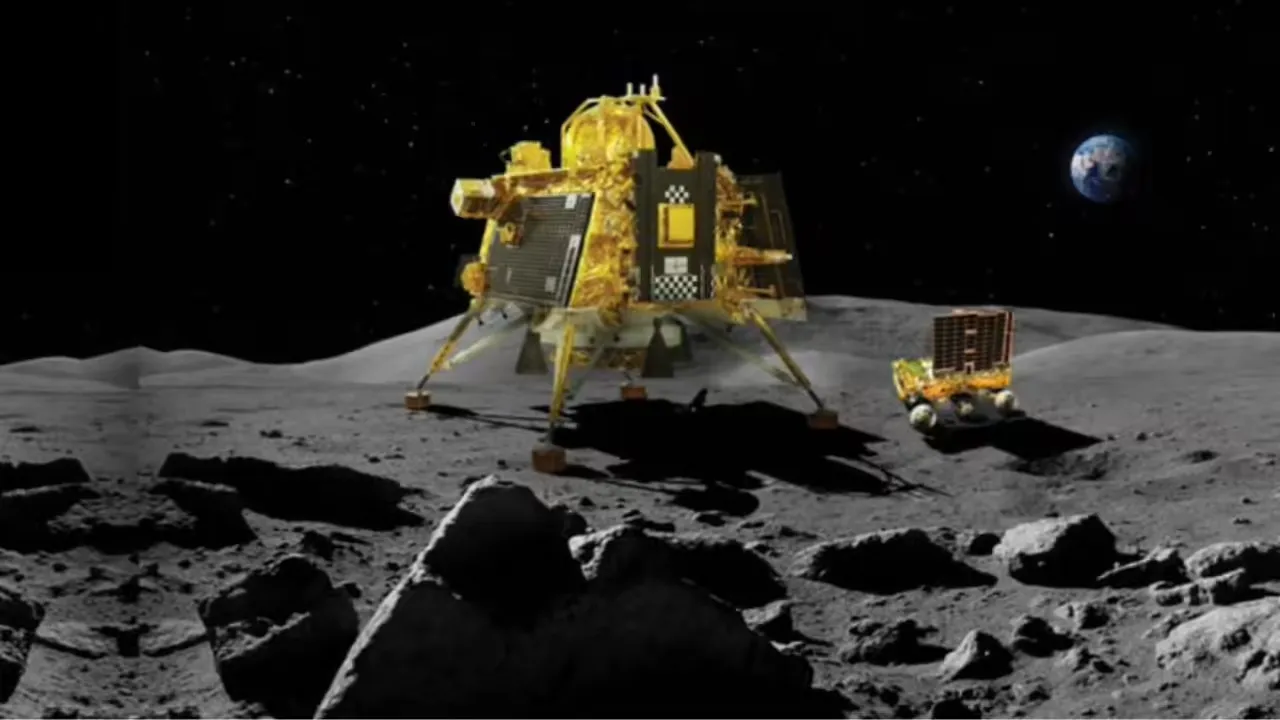
Data collected during an unplanned thrust maneuver by India’s robotic explorer has altered global understanding of lunar soil density at the southern polar region. Fresh scientific analysis indicates that the top layer of material at Shiv Shakti Point is far more structurally diverse than initial assessments suggested. This critical revelation occurred after the mechanical explorer executed a brief, forty-centimeter leap using residual propellant just before the onset of the freezing lunar night. By executing this spontaneous test, engineers successfully cleared away the uppermost layer of loose, powdery dust, giving onboard sensors a clear view of pristine, previously unexposed planetary crust.
Engineers at the Indian Space Research Organisation turned what was originally a demonstration of liftoff capabilities into a major geological investigation. When the propulsion systems fired, the exhaust gases stripped away approximately three centimeters of highly porous, fluffy surface dust. This exposed a much denser, highly compacted sub-surface layer possessing drastically different thermal and mechanical attributes. The onboard thermal probe, known as Chandra's Surface Thermophysical Experiment, immediately began recording the physical properties of this freshly exposed terrain, documenting an abrupt geological transition just centimeters beneath the surface.
Historically, India's deep-space program has specialized in maximizing scientific output from minimal resources, a philosophy that previously led to the detection of lunar water molecules by Chandrayaan-1 in 2008. This latest operational success continues that tradition of cost-effective innovation, establishing a precedent for extracting high-value discoveries from nominal engineering experiments.
Data showing localized physical variation across short distances carries deep implications for international space agencies planning long-term infrastructure. Planetary researchers now know that the south polar terrain is highly heterogeneous, meaning building conditions change dramatically across a span of just a few meters. Broad structural assumptions regarding structural support, anchor stability, and excavation safety must now be thoroughly revised.
Engineers designing heavy infrastructure for upcoming international operations will need to account for this newly discovered layering. Because the region is widely believed to contain volatile water ice within permanently dark craters, knowing the exact physical nature of the surrounding soil is crucial for heavy equipment operations.
Observations during the multi-hour lunar twilight provided a rare look at how the local environment sheds solar heat. Sensors monitored the cooling rate of the dense sub-surface material as sunlight faded, gathering a highly specialized dataset regarding thermal retention. This information provides invaluable metrics for organizations attempting to design survival systems capable of withstanding the prolonged, hyper-cold lunar nights. What started as an engineering exercise to burn off excess fuel has ultimately delivered one of the most comprehensive planetary soil profiles ever recorded from the polar latitudes.
.webp)