


New Delhi, March 14: A bill was introduced in Lok Sabha on Friday that seeks to give a precise definition for proper and definitive identification and protection of transgender persons to whom the benefits of Transgender Persons (Protection of Rights) Act, 2019 must reach.
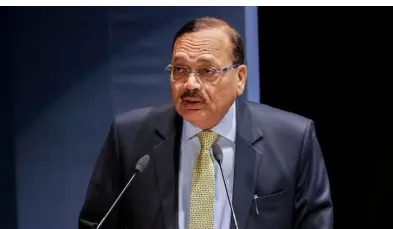
Social and Justice Minister Virendra Kumar today introduced the Transgender Persons (Protection of Rights) Amendment Bill, 2026, in the Lok Sabha. The Bill aims to amend the Transgender Persons (Protection of Rights) Act, 2019.
According to the statement of the objects and reasons for the bill, it is the legislative policy to recognise a specific class of transgender persons, who face social issues and to create a regime for their protection. The legislative policy was and is intended to protect only those who face severe social exclusion due to biological reasons for no fault of their own and no choice of their own.
The statement said that over the course of time, during the implementation of this enactment, certain doubts and difficulties have arisen and are likely to arise with regard to the expanse of the definition of transgender persons and how the identification of such persons is to be done under the existing definition. This is critical to the implementation of the Act, as it is of prime importance that the enactment is utilised and works towards only those who are in actual need of such protection, it said.
The intent, object and purpose of the Act is and was to protect a specified class of persons socially and culturally known as transgender people who face societal discrimination of an extreme and oppressive nature.
"The purpose was and is not to protect each and every class of persons with various gender identities, selfperceived sex/gender identities or gender fluidities. The existing vague definition of the expression "transgender person" not only makes it impossible to identify the genuine oppressed persons to whom the benefits of the Act are intended to reach, but also makes the operation and enforcement of several provisions under penal, civil and personal laws unworkable. Such a vague and broad definition of the expression 'transgender person' is found to have created complex issues in the working of statutory enactments, as this vague definition is not compatible with several statutory provisions of several enactments enacted both by the Parliament and the State Legislatures," the statement said.
"It is therefore imperative to give a precise definition for proper and definitive identification and protection of transgender persons to whom the benefits of the Act must reach. The protection and benefits that are provided under the Act are vast in nature, and therefore, care has to be taken that such identification cannot be extended on the basis of any acquirable characteristics or personal choice or claimed self-perceived identity of an individual," it added.
The Bill also contains provisions for designation of an authority and provisions providing the relevant authorities the option to seek expert advice if required. The Bill also seeks to empower the transgender persons to make consequential changes in official documents. The Bill further provides for a change in the constitution of the National Council ensuring that persons, not below the rank of Director, form a part of the same as representatives of the State Governments and Union territories administration, by rotation, one each from North, South, East, West and North-East regions.
The Transgender Persons (Protection of Rights) Act, 2019 prohibits discrimination and abuse against transgender persons but its penal provision under section 18, as presently enacted, addresses only general wrongs and criminal offences and prescribes a maximum of two years' imprisonment. It does not adequately address offences of exceptional gravity that have been documented in practice.
The abduction of adults and children, the infliction of reversible or irreversible bodily harm upon them through mutilation, emasculation, castration, hormone therapies / other similar therapies or chemical alteration, and their forced assumption of a transgender identity, frequently as a prelude to economic and other forms of exploitation including but not limited to begging or servitude has been observed.
While scattered provisions of the Bharatiya Nyaya Sanhita, 2023 and the Juvenile Justice (Care and Protection of Children) Act, 2015 address individual 7 elements of these wrongs, no existing provision treats this conjunction of abduction, permanent bodily harm, and forced identity as a unified penal approach.
The Bill also proposes to substitute section 18 of the principal Act, creating specific offences with graded punishments that reflect the gravity of the harm, the irreversibility of the injury, and the particular vulnerability of child victims. (ANI)