
.webp)


Bhubaneswar, September 6: Former Chief Election Commissioner SY Quraishi has extended strong support to the ongoing ‘Gen Z’ student protests, describing their concerns over examination paper leaks as “very genuine” and welcoming the government’s decision to accept their demands.
“The Gen Z protest is a matter of concern, and the issues they have raised are very genuine. These children work for years to prepare for their examinations, and then suddenly they find a paper has been leaked and the examination is cancelled,” Quraishi told ANI.
He said simply asking students to appear for another examination overlooks the immense pressure and hardship they face.
“Very easily we say, ‘Okay, we’ll have another exam.’ It’s not easy, and it has led to many suicides,” he said.
Quraishi said the protesters’ central demand for reforms in the education and examination system was legitimate.
“They are only demanding streamlining of the educational system, which is a very valid demand, and I’m sure the government is considering it,” he said.
He also expressed satisfaction with the developments so far, saying the protesters appeared to have achieved what they had been seeking.
“So far, the government has accepted the demands, and they seem to be satisfied, and they should be. Because what they wanted, they have achieved, so that’s a good thing,” Quraishi said.
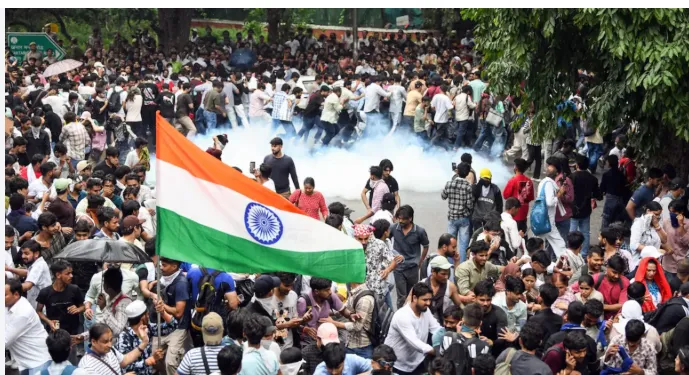
The youth-led protests erupted following allegations of a National Eligibility cum Entrance Test (NEET) paper leak. Spearheaded by the Cockroach Janta Party (CJP), the movement began in June 2026 and quickly spread across several parts of the country, drawing support from student groups including the All India Students’ Association (AISA).
Social activist Sonam Wangchuk later joined the agitation through a hunger strike, demanding the resignation of then Education Minister Dharmendra Pradhan. His participation further intensified the movement.
The protests escalated on July 20 when a large group of demonstrators marched towards Parliament, leading to clashes with police. Authorities used tear gas and other measures to disperse the protesters.
The agitation culminated in Pradhan’s resignation on July 25, following which Pralhad Joshi was assigned the education portfolio.
Meanwhile, student protests also erupted in Jharkhand over alleged irregularities in recruitment examinations conducted by the Jharkhand Public Service Commission (JPSC) and Jharkhand Staff Selection Commission (JSSC).
Following several rounds of discussions with a government delegation, Chief Minister Hemant Soren announced the cancellation of several examinations, including the JPSC exams.
However, the Jharkhand High Court subsequently stayed the state government’s decision to cancel the 11th and 13th JPSC examinations and the appointments arising from them. The order provided relief to newly appointed officers who had challenged the government’s decision.
In Bihar, students launched a separate agitation over alleged irregularities in the Bihar Public Service Commission (BPSC) examination. Following the protests, State Education Minister Mithilesh Tiwari announced that upcoming BPSC examinations had been put on hold to establish a unified single-test pattern, following intervention from the state leadership.
Meanwhile, the CJP has also turned its attention to the condition of government schools in rural areas through its ‘School Thik Karo’ campaign, highlighting the need for better infrastructure and educational facilities in village schools.
.webp)