
.webp)


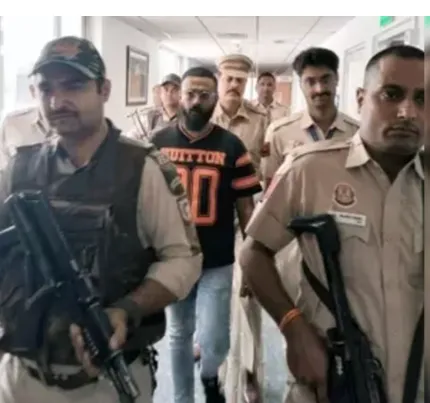
New Delhi, August 26: Convicted in a 2017 case involving allegations that he impersonated a sitting Supreme Court judge to influence a judicial officer and secure bail, Sukesh Chandrasekhar has approached the Delhi High Court challenging his conviction and seeking deletion of what he has described as derogatory and prejudicial remarks in the trial court judgment.
In a writ petition filed before the High Court, Chandrasekhar has sought the setting aside of the August 20, 2026 judgment delivered in FIR No. 100/2017 registered at Subzi Mandi police station. He has also sought expunction of observations that he claims are stigmatic, pejorative and beyond the evidence on record.
Advocate Anant Malik, appearing for Chandrasekhar, said the petition was moved immediately after the conviction. The matter was mentioned urgently before Justice Madhu Jain on August 25 and has been listed for hearing on August 31.
According to Malik, the petition challenges the conviction on grounds including alleged violation of the Delhi High Court Rules, settled principles of law and the accused's right to a fair and impartial trial. The defence has also alleged that the proceedings reflected a perception of judicial bias and that the judgment contained remarks that went beyond the judicial record.
"The conviction is being challenged because a citizen's fundamental right to liberty cannot be trampled upon in this manner. It is a severe legal anomaly that our client has undergone eight long years of incarceration for an alleged offence that carries a maximum punishment of two years," Malik said.
He further alleged that the trial was conducted in a hostile and biased manner and pointed to the absence of physical evidence such as the mobile phone or recordings. According to the defence, these circumstances warranted intervention by the High Court.
The petition also claims that Chandrasekhar had approached a superior court even before the judgment was pronounced, citing apprehensions over the manner in which the trial was being conducted. It refers to alleged oral observations made during final arguments on August 17, when the trial court purportedly indicated that the defence submissions would not result in an acquittal.
A key grievance in the petition relates to the trial court's repeated use of terms such as "conman", "seasoned conman" and "fraudster" while referring to Chandrasekhar. The defence has argued that such descriptions were unnecessary for determining the criminal charges and went beyond the evidence by commenting on his alleged personality, criminal propensity and broader conduct.
The petition particularly refers to the use of the expression "seasoned conman" while the trial court was considering the defence's submissions regarding the availability of the judicial officer's telephone number. Chandrasekhar's plea contends that the characterisation became part of the reasoning rather than remaining confined to the evidence concerning the alleged impersonation.
The defence has also cited earlier judicial orders, including a 2022 order cautioning against prejudicial or predetermined descriptions of an accused. It has further relied on a 2025 civil court order directing that the term "conman" not be used while referring to Chandrasekhar in reports concerning pending cases until further orders.
In its prayers, the petition seeks that the matter be remanded to another court for fresh hearing of final arguments and that the allegedly prejudicial observations be deleted. It also seeks a declaration that such remarks should not be treated as findings about Chandrasekhar's general character or relied upon in any other judicial or administrative proceedings.
The plea further seeks deferment of sentencing proceedings while the challenge to the conviction remains pending.
On August 20, Chief Judicial Magistrate Harshita Mishra of the Central District, Tis Hazari Courts, convicted Chandrasekhar under Sections 170, 189 and 507 of the Indian Penal Code. The case relates to allegations that he impersonated a sitting Supreme Court judge and attempted to influence Special Judge Poonam Chaudhary to grant him bail in a separate corruption case.
According to the prosecution case, Chandrasekhar, while in police custody in April 2017, allegedly obtained access to the mobile phone of Delhi Police constable Manjeet and used it to contact the judicial officer.
The trial court's judgment said the caller initially introduced himself as the personal secretary of a Supreme Court judge and later impersonated the judge himself. The caller allegedly claimed to be speaking on behalf of the Home Ministry and the Supreme Court Collegium and pressed for Chandrasekhar's immediate release on bail.
The judicial officer did not act on the alleged request and instead verified the claim through the Supreme Court judge's office. Following the verification, an FIR was registered and the investigation was subsequently transferred to the Crime Branch.
While convicting Chandrasekhar, the trial court relied on the testimony of the judicial officer, call detail records and other circumstantial evidence, holding that the prosecution had established its case beyond reasonable doubt.
The court, however, also noted deficiencies in the investigation and directed the Delhi Police to examine the lapses and scrutinise the role of Constable Manjeet. It clarified that these observations did not amount to a finding of guilt against the constable.
The Delhi High Court is scheduled to hear Chandrasekhar's petition on August 31, 2026.
.webp)