


Four severe earthquakes struck three continents within mere hours
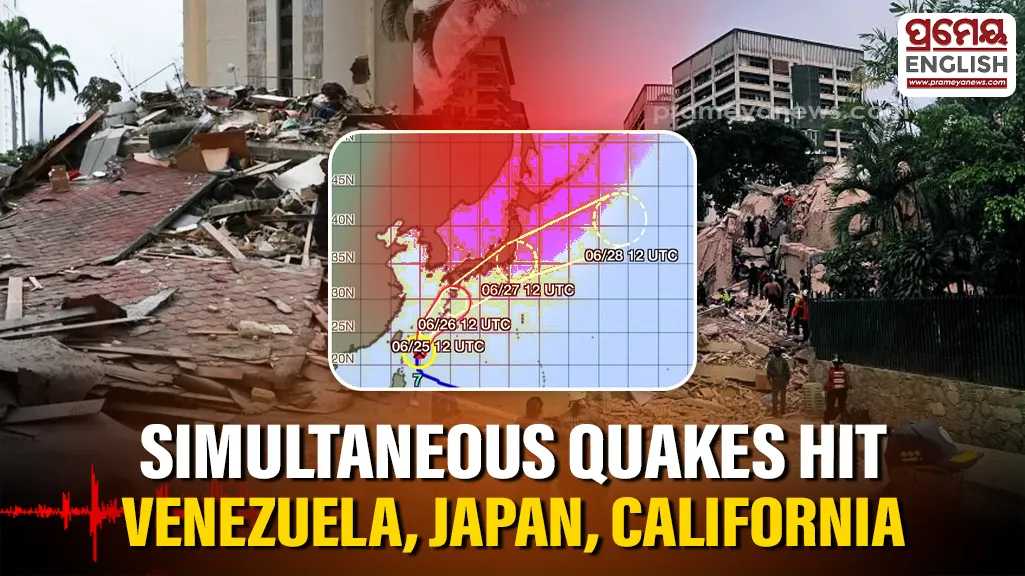
Several powerful earthquakes struck Venezuela, Japan, and California within a brief timeframe on June 24 and 25. Two consecutive quakes measuring 7.2 and 7.5 on the Richter scale devastated areas near Caracas in Venezuela. These violent shocks collapsed numerous buildings, claiming at least 32 lives and injuring hundreds of terrified residents.
Shortly after the South American disaster, a strong 7.2 magnitude quake rattled the northeastern coast of Japan. Earlier that evening, northern California experienced a 5.6 magnitude tremor near Redwood Valley. Such rapid succession of global earthquakes quickly sparked fears of a connected geological disaster. Citizens worldwide wondered if one deep shock directly triggered the others.
Science behind Simultaneous Shaking
Geologists firmly reject any link between these widely separated events. Each tremor occurred in completely distinct tectonic environments stretching thousands of kilometres apart. Japan sits securely on the highly active Ring of Fire, which frequently produces intense seismic shifts. California faces constant geological risk from the famous San Andreas fault system. Venezuela rests on a very complex boundary where the Caribbean and South American plates constantly grind past each other. Historically, this specific South American region has suffered similar catastrophic quakes whenever these shifting plates violently release built-up stress over several decades.
Coincidental Timing over Direct Links
Experts explain that simultaneous large tremors occasionally happen by pure mathematical coincidence. Earth quietly registers thousands of minor quakes daily. While large fractures release energy across the globe, this resulting energy remains far too weak to ignite new major faults across vast oceans. Rescue teams currently scramble to find trapped survivors in Venezuela, anxiously anticipating a higher final death toll. Fortunately, neither Japan nor California reported any tragic fatalities from their respective shocks. Scientists will carefully analyse fresh data from these simultaneous events to better understand global fault behaviors, confidently treating the timing as a random natural occurrence.