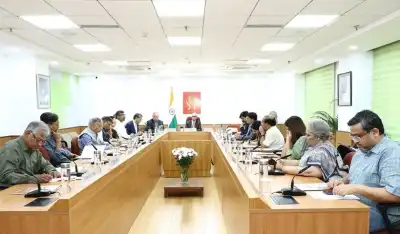


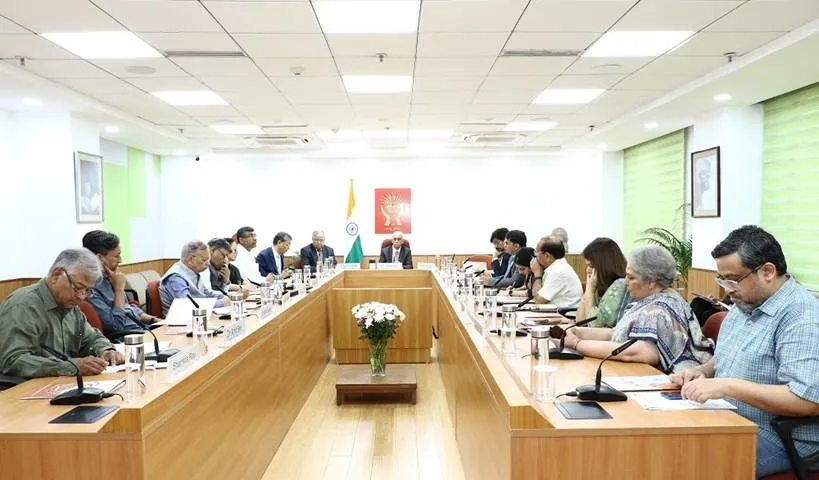
Delhi, March 18:The National Human Rights Commission (NHRC), India organised an Open House Discussion on ‘Access to Social Media by Children’ in hybrid mode at its premises in New Delhi.
NHRC Chairperson, Justice V. Ramasubramanian chaired the meet which was attended by Member, Justice (Dr.) Bidyut Ranjan Sarangi; Secretary General, Bharat Lal; Secretary MeitY, S. Krishnan; Director General (Investigation), Anupama Nilekar Chandra; Registrar (Law), Joginder Singh; Joint Secretaries, Samir Kumar, Saidingpuii Chhakchhuak; along with senior government functionaries from the centre and state governments, statutory bodies, members of academia, domain experts, UN organisation and representatives of civil society organisations.
The discussion was organised in the backdrop of concerns regarding children’s excessive use of social media and the inadequacy of child protection safeguards against harmful contents,growing among parents, educators and policymakers in India and worldwide. Globally, increasing concerns about children’s safety online have led several countries to introduce or consider bringing age-based restrictions and stronger accountability measures for social media platforms, as seen in recent legal developments in Australia. Keeping in mind the wellbeing and the rights of children, the National Human Rights Commission, India reached out to stakeholders to deliberate on a key question: Can similar age-based restrictions protect children online without excluding them from the benefits of social media?
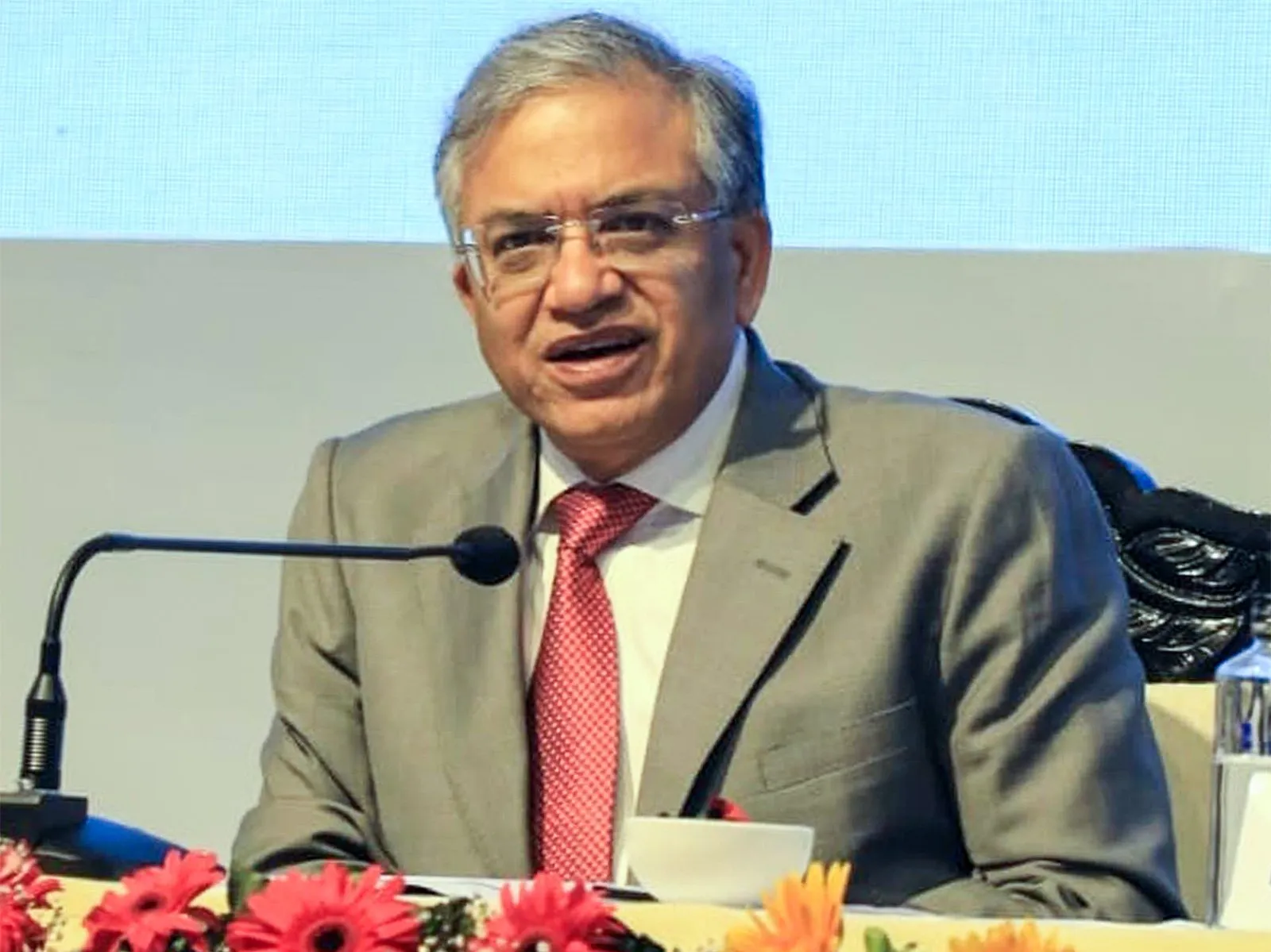
In this context, the NHRC, India Chairperson posed three questions to the participants. First, whether children’s access to social media needs to be banned or only regulated up to a certain age. Second, who should do it, whether the State Legislature or the Parliament. Third, a threshold to which extent social media access to children can be curtailed. He said that India, by far, has been a country with best possible laws in the world but implementation has also been a matter of concern. Therefore, the country must look for enforceable and practical solutions to the problem. The law should also be uniform throughout the country to ensure effective implementation.
He further said that while discussions focus on digital devotion, digital hygiene and digital addiction, there are no discussions about digital discipline. He urged the experts to suggest ways to make enforcement more effective.
During the discussion, NHRC Member, Justice (Dr.) Bidyut Ranjan Sarangi said that it may be best to regulate access instead of banning social media. He said, given the technology-driven world we live in, we may not deprive our children of the benefits of technology. He emphasised the need for a uniform central law to ensure equal digital opportunities and protections for children across all geographical and socio-economic backgrounds.
Earlier in his opening remarks, NHRC Secretary General, Shri Bharat Lal gave an overview of the three technical sessions of the discussions i.e. i.) ‘Understanding the positive and negative impacts of social media on children’, ii.) ‘Assessing the Indian regulatory framework’ and iii.) ‘Evaluating age-based restrictions/ ban on access to social media for children.’ He said that there are both advantages and disadvantages of social media. India has a sizeable number of children using smartphones with access to social media. He quoted the Annual Status of Education Report 2024 that in the 14-16 age group, 76% children use smartphones to access social media while 57% use them for educational purposes. He noted that social media is also being used for cyber bullying, data privacy-related exploitations, sexual abuse of children and cyber frauds. He, therefore, called for a ‘balanced approach’ in dealing with the issue of children's access to social media and requested the experts to deliberate on the theme from a holistic perspective. He also spoke about privacy as well as children's overall health especially mental health in the digital era.
Lal highlighted the NHRC's advisory for Protection of the Rights of Children against Production, Distribution and Consumption of Child Sexual Abuse Material (CSAM) in 2023, which he said, has received a good response from Union and state governments. The advisory focused on strengthening legal, institutional, technological and victim-support mechanisms to curb the production, circulation and consumption of CSAM online.
S. Krishnan, Secretary, MeitY gave an overview of the work being done by the ministry and further stated said that the government has been trying to ensure that the digital space is more regulated as it understands the social concerns and the sense of urgency in addressing them. In February 2026, the Ministry mandated the labelling of synthetically generated content and restricted social media posts which violate laws. In this regard, he noted the need to strike the right balance in content regulation. He also called for understanding digital access as public infrastructure.
Smt. Aishwarya Dongre, Deputy Director, I4C raised concerns about the increasing availability of inappropriate content in the form of animation. She explained how proactive work is undertaken to locate and combat Child Sexual Abuse Material. She called for empowering children to become responsible citizens in a digital age. Dr. Muktesh Chander, Special Monitor, NHRC suggested regulating internet gateways to ensure better control and monitoring.
Dr. Sanjeev Sharma, Member-Secretary, NCPCR said that apart from legislation, an awareness drive is required for sensitising children and parents on the advantages and disadvantages of social media. Dr. Sneha, KAS, Director, Integrated Child Protection Directorate, Department of WCD, Karnataka said that the Karnataka government is finalising guidelines on children’s access to social media. Kabir K. Shirgaonkar, Director, Department of Information Technology, Electronics and Communication, Goa and Shri Syed Mohsin Ali, Deputy Director, Child Protection Development Unit, Department of WCD, Delhi said that their respective state governments are considering regulation in this regard.
Dr. Laxmi Vijay Kumar, Sneha Foundation said a temporary ban could provide time to develop protections, given the brain's plasticity until the age of 16. Zaffrin Chowdhury, Chief of Communication, Advocacy and Partnerships, UNICEF endorsed restrictions on social media after due stakeholder consultations, including children. Sharmila Ray, Child Protection Specialist, UNICEF highlighted the need to address behavioural issues. Swagata Raha, Head, Restorative Practices, Enfold India said that evidence-based approach will be necessary before adopting regulations for children’s access to social media. She also pointed out how social media serves as an equaliser, breaking societal barriers.
Rakesh Senger, Executive Director, Kailash Satyarthi Foundation emphasised that the primary responsibility for child safety should lie with Internet Service Providers (ISPs) and social media platforms through stricter regulation and real-time monitoring. Dr. Manoj Sharma, Professor of Clinical Psychology, NIMHANS (SHUT Clinic) emphasised that while digital access is now integral to youth lifestyles, a holistic approach focusing on behavioural "preparedness" and lifestyle modification may be more effective than bans. Anuradha Joshi, Principal of Sardar Patel Vidyalaya said that social media use is neither good nor bad, it depends on how one uses it. She said that devices promote loneliness therefore, safety measures on mobile phones are essential.
Sourabh Ghosh, Senior Manager, Research and Knowledge Exchange, CRY suggested continuous awareness and capacity building for children, teachers and parents. Dr. Karnika Seth, Cyber Lawyer and Public Policy Expert said that children, as citizens of India, also have rights; therefore, she backed the regulated use of social media instead of an outright ban.
Hasina Kharbhih, Founder and Chairperson, Impulse NGO Network, Meghalaya asserted that strengthening regulation and updating legal frameworks would be a more practical and effective solution. Dr. Amit Sen, Director, Children First said that regulations should be centralised but should have adequate scope to accommodate local, cultural and societal contexts as India is a very large and diverse country.
During the multi-stakeholder discussions, concerns were expressed over children losing empathy and emotional control. It was also noted that the online mode of communication adopted by schools during COVID 19 disruptions may need to be revisited. The need to raise parental awareness and encourage digital discipline was highlighted as measures to dissuade children from excessive use of social media. The need for more transparent data sharing by technology companies to accurately assess social media impact on children was also raised. Emphasis was placed on the importance of encouraging children to connect with the real world.