


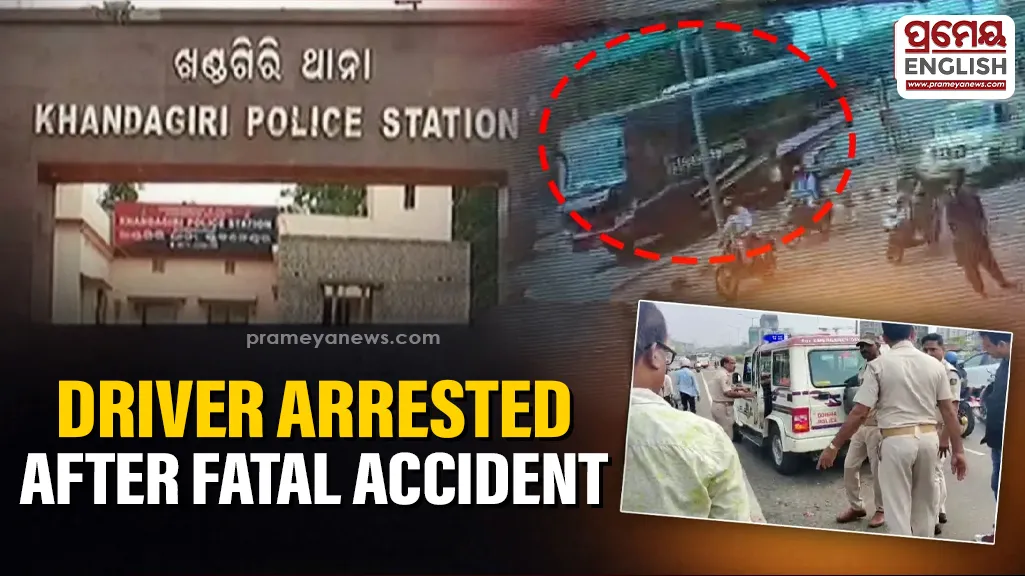
Bhubaneswar, Mar 17: The bus driver responsible for the tragic death of a woman in a bus accident at Aiginia Chhak on March 13 has been arrested by the Khordha police. The driver, identified as Prashant Kumar Das (37), hails from Mangarajpur in the Nayagarh Sadar police station area.
According to reports, Vijayalakshmi Kar (68), a retired healthcare worker, had visited her sister-in-law’s house in Dumduma Phase-4. On the morning of March 13, around 9 a.m., while returning home, she was crossing the road at Aiginia Chhak when a private bus, ‘Shree Raghunath,’ traveling from Khordha to Bhubaneswar, struck her. Despite the accident, the bus driver did not stop and sped away from the scene.
Vijayalakshmi was rescued and rushed to Capital Hospital, where doctors declared her dead. Her family member, Subash Chandra Tripathy, filed a complaint with the Khordha police. The police recovered the bus involved in the accident and arrested the driver, Prashant Kumar Das, who had fled the scene after the incident. He was later taken to court for further legal proceedings.