


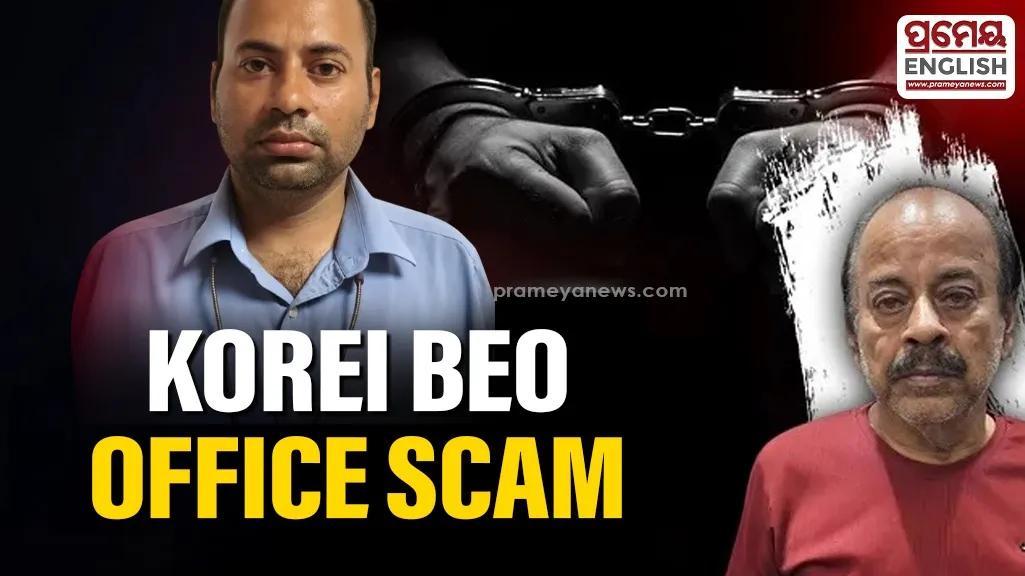
Jajpur, March 19: Odisha Vigilance has intensified its crackdown in the ₹5.56 crore fraud case in the Korei Education Department, arresting the parents of the main accused from Charampa in Bhadrak. The arrests come a day after the apprehension of prime accused Matruprasad Mohanty, a private bank branch head in Bhadrak.
The scam pertains to large-scale financial irregularities in the Korei Block Education Office. Matruprasad is the son of retired headmaster Pradeep Mohanty, who is alleged to be the mastermind behind the fraud.
According to Vigilance officials, between 2018 and 2024, the IDs of 13 retired teachers were fraudulently used to siphon off ₹5,56,11,495 through online transactions. Investigators allege that the father-son duo executed the scam in a planned manner.
After his retirement, Pradeep Mohanty was reappointed in the Korei BEO office, where he allegedly manipulated official records by falsely showing retired teachers as active employees. Pension bills were generated every month in their names, and the funds were illegally withdrawn.
The siphoned money was reportedly transferred to bank accounts belonging to Matruprasad and other family members. The fraud continued undetected for nearly six years, from November 2018 to September 2024.
A case (No. 11/2026) has been registered at the Cuttack Vigilance Police Station under relevant sections of the Prevention of Corruption (Amendment) Act, 2018, along with IPC Sections 409, 477-A, and 120-B.
Matruprasad Mohanty was produced in court on Wednesday. Vigilance officials said the investigation is ongoing and indicated that more arrests are likely in the coming days.