


Russia formally supports India for permanent Security Council membership
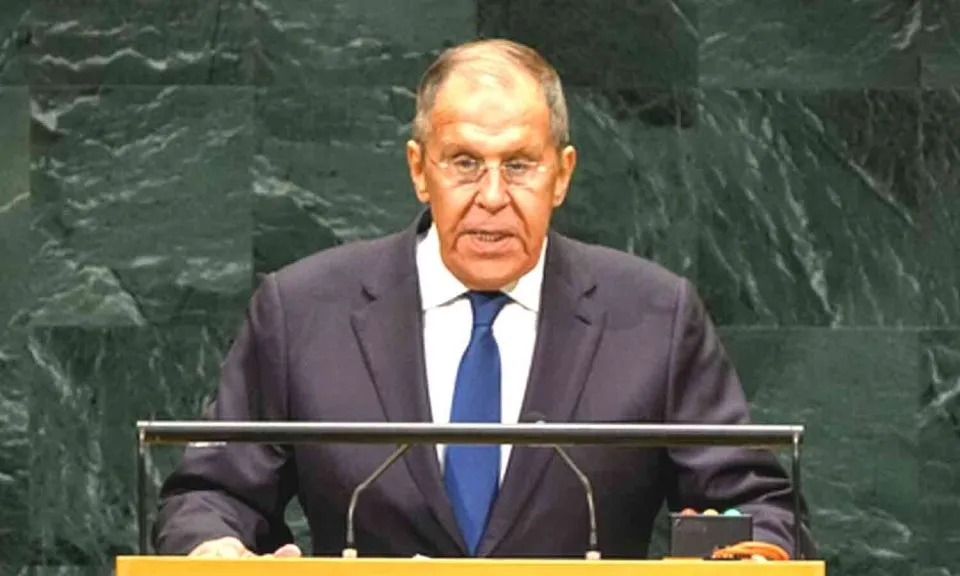
Russia has officially endorsed India and Brazil for permanent seats on the United Nations Security Council. Russian Foreign Minister Sergey Lavrov made this declaration on Saturday during the United Nations General Assembly in New York. He firmly opposed granting any new permanent positions to Western nations. Lavrov specifically objected to Germany and Japan, claiming these countries are moving toward militarism and revanchism. For decades, developing nations have argued that the current UN structure, established right after World War II in 1945, fails to accurately represent modern global power dynamics.
Expanding global south representation
Lavrov emphasized that any restructuring must prioritize nations from Asia, Africa, and Latin America. This stance aligns with growing international consensus. Other nations expressed similar backing for India during the general debate. Mauritian Foreign Minister Dhananjay Ramful supported the G4 and L69 positions, citing India's constructive global role. Portugal's Prime Minister Luis Montenegro also called for structural updates to grant permanent status to Africa, Brazil, and India.
Competing demands and African voices
Different alliances hold competing visions for this expansion. The Marshall Islands affirmed its long-term support for Japan and other G4 members. Japanese Prime Minister Sanae Takaichi advocated for expanding both permanent and non-permanent member categories to reflect current realities. Meanwhile, African leaders highlighted their severe underrepresentation. Sierra Leone President Julius Maada Bio pointed out that Africa has zero permanent seats despite boasting a population exceeding 1.6 billion people. Ghanaian President John Dramani Mahama noted that reform remains essential for institutional credibility.
Current structure and rules
Currently, five nations hold permanent veto power. These include China, France, Russia, the United Kingdom, and the United States. Ten additional members serve rotating two-year terms. Changing this foundational system requires a two-thirds majority vote in the General Assembly. Furthermore, two-thirds of all UN member states, including all five existing permanent members, must ratify any official UN Charter amendments.
Image Courtesy: Newsonair