
.webp)

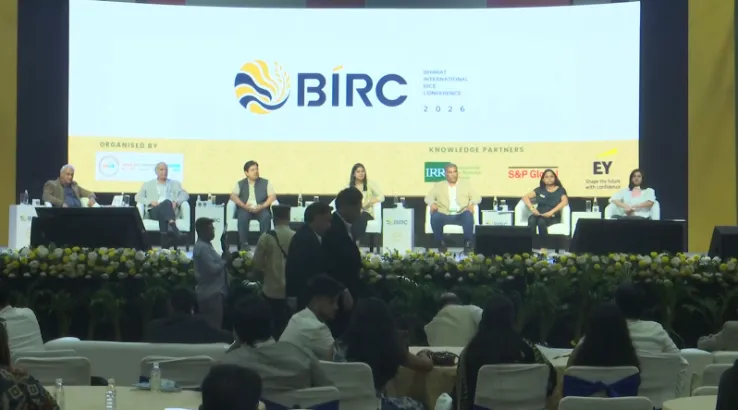
Bhubaneswar, Oct 24: Odisha could boost farmers' incomes by moving beyond conventional rice sales and focusing on premium varieties, healthier food products and commercial use of agricultural waste, as industry experts highlighted the potential of value-added rice products at the Bharat International Rice Conference (BIRC) 2026 in New Delhi.
According to the third advance estimates for 2025–26 published by the Department of Agriculture and Farmers Welfare, Odisha is India's sixth-largest rice-producing state, contributing 6.63 per cent to the country's total rice production. The state is estimated to produce 102.18 lakh tonnes of rice in 2025–26, up from 95.27 lakh tonnes in the previous year.
With rice accounting for a significant share of its agricultural economy, value-added products could offer Odisha an opportunity to increase farmers' incomes, tap premium markets and generate additional revenue through food processing and the commercial use of agricultural waste. These figures underline the scale of Odisha's rice economy and the opportunity to generate additional income through processing, branding and access to specialised markets.
At a panel discussion on value-added rice products, experts said India needs to move beyond bulk grain exports and focus on products that command higher prices, offer better nutrition and generate more revenue across the agricultural value chain.
Priyabrata Roy, Scientist and Project Lead at the International Rice Research Institute (IRRI), said conventional rice typically sells for around USD 350–500 per metric tonne, while specialised low-glycemic-index (GI) rice can fetch more than USD 2,000 per tonne in markets such as Australia.
Low-GI rice is designed to produce a slower rise in blood glucose than conventional varieties. Roy also highlighted the development of varieties such as DRR Dhan 81 and efforts to connect farmers growing traditional rice varieties in Odisha and Uttar Pradesh with private buyers.
For Odisha, these initiatives could help farmers secure better prices, provided they have access to suitable processing facilities, quality certification and reliable markets.
The state has already seen efforts to promote rice value addition. In February 2025, IRRI announced collaboration with Odisha's agriculture department and Mission Shakti involving a mini rice-processing facility in Bhubaneswar. The initiative aimed to help women-led self-help groups develop and market premium rice products, including low-GI and high-protein varieties.
Consumer demand for quality and traceability could provide another opportunity. Annie Vinod Manjila, Senior Marketing and Brand Leader at Double Horse, cited the example of Matta rice, which sells for around Rs 60 per kg when conventionally produced, compared with about Rs 100 per kg when grown using integrated pest management practices. She said companies are working to ensure farmers benefit from the price premium.
Experts also highlighted opportunities to improve rice's nutritional value through fortification, biofortification and combinations with pulses and millets.
Dr Shruti Srivastava, Chief Executive Officer of Catalyse, pointed to the potential of converting rice straw into fuel briquettes. Rice husk, bran and broken rice can also be used in food and industrial applications, creating additional revenue opportunities for rice mills and rural businesses while reducing agricultural waste.
For Odisha, expanding these uses could support local processing industries, although investment, infrastructure and access to dependable buyers would be essential.
The panel also discussed ready-to-eat and ready-to-cook rice products that combine convenience, nutrition and regional flavours. Such products could help Odisha-based businesses reach consumers outside the state, while indigenous rice varieties could find specialised uses in premium food and beverage markets.
The Bharat International Rice Conference 2026 is being held in New Delhi from October 23 to 25, bringing together exporters, international buyers and other stakeholders in the global rice trade.
For Odisha, the opportunity lies in earning more from the rice it already produces through premium products, stronger market connections and commercial use of agricultural by-products. (with ANI inputs)
.webp)