
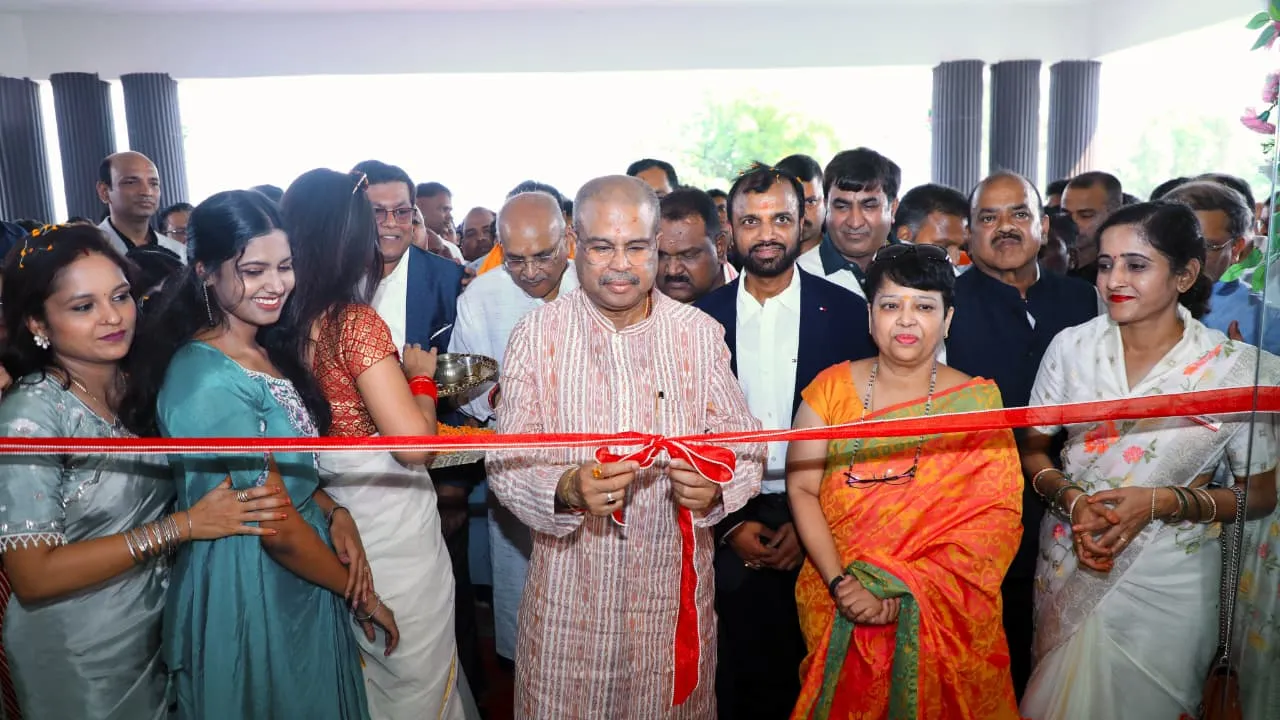
Sambalpur (Odisha), March 15: Union Education Minister Dharmendra Pradhan on Sunday attended the inaugural ceremony of Birla Open Minds International School in Sambalpur.
Speaking at the event, Pradhan emphasised that India's education sector is undergoing a significant transformation with a focus on innovation, skill development and global standards. He said institutions that combine modern infrastructure with value-based learning will play a key role in shaping the country's future.
Pradhan noted that schools like Birla Open Minds International School can help nurture young minds and prepare students to meet the challenges of a rapidly changing world. He added that providing students with holistic education--covering academics, technology, creativity and ethics is essential for building a strong and progressive society.
He also highlighted the role of private educational institutions in complementing government efforts to strengthen the education ecosystem. He said collaboration between the public and private sectors can significantly improve access to quality education in both urban and semi-urban areas.
During his address, the minister spoke about the growing emphasis on innovation and digital learning in schools across the country. He noted that with the implementation of the National Education Policy 2020, the government aims to make education more flexible, inclusive and skill-oriented.
Pradhan added that the policy encourages critical thinking, creativity and multidisciplinary learning among students, ensuring they are better prepared for future opportunities.
The inauguration ceremony concluded with cultural performances by students and interactions between the minister, school management and attendees, marking the formal opening of the new educational institution in Sambalpur.
Taking to X, Pradhan said, "I am excited to inaugurate Birla Open Minds International School in the Sambalpur parliamentary constituency. On this important occasion, I extend my heartfelt congratulations to the school family and best wishes to the citizens of Sambalpur, the students, and their parents."
He emphasised that under the leadership of Prime Minister Narendra Modi, the National Education Policy 2020 is providing a modern and holistic direction to the country's education system.
"Under the visionary leadership of the Hon'ble Prime Minister, the 'National Education Policy 2020' being implemented is providing a modern and holistic direction to the country's education system, in which studies in the mother tongue, skill development, AI, sports, and innovation are being integrated with education. I am confident that this school too, while imbibing these values, will enrich students with knowledge, culture, and innovation. At the same time, it will also pay special attention to children's mental health, positive thinking, and the development of a balanced personality," Dharmendra Pradhan said.
"Certainly, this institution will emerge as an inspirational center of education in the Sambalpur region, making a significant contribution to strengthening the resolve of 'Developed India 2047' and 'Developed Odisha 2036'," he said. (ANI)