

.webp)


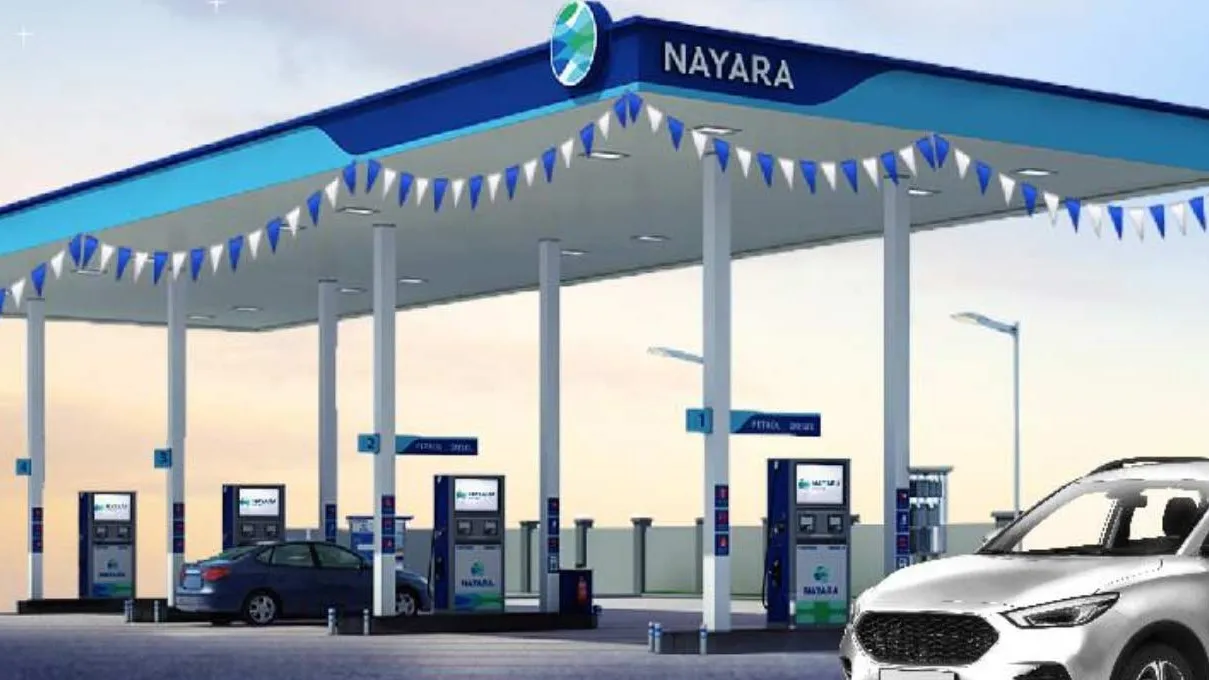
Nayara Energy raises fuel prices following global crude surges.
India's largest private fuel retailer, Nayara Energy, has increased petrol prices by five rupees per litre and diesel by three rupees. This urgent decision passes mounting international crude costs directly to consumers following escalating military conflicts in the Middle East. Disruptions in the Strait of Hormuz critically endanger India's energy security, considering the nation imports nearly ninety percent of its crude oil through this volatile maritime corridor.
State Run Companies Hold Retail Rates Steady
Public sector fuel retailers govern approximately ninety percent of the domestic market and persistently maintain a freeze on standard consumer rates. State-owned giants like Indian Oil Corporation, Bharat Petroleum, and Hindustan Petroleum consistently absorb current input cost fluctuations. They strategically balance these temporary operational deficits against substantial profits recorded during previous cycles of cheaper crude. During the last financial year alone, these public entities posted record net earnings exceeding 81,000 crore rupees, providing a strong financial buffer.
Recently, they exclusively altered rates for premium 95-octane petrol, bumping it by two rupees per litre, and increased bulk industrial diesel by roughly twenty-two rupees. Normal fuel grades, featuring a standard octane rating of 91-92 designed for everyday commuter vehicles, remain strictly untouched. Regular petrol in the national capital officially stays at Rs 94.77, while standard diesel currently sits at Rs 87.67.
Geopolitical Pressures Squeeze Private Operators
Private outlets function without the essential financial safety nets routinely granted to their public sector counterparts. Government compensation mechanisms do not reimburse non-state operators for holding retail rates artificially low when international benchmark prices spike aggressively. Global oil markets recently experienced extreme turbulence, with crude briefly touching 119 dollars per barrel earlier this month. This dramatic surge directly follows severe military engagements involving the United States, Israel, and Iran.
Retaliatory actions by Iranian forces resulted in stern warnings for commercial maritime shipping. Insurers immediately withdrew necessary coverage, practically paralyzing crucial tanker traffic through vital global supply routes. Consequently, private retailers managing nearly seven thousand service stations nationwide faced unavoidable economic pressure to quickly adjust their retail pricing structures. Regional taxation policies, particularly local value-added tax variations, will ultimately determine the exact final financial burden borne by motorists. Drivers situated in specific high-tax jurisdictions might observe regular petrol jumping by as much as Rs 5.30 per litre at local Nayara dispensing stations.
.webp)