



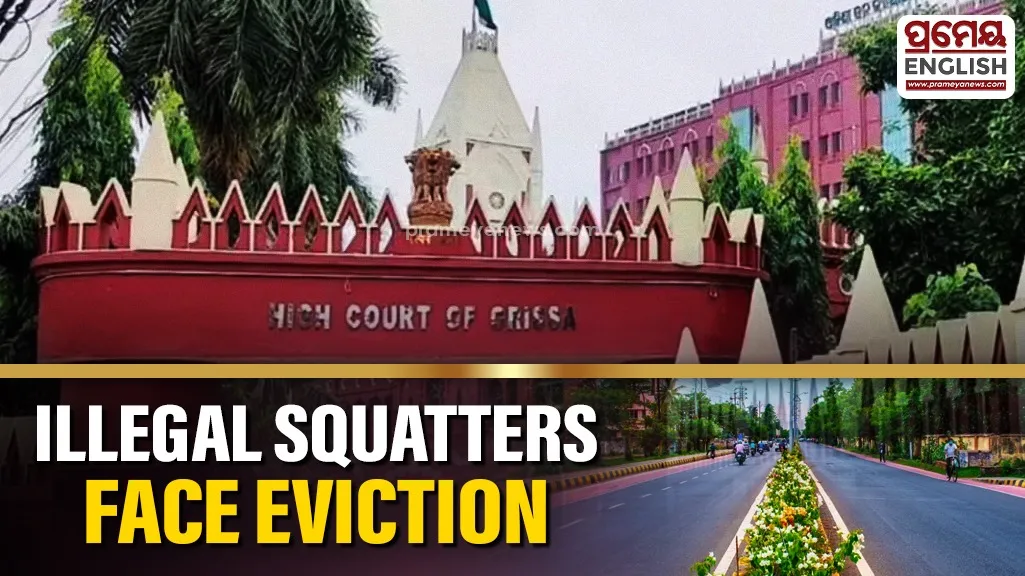
Orissa High Court prioritises public infrastructure over illegal land occupation
Odisha’s top judicial authority has given the go-ahead for a crucial urban infrastructure development, permitting the state to evict illegal occupants blocking a major arterial route. Delivering a firm stance on property rights, the Orissa High Court ruling declared that individuals unlawfully occupying government land cannot halt vital public works. Chief Justice Harish Tandon and Justice Murahari Sri Raman presided over the case, stressing that trespassers possess no constitutional protection to squat on state property.
Rapid urban expansion has put immense pressure on public land across the capital city. This specific legal battle centred around a 200-foot-wide masterplan pathway linking the Institute of Mathematics to Ekamra Kanan through the bustling Infocity Khordha area. Two conflicting public interest litigations came before the bench. While one group of Chunukoli villagers claimed the eviction of squatters violated tribal rights and forest laws, another citizen demanded the immediate completion of the stalled thoroughfare to prevent traffic congestion and fatal accidents.
State engineers had altered the 2018 Comprehensive Development Plan strictly for technical reasons, which the court fully supported. Officials proved that the original layout contained a hazardous sharp curve. By adjusting the blueprint to a 200-metre curve radius designed for 50 kmph speeds, the revised Bhubaneswar road project guarantees better vehicular flow and drastically reduces crash risks. Furthermore, this modification primarily uses government plots, minimising the destruction of private homes.
Judges strongly criticised the petitioners who tried to misuse the Forest Rights Act to derail the initiative. Evidence showed these residents were rank encroachers whose previous applications had already been rejected by competent authorities. Noting that several occupants were already facing civil eviction decrees, the bench called their litigation a motivated attempt to mislead the justice system. While acknowledging citizen rights to reside within India, the ruling clarified this does not permit unauthorised settlement.
Road safety Odisha initiatives are deeply connected to the fundamental right to life, as observed by the court. By dismissing the obstructive petitions, this verdict establishes a powerful legal benchmark. It clearly signals that judiciary bodies will likely support technical administrative decisions regarding infrastructure, provided they follow due process, ensuring that the broader public interest always outweighs the demands of illegal land occupants.
With Inputs from: Uma Kanta Tandi, Advocate, Orissa High Court, Cuttack