
.webp)


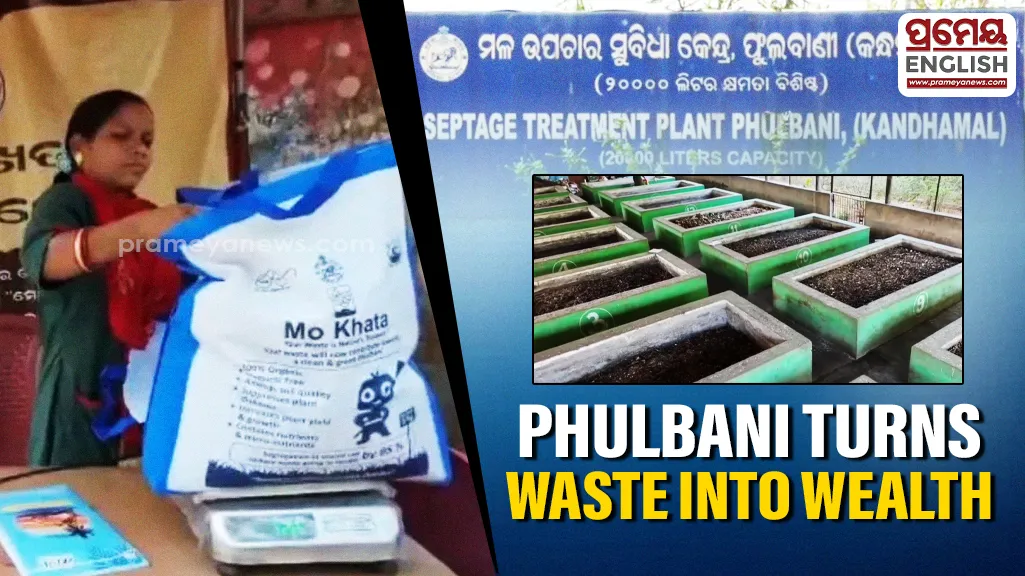
Kandhamal, Jul 6: What was once considered useless garbage is now generating employment and helping protect the environment in Odisha's Phulbani town. A waste management initiative launched by the Phulbani Municipality is transforming household and market waste into organic compost, while providing sustainable livelihoods to around 30 women.
Every day, households and markets produce large quantities of biodegradable waste, including leftover food, fruits, and vegetable scraps. Traditionally, this waste was collected and dumped on the outskirts of the town, causing environmental pollution, foul odour, and contamination of nearby water bodies. The municipality also had to spend lakhs of rupees annually on waste collection and disposal.

To address the growing waste management challenge, the Phulbani Municipality established a modern waste management unit at Narayani Road. The facility converts organic waste into eco-friendly compost under the brand name 'Mo Khata', giving a productive use to waste that would otherwise pollute the environment.

The compost produced at the plant is highly beneficial for vegetables, flowers, fruit trees, and other plants. It has emerged as an environmentally friendly alternative to chemical fertilizers while also reducing the burden of waste disposal.
Before the project was launched, garbage collected from different wards was dumped in open areas outside the town due to the absence of a proper dumping yard. This led to severe environmental concerns, with decomposing waste polluting nearby rivers and drains and triggering complaints from local residents.
The project has also become a source of livelihood for women from the area. Workers engaged at the facility say the initiative has provided them with stable employment while allowing them to contribute to environmental conservation.

Under the new waste collection system, battery-operated vehicles collect segregated wet and dry waste from households and streets across the municipality. The waste is then transported to the processing unit.
At the plant, dry waste such as plastic, polythene, metal cans, and other recyclable materials is separated and sent to a cement factory in Bargarh for further processing. Wet waste—including leftover food, rice, vegetable peels, fruit waste, and other biodegradable materials—is processed into organic compost using a natural fermentation method.
The organic waste is mixed with jaggery, curd, microbial culture, and other organic ingredients before being placed in composting pits. After decomposing for about 22 days, the compost is dried in sunlight and then powdered using machines to produce high-quality organic manure.

The compost is sold at Rs 10 per kilogram and is being purchased by the Forest Department, Agriculture Department, Horticulture Department, and Soil Conservation Department. It is also available for the general public through a sales counter set up near the District Collector's office.
The waste management unit has created direct employment for 30 women, including 10 battery vehicle drivers and 20 women engaged in compost production. Each worker earns a monthly salary of around Rs 15,000.

Municipal officials say the initiative has not only reduced the volume of waste being dumped but has also improved sanitation, protected the environment, promoted recycling, and created sustainable employment opportunities for local women.
The Phulbani model is emerging as an example of how effective waste management can simultaneously promote environmental protection and economic empowerment.
.webp)