


Puri, Jun 1: A fresh controversy has erupted over the alleged online sale of Lord Jagannath’s Mahaprasad, triggering outrage among servitors and devotees who have termed it an attack on the sanctity and traditions of the Jagannath culture.
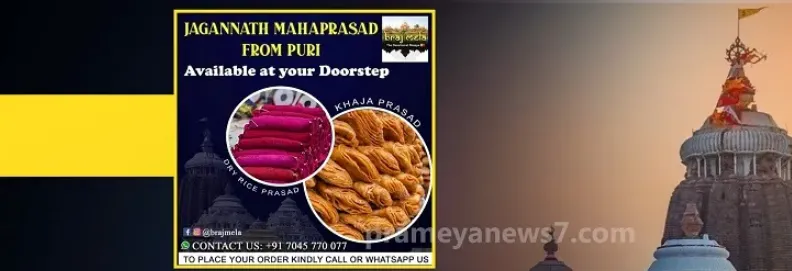
The controversy surfaced after advertisements promoting the sale of dry Mahaprasad and Khaja Prasad appeared on social media platforms. The advertisements, reportedly circulated through an Instagram account named “Hare Krishna Television,” claim to offer delivery of Jagannath Mahaprasad and provide contact details for placing orders. A group identified as “Braj Mela” is said to be associated with the promotional campaign.
The development has sparked strong reactions from Jagannath devotees, who argue that Mahaprasad is not a commercial commodity but a sacred offering of Lord Jagannath. They have expressed concern over what they describe as the repeated commercialization of a revered religious tradition.
The issue gains significance amid increasing online promotions claiming to deliver Puri’s Abhada Mahaprasad directly to devotees’ homes. Such campaigns often charge substantial amounts for the offerings. However, according to long-standing Shri Jagannath Temple traditions, Mahaprasad cannot be commercially marketed, and any sale or distribution without proper authorization from the temple administration is considered a violation of established norms.
Members of the Suara and Mahasuara Nijogs of the Jagannath Temple have strongly opposed the practice. Servitors contend that transporting Mahaprasad through courier services or commercial channels could compromise its sanctity and ritual purity.
“Mahaprasad is not merely food; it is ‘Anna Brahma’-a divine offering. Turning it into a business product for profit undermines centuries-old traditions and the faith of millions of devotees,” servitor representatives have argued.
The controversy has fueled resentment among Jagannath followers across Odisha, many of whom have demanded immediate intervention by the Shri Jagannath Temple Administration (SJTA) and cyber enforcement agencies.
Devotees and cultural activists have called for a thorough investigation into the entities behind the advertisements and sought stringent action against those allegedly exploiting religious sentiments for commercial gain.
Critics point out that similar controversies have surfaced in the past, and repeated instances of unauthorized online promotion of Mahaprasad reflect gaps in regulatory oversight. With emotions running high ahead of the annual Rath Yatra season, devotees are urging authorities to act swiftly to safeguard the sanctity of one of Hinduism’s most revered traditions.