


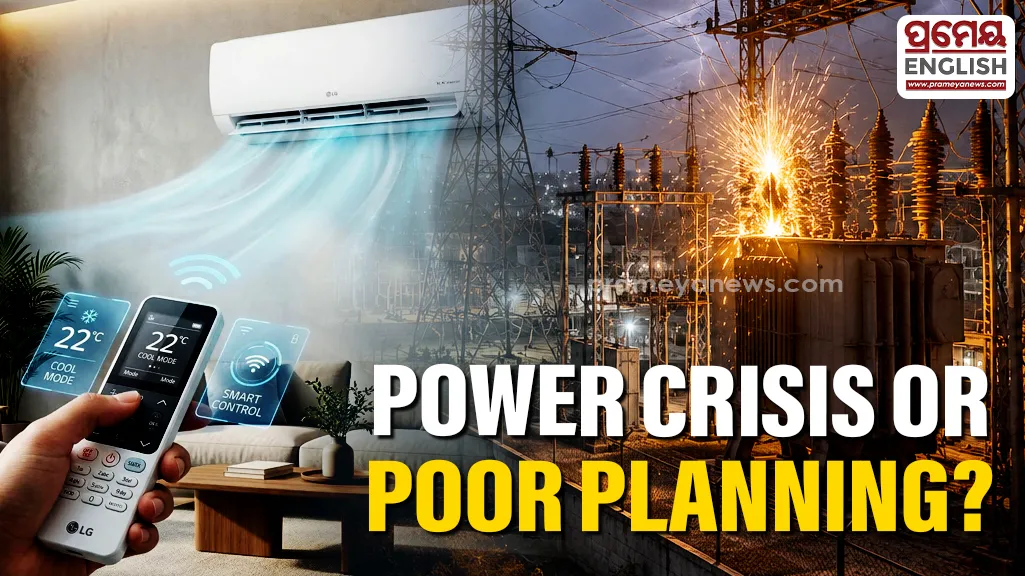
Bhubaneswar, June 4: As Odisha grapples with frequent power outages amid an intense summer heatwave, experts and consumers are questioning the state government's claim that rising use of air conditioners is primarily responsible for the growing electricity demand and subsequent disruptions.
The unprecedented heat has forced many households to rely on air conditioners to cope with soaring temperatures. However, power analysts argue that blaming AC usage for the current crisis diverts attention from deeper issues related to inadequate infrastructure and poor planning in the power sector.
The state has witnessed recurring power cuts in recent weeks as electricity demand surged. According to official data, Odisha recorded its highest-ever power demand of 8,188 MW on May 22. While the figure is significant, experts point out that neighbouring Andhra Pradesh, a state with a comparable population and geographical size, successfully managed a peak demand of 15,016 MW on May 21 without facing similar large-scale disruptions.
Data from the Power Finance Corporation's 2024-25 report further highlights the gap in electricity consumption patterns. Odisha's per capita electricity consumption in the domestic, commercial, and small and medium enterprise sectors stands at 178, 75, and 6 units respectively. In contrast, Andhra Pradesh records 328, 104, and 25 units, while the national average is 264, 92, and 64 units.
When combined, Odisha's total per capita consumption across these sectors is 258 units, significantly lower than Andhra Pradesh's 457 units and the national average of 420 units. The figures suggest that electricity consumption in Odisha remains nearly half that of Andhra Pradesh and substantially below the national average.
Power sector analyst Anand Mahapatra said increasing use of air conditioners should be viewed as a sign of economic progress and improved living standards rather than a cause for concern. According to him, higher adoption of cooling appliances reflects growing purchasing power and changing lifestyles in a developing economy.
He argued that while Andhra Pradesh has developed the capacity to meet a demand of over 15,000 MW, Odisha is struggling to cope with a peak load of just over 8,000 MW. The recurring outages, he said, expose weaknesses in the state's power distribution network, infrastructure preparedness, and overall system management.
The ongoing situation has sparked a wider debate on whether Odisha's power sector is adequately equipped to meet future demand. With rising urbanisation, increasing household electrification, and greater adoption of electrical appliances, experts believe the focus should be on strengthening transmission and distribution infrastructure rather than attributing the crisis solely to consumer behaviour.
As temperatures continue to soar, consumers across the state are demanding reliable power supply, while experts stress that long-term investments in infrastructure and grid modernization are essential to prevent similar crises in the future.