

Bhubaneswar, March 24: In a major push to strengthen water governance and rural infrastructure, the Odisha government has entered into a strategic partnership with the Union Ministry of Jal Shakti through the signing of a Memorandum of Understanding (MoU) for the implementation of Jal Jeevan Mission 2.0.
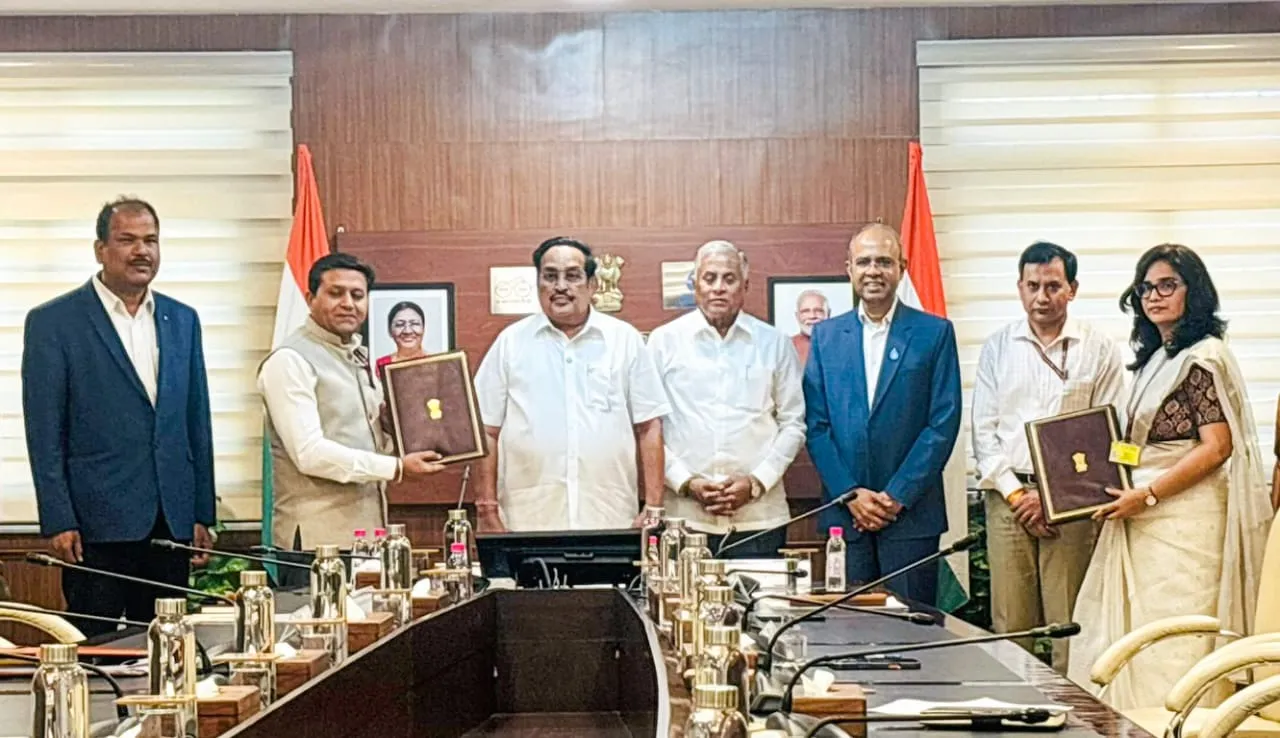
The MoU was formalized in New Delhi, with participation from key leaders at both the state and central levels. Chief Minister Mohan Charan Majhi joined the programme virtually from Lok Seva Bhavan, while Union Minister C. R. Patil and Minister of State V. Somanna attended from the national capital.
Under Jal Jeevan Mission 2.0, Odisha has laid out a clear and structured roadmap aimed at improving water access, sustainability, and governance. The state government has emphasized a multi-pronged approach that integrates infrastructure development with long-term maintenance and community involvement.
A strong focus has been placed on public participation, recognizing that community engagement is essential for the success of water initiatives. In parallel, the government is prioritizing financial sustainability and efficient service delivery through a robust Operation & Maintenance (O&M) policy.
The initiative gains further momentum with the Union Cabinet’s approval to extend Jal Jeevan Mission 2.0 until 2028. This extension provides a stable policy framework for states to achieve universal water coverage.
To enhance accessibility and responsiveness, Odisha has strengthened its citizen service platforms. Tools such as the Basudha Helpline, WhatsApp-based services, and digital grievance redressal systems are enabling faster communication and issue resolution, ensuring that the benefits of the mission reach every household effectively.
The state’s progress under the mission is already evident through several large-scale initiatives:
Recognizing the link between water security and ecological balance, the state has also undertaken massive afforestation efforts. The plantation of over 2 crore trees is expected to improve groundwater recharge, reduce soil erosion, and enhance climate resilience.