


Sambapur, Jul 13: Despite receiving above-normal rainfall during the first half of the monsoon season, most of Odisha's major reservoirs remain alarmingly low, raising concerns over irrigation, hydropower generation, and the possibility of water scarcity if rainfall weakens in the coming weeks.
Heavy rainfall triggered by a low-pressure system during the first week of July brought substantial precipitation across the state. Odisha recorded a total of 203 mm of rainfall during the period, with one district receiving normal rainfall and 29 districts recording excess rainfall. However, this has not significantly improved water storage levels in most reservoirs.
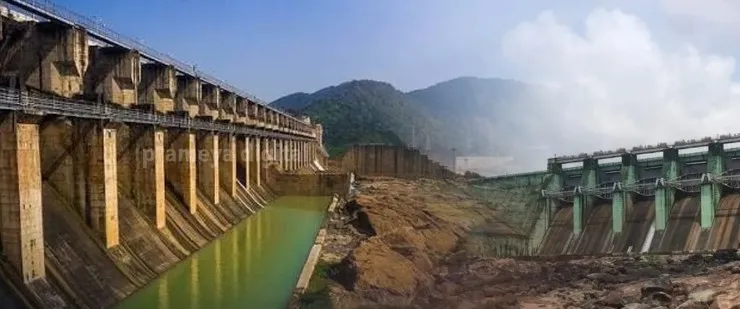
The situation is particularly worrying at the Rengali Reservoir, where the water level currently stands at 112 metres, with only 12.8% of its storage capacity filled. At the same time last year, the reservoir had already reached 73.5% capacity. Similarly, the Upper Indravati Reservoir has only 20% storage compared to 40% during the corresponding period in 2025.
Water storage in the Machkund Reservoir has dropped sharply, with only 27% capacity filled compared to 63% last year. The Upper Kolab Reservoir stands at 21% capacity, while Balimela Reservoir has stored just 15.5% of its capacity.
Except for the Hirakud Reservoir, nearly all major reservoirs across Odisha continue to remain critically low, significantly affecting hydropower generation. Authorities also fear that the anticipated impact of El Niño could lead to below-normal rainfall later in the season, potentially worsening the water crisis.
The concern extends beyond major reservoirs. More than half of Odisha's small and medium irrigation dams have also failed to receive adequate inflow despite recent rains.
The Badanal Dam in Rayagada, a key irrigation source for the surrounding region, is only around 40% full. Other reservoirs are also recording low storage levels, including Deo Dam in Mayurbhanj (36%), Ghatakeswar Dam in Ganjam (19%), Jambhira Dam near Baripada (14.3%), Jharbandh Dam in Bargarh (12%), Kal Dam near Kaptipada in Mayurbhanj (5.8%), and Nesa Dam (33%).
In Sundargarh district, Kansbahal Dam has reached 38.5% capacity, Mandira Dam 43%, Sarafgarh Barrage 26%, and Rukura Barrage 27%. In Koraput, the Telengiri Barrage has stored 22% of its capacity, while Satiguda Dam in Malkangiri stands at 32%.
According to rainfall data for the monsoon period from June 1 to July 11, Odisha received 347 mm of rainfall against the normal average of 314 mm, indicating an overall surplus. However, rainfall distribution has remained uneven across the state.
Four districts—Kalahandi, Nabarangpur, Balasore, and Deogarh—recorded rainfall deficits ranging from 20% to 40%. On the other hand, Kandhamal, Boudh, and Sonepur experienced heavy excess rainfall, while the remaining 23 districts recorded either normal or slightly above-normal rainfall.
Hirakud Reservoir remains the only major reservoir in a relatively stable position. Against its Full Reservoir Level (FRL) of 630 feet, the current water level stands at 611 feet, with nearly 37% of its storage capacity filled. Three sluice gates are currently open to release excess water.
Hydropower generation at the Burla Power House continues, although below its full capacity. The station generated 162 MW of electricity on July 11 and 167 MW on July 10, against its installed capacity of 287 MW.
In contrast, hydropower generation at the Rengali Power Station has come to a complete halt due to insufficient water storage. Despite having a daily generation capacity of 250 MW, the plant has produced no electricity over the past two days. On July 9, it generated only 16 MW, highlighting the severe impact of depleted reservoir levels.