


Policy Experts Discuss Emerging Trends In Modern Public Administration
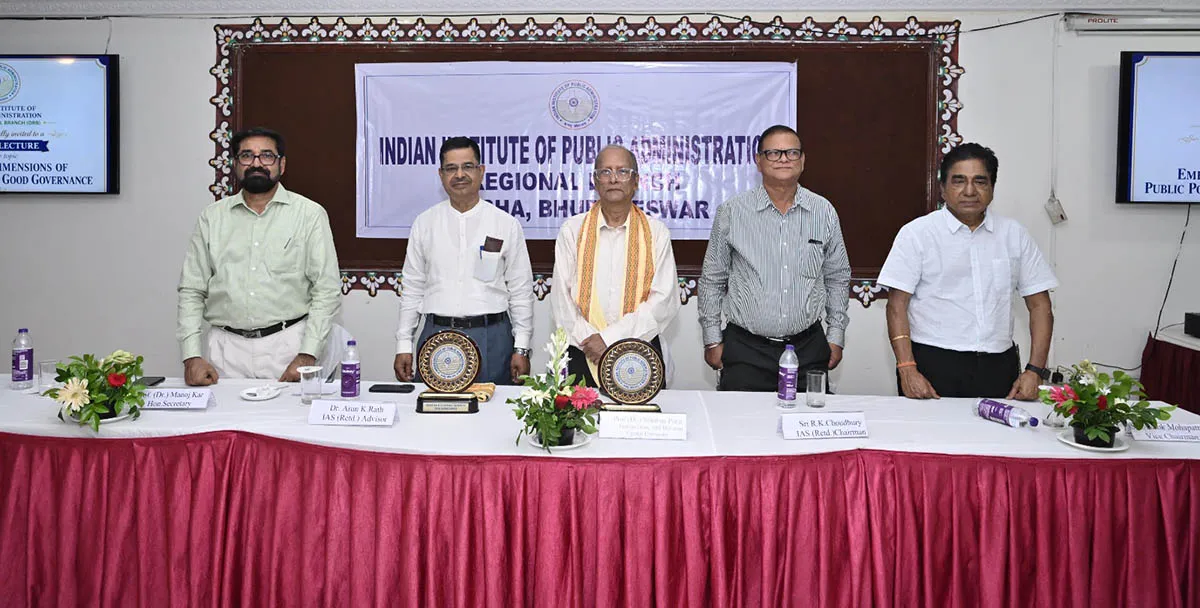
Bhubaneswar hosted a high-level public lecture on May 10, 2026, centering on the evolving landscape of public policy and administrative excellence. Organized by the Odisha Regional Branch of the Indian Institute of Public Administration (IIPA–ORB), the event drew a diverse crowd of policymakers, retired civil servants, and researchers to Pantha Nivas. Prof. (Dr.) Manoj Kar, Honorary Secretary, IIPA–ORB, delivered the Welcome Address and highlighted the growing importance of citizen-centric governance, digital transformation, transparency, accountability, and sustainable development in contemporary public administration.
Professor Srinibas Pathi, the keynote speaker, dissected the intersection of global trends and local governance. He highlighted how technological shifts and participatory democracy are redefining how states serve their people. Equitable access and ethical leadership remain the cornerstones of this transition. While the discussion covered broad themes like the Sustainable Development Goals, it also celebrated local milestones. Pathi specifically praised the strides Odisha has made in disaster resilience and women's empowerment, noting that the state's proactive models often serve as blueprints for national policy.
Technological Shifts and Institutional Synergy
Participants explored the roadmap toward Viksit Bharat 2047, focusing on how digital tools can foster transparency. R. K. Choudhury, Chairman of IIPA–ORB, pointed out that democratic governance survives on informed public discourse and collaborative efforts between institutions. This intellectual gathering served as a reminder that administrative reforms are not just about efficiency but about reaching the last person in the social queue.
Odisha’s Administrative Legacy
Historically, the Odisha branch of the IIPA has been a vital link in the state's intellectual infrastructure since its establishment in the mid-1950s, consistently influencing local administrative culture. During the interactive session moderated by Dr. Arun K. Rath, attendees tackled contemporary hurdles like policy implementation gaps. The dialogue concluded with a shared vision: to make governance more responsive and accountable through continuous innovation.