
.webp)


Bhubaneswar, November 19: With the Supreme Court yet to pronounce its verdict in the Odisha Director General of Police (DGP) appointment case, uncertainty continues over the appointment of a regular police chief in the state. The issue has assumed urgency as the incumbent officer holding additional charge of DGP is set to retire on November 30, raising questions about the possible administrative arrangements the state government may adopt in the interim.
Will the government appoint an ad hoc or interim DGP, or will another senior IPS officer be entrusted with the additional charge of the police headquarters? These questions have gained significance as the legal battle over the appointment process remains unresolved.
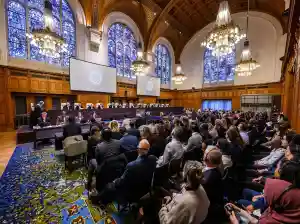
The Supreme Court is examining whether Odisha has complied with the directions laid down in the landmarkPrakash Singh vs Union of India judgment of 2006, which established guidelines for police reforms and the appointment of state police chiefs. Under the prescribed procedure, the Union Public Service Commission (UPSC) is required to prepare a panel of three eligible senior officers from which the state government selects the DGP.
Disputes concerning the eligibility of officers, preparation of the list and finalisation of the selection panel have emerged as key issues in the ongoing proceedings.
Supreme Court's February 2026 Judgment Holds Significance
A significant legal precedent that could influence the Odisha case is the Supreme Court's recent judgment in Union Public Service Commission vs T Dhangopal Rao and Others (State of Telangana), delivered on February 5, 2026.
In the judgment, the apex court reiterated that state governments are required to appoint regular DGPs strictly in accordance with the procedure and timeline prescribed in thePrakash Singhjudgment.
The Supreme Court expressed serious concern over the practice of state governments continuing with temporary arrangements by appointing acting DGPs instead of completing the prescribed selection process for regular appointments.
The court also made it clear that delays by state governments in forwarding proposals to the UPSC cannot be allowed to derail the appointment process or deprive eligible and meritorious senior IPS officers of fair consideration.
Taking note of instances of prolonged delays, including those involving Telangana, the apex court emphasised that the UPSC has a responsibility to ensure that the selection process does not remain stalled indefinitely due to administrative inaction by state governments.
To address such delays, the UPSC incorporated paragraph 4(xii) in its guidelines, requiring states to seek the Supreme Court's permission if proposals for DGP appointments are not submitted within the prescribed timeframe.
More importantly, the Supreme Court clarified that whenever a vacancy arises, the UPSC is authorised to write to the concerned state government seeking timely submission of its proposal. If the state fails to forward the proposal within the stipulated period, the commission can approach the apex court for enforcement of its directions issued in thePrakash Singhcase.
November 26 Hearing Crucial for Odisha
Against this legal backdrop, the Odisha DGP appointment controversy has reached a crucial stage. Senior IPS officer Vinaytosh Mishra, who is presently holding additional charge of DGP, is scheduled to retire on November 30, 2026.
The Supreme Court has listed the matter for hearing on November 26, just four days before his retirement. The timing has intensified speculation over the administrative course the Odisha government may adopt if the legal dispute remains unresolved.
The government may have to consider an interim arrangement by assigning additional charge of DGP to another senior IPS officer or explore another permissible administrative option.
The key question is whether the state government will be able to move forward with the regular appointment process through the UPSC or will have to continue with a temporary arrangement until the apex court delivers its final verdict.
Also Read: Odisha DGP Binaytosh Mishra granted retirement approval; tenure to end on November 30
.webp)