
.webp)

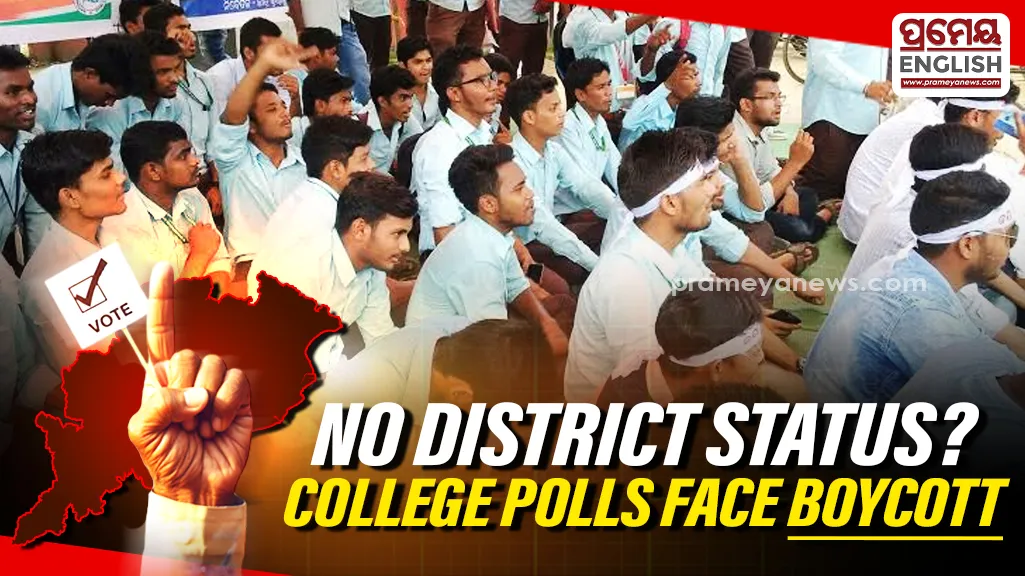
Titilagarh: The long-standing demand for district status for Titilagarh has taken a new turn, with the Students’ Action Committee calling for a boycott of the upcoming student union elections at Titilagarh DAV Autonomous College.
Raising the slogan ‘No District, No Vote’, the committee has urged students to oppose the election process until Titilagarh is granted district status.
📲Follow our WhatsApp Channel for the latest news, breaking updates, and important headlines. Stay connected with us for more updates!
The move has brought the district status demand back into focus, with students seeking to use the college elections as a platform to intensify their agitation and press for the fulfilment of their long-pending demand.
The student union elections at Titilagarh DAV Autonomous College are set to be held after a gap of 17 years. The last elections at the institution were conducted in 2009.
Standing For A Cause
The announcement of the polls had generated enthusiasm among students, as the campus was preparing to witness the return of electoral activities after a prolonged interval.
Also Read: Violence erupts at Deb Ray College ahead of student union election nominations
The elections are scheduled to fill several key positions in the student union, including president, secretary, vice-president and assistant secretary, along with secretary posts in various committees. The filing of nomination papers was scheduled for today.
However, the Students’ Action Committee’s call for a boycott has cast uncertainty over the election process, shifting the focus from campus politics to the broader demand for district status.
Students Turn Elections into a Platform for District Demand
The demand for district status for Titilagarh has been a long-standing issue in the region. With the student community now joining the movement, the committee is seeking to build pressure by linking participation in the college elections to the fulfilment of the demand.
The slogan ‘No District, No Vote’ reflects the committee’s stand that the elections should not proceed until the demand is addressed.
The move marks a fresh development in the agitation, bringing student politics and the regional demand for administrative recognition together.
.webp)