

.webp)

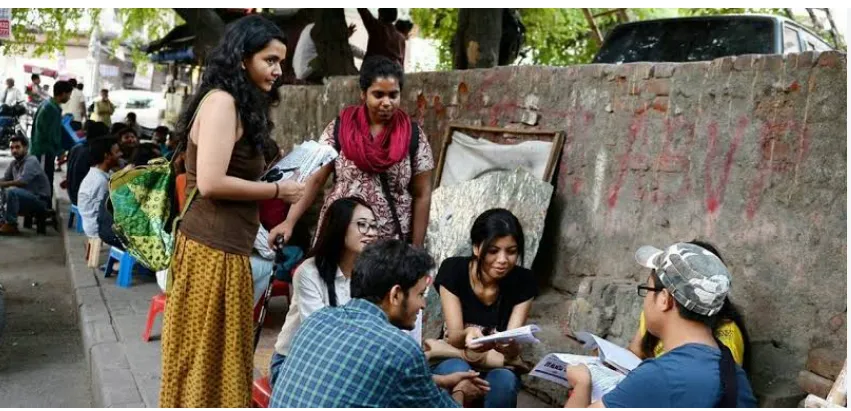
New Delhi, September 8: The National Human Rights Commission (NHRC) has taken serious note of the shortage of adequate and affordable hostel facilities for students of the University of Delhi (DU), particularly those coming from outside the national capital, and directed authorities to take concrete steps to increase hostel accommodation.
The Commission has asked the Chief Secretary of the Government of NCT of Delhi and the Chairman of the University Grants Commission (UGC) to coordinate with Delhi University and submit a comprehensive, action-oriented plan to address the accommodation shortage.
The matter was taken up by the NHRC in 2025 following a complaint filed by the Network for Access to Justice and Multidisciplinary Outreach Foundation. The complaint pointed out that Delhi University has around 72,000 undergraduate students, while the availability of hostel accommodation remains highly inadequate.
Students from outside Delhi often have to rely on expensive paying guest (PG) facilities or privately rented accommodation, placing a significant financial burden on them and potentially affecting their education and overall well-being.
The Commission had treated the issue as one involving the human rights of students. On September 30, 2025, an NHRC Bench headed by Member Priyank Kanoongo sought an Action Taken Report (ATR) from the concerned authorities under Section 12 of the Protection of Human Rights Act, 1993.
As the report was not submitted within the prescribed period, the Commission issued a reminder and granted additional time to the authorities. The response subsequently submitted by Delhi University was taken on record.
In its response, the university stated that undergraduate programmes are offered through 65 constituent and affiliated colleges. It also acknowledged the accommodation challenges faced by students from outside Delhi and highlighted the need for infrastructure improvement, including the creation of additional or new hostel facilities.
The NHRC, however, observed that the university's response did not adequately address the central concerns raised in the complaint. It noted that the response lacked a clear assessment of existing hostel capacity, the actual shortfall, the additional accommodation required, the need for new hostels, the financial responsibilities of various institutions and a definite timeline for implementation.
The Commission has now directed the Chief Secretary of Delhi and the UGC Chairman to work with Delhi University and prepare a specific and consolidated plan to increase hostel accommodation.
The NHRC said the plan should not be limited to the construction of new hostels. It should also consider the renovation, expansion, upgradation and augmentation of existing hostel infrastructure, besides assessing the feasibility and requirement of additional facilities.
The proposed report will have to assess the hostel capacity and infrastructure available at present, identify scope for renovation and expansion, and determine the need for new or additional hostels. It will also have to examine the requirements of individual colleges, recommend appropriate interventions, identify institutional and financial responsibilities, and specify a clear implementation timeline.
The NHRC has given the Chief Secretary of Delhi and the UGC Chairman four weeks to submit the consolidated, specific and action-oriented report in coordination with Delhi University. The Commission has fixed October 15, 2026, as the deadline for submission.
The proceedings, initiated last year over concerns about inadequate hostel facilities, have now moved towards a concrete and time-bound institutional response. Through its intervention, the NHRC has emphasised that access to higher education should not end with securing admission, but must also be supported by adequate and affordable residential facilities for students.
.webp)