
.webp)

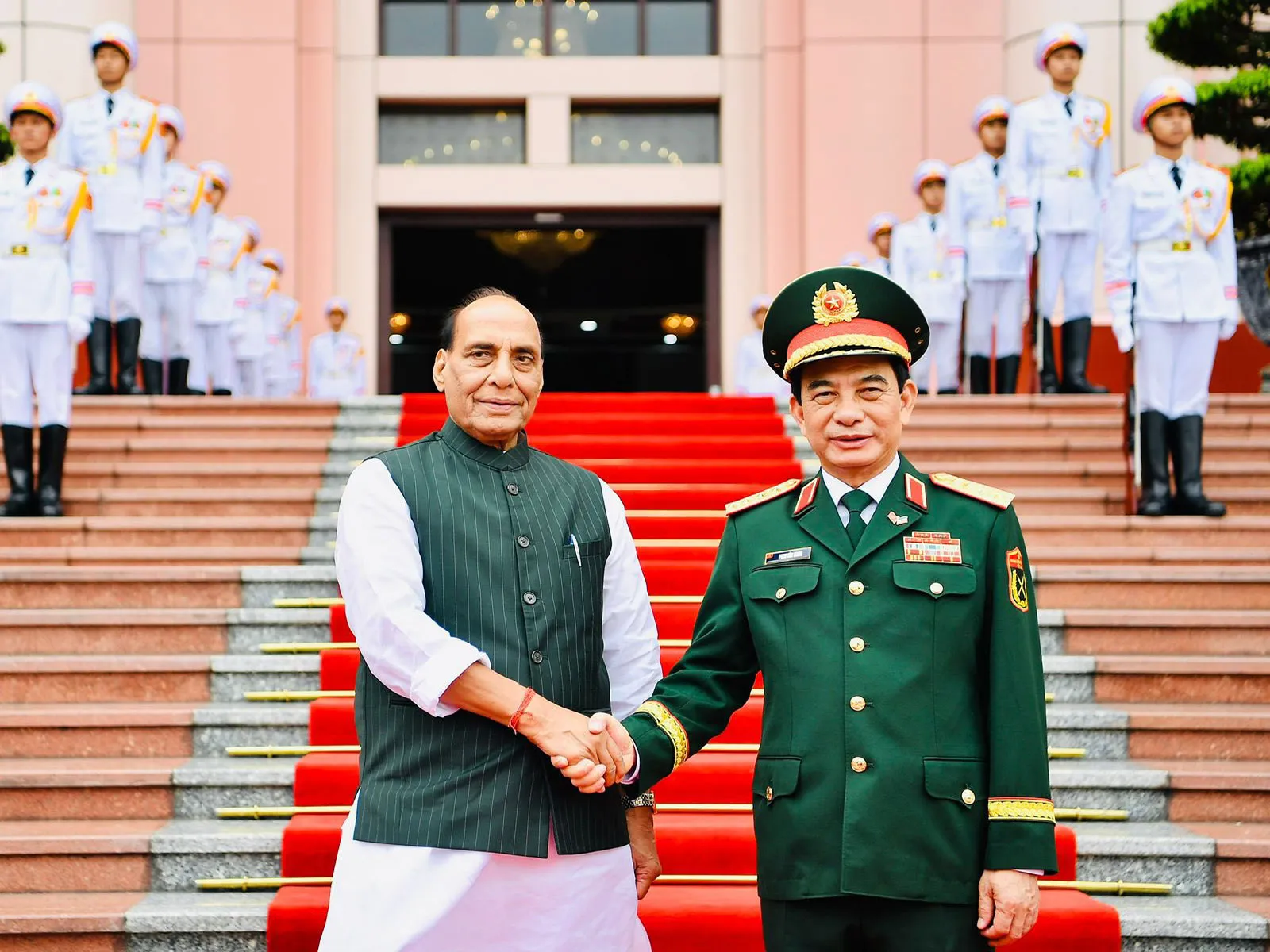
Indian and Vietnamese defence chiefs reinforce maritime defence alliances
Indian Defence Minister Rajnath Singh sealed a futuristic technological alliance during high-level bilateral discussions with his Vietnamese counterpart, Senior Lieutenant General Phan Van Giang, in Hanoi. Meeting on Tuesday, the two leaders exchanged strategies to elevate maritime security, expand joint military training, and boost domestic defense production capabilities. This diplomatic interaction holds heightened strategic relevance as New Delhi seeks to expand its Act East policy, balancing regional security dynamics in the South China Sea where Vietnam acts as a critical geopolitical anchor.
Advanced Technology Frontier
Expanding past traditional military logistics, the two countries executed a groundbreaking Memorandum of Understanding focused on integrating artificial intelligence and quantum computing into modern defence frameworks. This deployment of emerging computing capabilities represents a deliberate pivot toward high-technology deterrence. Singh noted that the digital agreement signifies a substantial evolutionary leap for their existing strategic ties.
Infrastructure collaboration formed another core pillar of the ministerial dialogue. The dignitaries jointly inaugurated a new Language Laboratory at the Vietnam Air Force Officer College, a project designed to streamline communication and operational synchronization between the respective air wings. Discussions also focused heavily on securing open sea lanes, protecting maritime trade infrastructure, and neutralizing rising security challenges across shared waters.
Historical Alignment
Paying tribute to deep-rooted bilateral connections, Singh referenced the historical foundation established by previous generations. The timing of the ministerial visit purposefully coincided with the 136th birth anniversary of former Vietnamese President Ho Chi Minh, a leader widely respected within Indian diplomatic history.
Looking ahead, this enhanced defense operational readiness establishes a more robust frameworks for security cooperation, ensuring both democracies can maintain freedom of navigation across the wider Indo-Pacific maritime zones.
With Inputs from Agency Threads and Image Courtesy: ANI
.webp)