


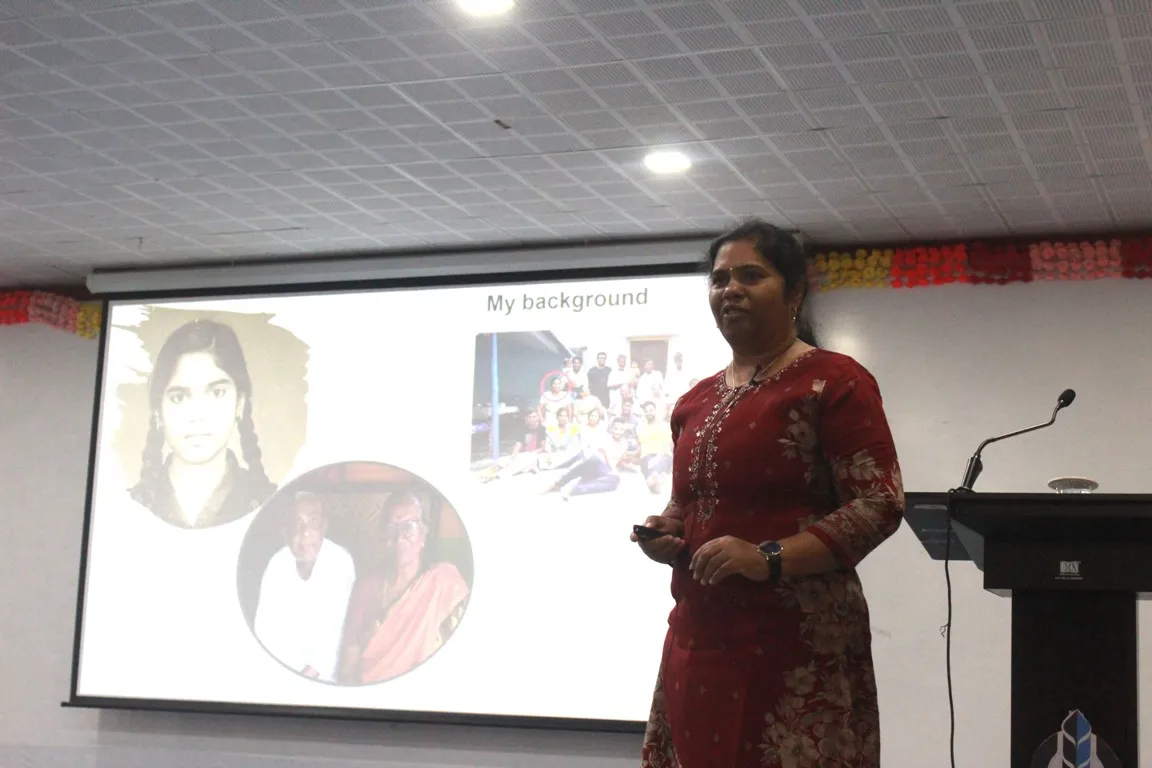
Bhubaneswar, March 17: Indian Institute of Technology (IIT) Bhubaneswar organized an inspiring talk by Prof. G. Madhavi Latha Gali of the Indian Institute of Science (IISc), Bengaluru, as part of its International Women’s Day celebrations, which featured a series of activities highlighting the achievements and contributions of women.
The programme brought together faculty members, staff, students, and their families to celebrate the spirit of women’s empowerment and leadership.
Delivering the keynote address, Prof. Madhavi Latha Gali shared her remarkable journey from a small village of Andhra Pradesh to becoming a leading geotechnical engineer associated with the construction of the Chenab Railway Bridge, the world’s highest railway bridge.
Reflecting on the challenges of building the bridge 359 metres above the river in a highly seismic Himalayan region, she described how the project required extensive geotechnical investigations, slope stabilization, rock anchoring, and continuous redesign through a “design-as-you-go” approach to address complex geological conditions.
Sharing insights from her personal journey, she emphasized that success does not follow a predetermined path and encouraged students, especially young women, to pursue their aspirations with resilience and determination.
“There is no template or blueprint for life—you evolve as a person as you go along,” she said, highlighting the importance of courage, perseverance, and supportive ecosystems in achieving one’s goals.
In his address, Prof. Shreepad Karmalkar, Director, IIT Bhubaneswar, underscored the importance of women’s health and well-being, emphasizing that proper nutrition and maintaining adequate haemoglobin levels are essential for women to lead healthy lives.
He noted that the Institute has introduced supportive measures such as allowing women students engaged in projects or research to take two days of work-from-home during their menstrual cycles, reflecting its commitment to a supportive and inclusive academic environment.
Encouraging women students to improve their haemoglobin levels through an appropriate diet so they can actively participate in activities such as blood donation, he stressed that everyone owes their existence to their mothers, and caring for women’s basic health needs is crucial for building a healthy and responsible society.
As part of the International Women’s Day Celebration, the Women Welfare Committee, in collaboration with Souls for Solace, organised a Self-Defence Camp on 8th March. This camp aimed to equip the female membersof the Institute with essential self-defence techniques to enhance their safety and confidence.
Dr. Anasuya Roychowdhury, Chairperson, Women Welfare Committee (WWC) spoke on the various activities being taken up by the Committee to ensure the wellbeing of the female members of the Institute. Dr. Prama Bhattacharya, Member Secretary, WWC, proposed a vote of thanks.
The winners of various competitions held earlier in the month were handed over prizes on the occasion. The students and residents of the Institute performed various cultural programmes to enthral the audience. The WWC student team actively participated in organizing the entire event.