


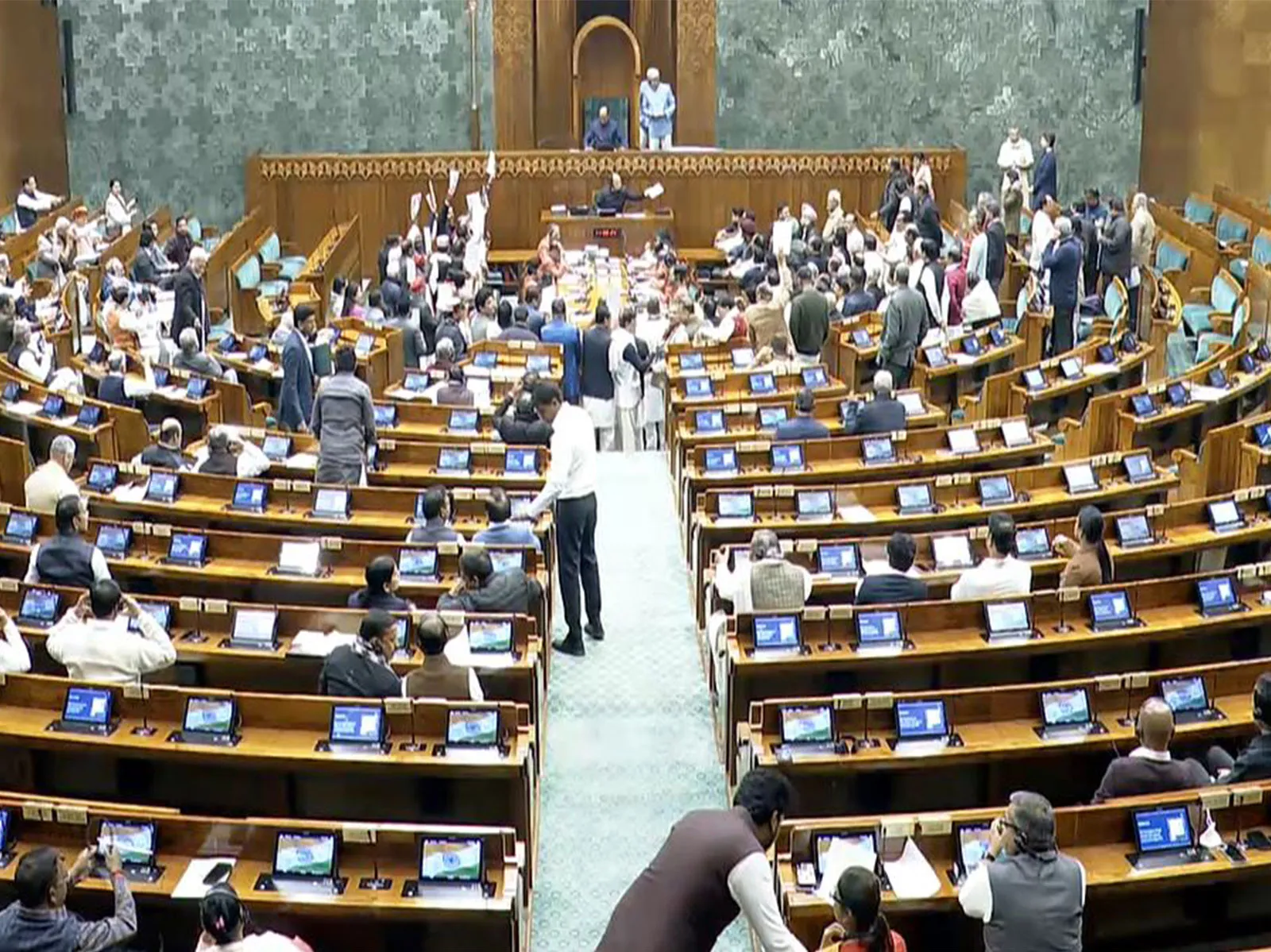
New Delhi, March 17: Lok Sabha Speaker Om Birla on Tuesday revoked the suspension of eight opposition MPs after Union Parliamentary Affairs Minister Kiren Rijiju moved a motion in the lower house of Parliament.
The eight opposition MPs - Gurjeet Singh Aujla, Hibi Eden, Dean Kuriakose, Amrinder Singh Raja Warring, B Manickam Tagore, Dr. Prashant Yadaorao Padole, Chamala Kiran Kumar Reddy, and S Venkatesan- paid tribute to Mahatma Gandhi inside the Parliament complex after their suspension was revoked.
After Rijiju moved the motion in the lower house, Congress Chief Whip K Suresh expressed regret for the "inadvertent indiscretion" by some of the members.
Follwing the motion today, the opposition MPs are allowed to participate in the ongoing parliamentary proceedings.
The eight opposition members were suspended from Lok Sabha for the remainder of the budget session on February 4 for violating rules and "throwing papers on the chair" following uproar in the House over Congress leader Rahul Gandhi's insistence on mentioning a specific reference about the border tensions with China in eastern Ladakh in 2020.
Yesterday, as per sources, a consensus was reached at a meeting of floor leaders convened under the chairmanship of Speaker Om Birla on the revocation suspension of the eight MPs.
Sources said that in the meeting, members agreed to uphold the dignity and established traditions of Parliament. It was collectively decided that no Member from either side shall approach the opposite side in the Well of the House, tear papers and throw them towards the Chair, or climb on the officials' table inside the House.
A reaffirmation was also made that all Members would adhere to established parliamentary decorum and traditions, and that both sides would ensure such incidents are not repeated, the sources said.
The Lok Sabha Secretariat has issued a bulletin reminding Members about the maintenance of decorum within the Parliament Estate. The bulletin draws attention to Direction 124A(2)(iii) of the Directions by the Speaker, which prohibits certain activities within the Parliament House Estate to keep the area and passages free and accessible for Members of Parliament.
The advisory also highlighted that the direction specifically prohibits the carrying of firearms, banners, placards, lathis, spears, swords, sticks, and brickbats within the Parliament Estate. Members have been repeatedly advised not to bring or display posters, placards, or banners inside Parliament.
The Bulletin further notes that in some instances, AI-generated portraits, pictures, and slogans of a derogatory nature have been displayed on posters and placards.
The Members were once again advised to strictly comply with Direction 124A(2)(iii) and other relevant rules, and warned that disciplinary action may be taken in the event of any violation. (ANI)