
.webp)


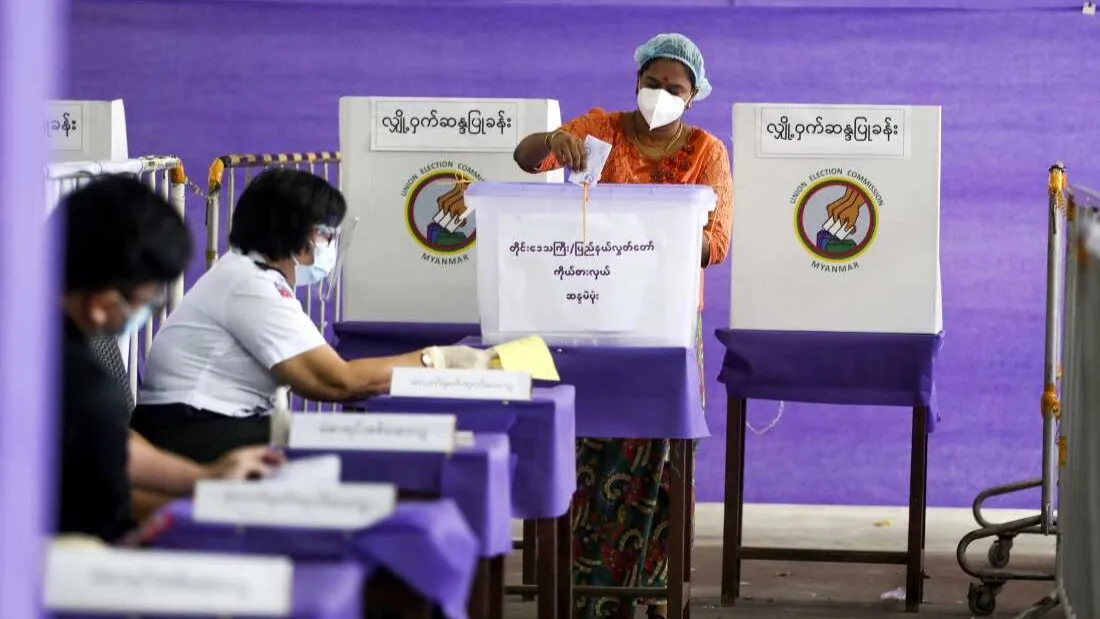
Military rulers initiate three-phase polling while excluding popular opposition parties.
Myanmar’s military government has officially started a national polling process this Sunday, marking the first time the country has seen a general election since the 2021 coup. This move comes nearly five years after the junta seized control from the elected government, an event that sparked a devastating civil war which still grips the nation today.
While the military claims this vote is a transition toward a "disciplined democracy," critics and human rights groups have labeled the event a sham. The primary goal, they argue, is to provide a veneer of legitimacy to a regime that maintains power through force. Significant parts of the country remain under the control of ethnic armed groups or pro-democracy rebels, making voting impossible in many border and central regions.
The political landscape for these Myanmar Junta Elections is starkly one-sided. The National League for Democracy (NLD)—formerly led by the country's most popular figure who remains in prison—has been dissolved. This leaves the ballot dominated by parties either directly backed by or closely aligned with the military.
The voting is scheduled in three distinct phases, with the first round beginning today and subsequent rounds set for January 11 and January 25. To ensure "order," the junta has implemented strict new laws. Hundreds of citizens have been detained for criticizing the electoral process, and security forces have been deployed in massive numbers nationwide.
On the international stage, the reaction is largely negative. The United States and several Western powers refuse to recognize the junta’s authority. Even regional neighbors like Japan and Malaysia have voiced concerns over the fairness of the process. Despite this, the military maintains it is simply fighting "terrorists" to restore stability. For the people of Myanmar, however, the path back to a true representative government remains obscured by ongoing violence and political exclusion.
.webp)