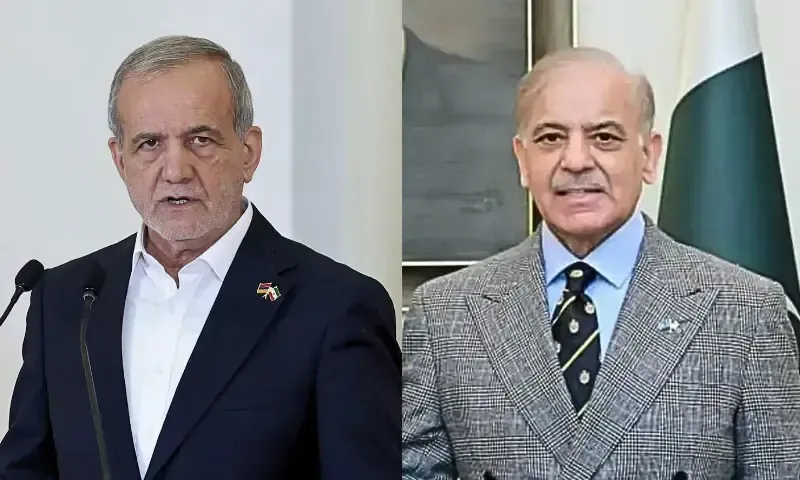
President Pezeshkian has informed Pakistan's leadership that Iran will not negotiate under the shadow of American threats or blockades. Diplomacy remains stalled as Tehran demands the removal of naval restrictions before returning to the table.
Published By : Satya Mohapatra
| April 26, 2026 8:48 AM
Tehran refuses negotiations while facing aggressive American naval blockades.
Iranian President Masoud Pezeshkian has officially declined to enter direct negotiations with the United States, citing the ongoing naval blockade as an insurmountable barrier to diplomacy.In a high-stakes telephone conversation with Pakistani Prime Minister Shehbaz Sharif, the Iranian leader asserted that Tehran will not be coerced into an agreement through military intimidation or economic siege.
Pezeshkian emphasized that the primary hurdle to regional stability is not a lack of communication but rather the "hostile actions" currently enforced by Washington. He noted that as long as operational pressures persist, reconstructing trust remains impossible. This diplomatic standoff follows the failure of recent mediation efforts in Islamabad, where Pakistan has attempted to facilitate a ceasefire between the two adversaries.
Naval Siege Halts Progress
The current crisis intensified after a U.S. naval blockade began choking Iranian ports on April 13, leading to significant disruption in the Strait of Hormuz.This maritime corridor is vital for global energy security, and its closure has sent shockwaves through international markets. Historically, Iran has utilized its strategic position at this chokepoint as leverage during periods of heightened Western sanctions, a tactic that continues to define its geopolitical maneuvering in 2026.
Pakistan Remains Committed Mediator
Despite the breakdown in direct talks and President Trump’s recent cancellation of envoy trips to the region, Prime Minister Shehbaz Sharif reiterated Pakistan’s role as a "sincere facilitator." Islamabad remains the central hub for these indirect exchanges, though Iranian Foreign Minister Abbas Araghchi has warned that the "maximalist demands" from the U.S. side regarding zero nuclear enrichment are currently unacceptable. For any meaningful dialogue to resume, Tehran insists that Washington must first dismantle the military and economic barriers characterising this latest escalation.


.webp)


.webp)