

.webp)


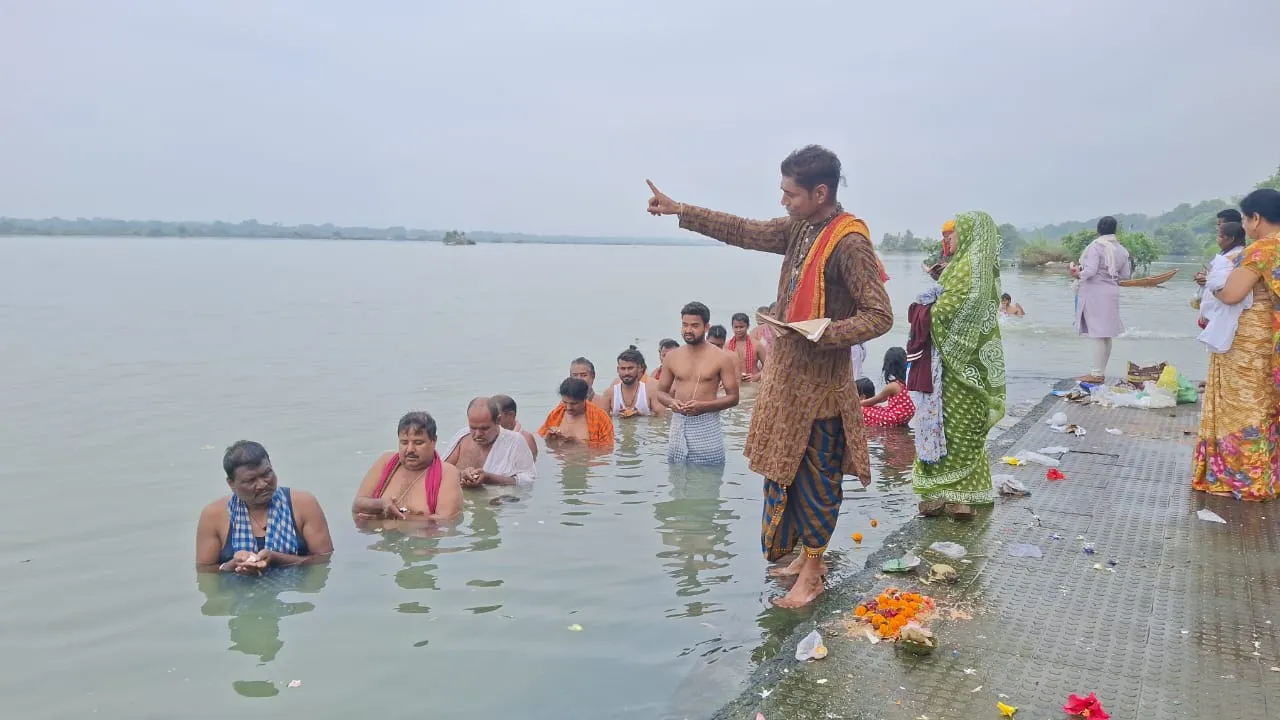
Bhubaneswar, Oct 10: Temples across Odisha witnessed a large influx of devotees on Saturday as Mahalaya Amavasya marked the conclusion of Pitru Paksha, the sacred fortnight dedicated to remembering departed ancestors. From the rare Dhabalamukhi Besha of Maa Sureswari and Maa Samaleswari to ancestral offerings at Puri’s Jagannath Temple and Jajpur’s Nabhi Gaya, devotees gathered to observe the auspicious day.
Mahalaya holds special religious significance in Hindu tradition, as families perform Shraddha, Pind Daan and Tarpan to pray for the peace and salvation of their ancestors.
Maa Sureswari Appears in Rare Dhabalamukhi Besha
At the shrine of Maa Sureswari, the presiding deity of Subarnapur, devotees gathered to witness the Goddess in her rare Dhabalamukhi Besha.
While Maa Sureswari is traditionally worshipped in a vermilion-coloured form throughout the year, she appears in white only on Mahalaya. The special appearance is also known as Ganga Darshan and is associated with the form of Goddess Saraswati.
Also Read:Durga Puja 2026: Nayapalli to showcase Vatican City
As the Goddess appears in this distinctive form only once a year, a large number of devotees visited the temple to seek her blessings.
According to the temple tradition, the rare darshan will remain available for two-and-a-half days from Mahalaya.
Maa Samaleswari in White at Sambalpur
In Sambalpur, devotees thronged the temple of Maa Samaleswari, the presiding deity of the city, to witness her annual Dhabalamukhi Besha.
The Goddess, who is worshipped in her traditional vermilion-coloured form throughout the year, appears in white on Mahalaya. The special appearance is also referred to as Ganga Darshan and is associated with Goddess Saraswati.
Long queues of devotees were seen inside and outside the temple from the early morning hours, with people arriving from distant places for a glimpse of the Goddess.
The temple priests also wore white clothes while performing the rituals and offering aarti. Security arrangements were tightened at the shrine to manage the large gathering.
The Dhabalamukhi Besha is expected to remain available for devotees for two-and-a-half days.
Devotees Gather at Nabhi Gaya in Jajpur for Pind Daan
In Jajpur’s Biraja Kshetra, a large number of devotees gathered at Nabhi Gaya to perform Pind Daan for their ancestors.
Mahalaya marks the final day of Pitru Paksha, when devotees offer pinda and prayers for the peace and salvation of departed family members. According to Hindu belief, these rituals help ancestors attain peace and bring blessings to their descendants.
Nabhi Gaya holds particular religious importance among devotees who come to perform ancestral rites. It is traditionally associated with the belief that departed ancestors receive the offerings made there.
Devotees who could not perform Pind Daan on the appropriate day during Pitru Paksha also visit Nabhi Gaya on Mahalaya to complete the rituals and seek blessings for their families.
Heavy Rush for Ancestral Rituals in Puri
In Puri, Mahalaya Amavasya witnessed a significant gathering of devotees at the Shree Jagannath Temple’s northern gate and various sacred ponds.
Devotees performed Shraddha, Pind Daan and Til Tarpan to honour their ancestors and pray for the peace of their souls.
On this day, many families offer Tarpan for ancestors from both their paternal and maternal lineages. The rituals involve offerings of water, sesame seeds and prayers in accordance with religious customs.
Mahalaya is considered one of the most significant days for ancestral worship, particularly for families whose ancestors' death-tithis are unknown or whose Shraddha rituals could not be performed earlier.
Mahalaya's Religious Significance
Mahalaya Amavasya is observed across India with different regional customs, but the central purpose remains the same: remembering ancestors and expressing gratitude for previous generations.
While devotees in Subarnapur and Sambalpur sought blessings through the rare white appearance of their presiding deities, pilgrims in Puri and Jajpur focused on ancestral rites and offerings.
The day also marks the transition from Pitru Paksha towards the festive period of Durga Puja, with Mahalaya carrying particular cultural significance in Odisha, Bengal and other parts of eastern India.
With temples witnessing large gatherings and families performing traditional rituals, Mahalaya once again brought together faith, ancestral remembrance and Odisha’s rich religious heritage.
.webp)